
All 11 districts · Noida · Ghaziabad · Gurgaon · Faridabad
Best Nasha Mukti Kendra in Delhi & NCR
दिल्ली और एनसीआर के परिवारों के लिए नशा मुक्ति केंद्र
24x7 Delhi helpline+91 62304 15581Eshan Charitable Trust is registered in Delhi, at the office of Sub-Registrar-I, Kashmere Gate. We run a government registered, men only residential de-addiction centre and take admissions from every district of the capital and across the NCR. Delhi has roughly two crore people and a few hundred government de-addiction beds, which is the gap this page is about. A charitable trust with no profit model, so full residential care is Rs 12,500 a month.
Is chitta, smack, sharab or goliyan eating a son, a brother or a husband in your house?Nasha chudane ka ilaj exists, and nobody here will judge you for calling.
Call +91 62304 15581Start here
Delhi has about two crore people and a few hundred government de-addiction beds
That sentence is the whole reason a family in this city ends up on a page like this one. Delhi is not short of enforcement, awareness drives or expertise. What it is short of is somewhere to put a man for thirty, sixty or ninety days, which is why the search for a nasha mukti kendra in Delhi so often ends in another state. Below is the arithmetic, taken from the Delhi government's own published list and from police disclosures, not from anybody's brochure.
195 beds, eleven centres
The Delhi government's published list of government-aided de-addiction centres under the National Action Plan for Drug Demand Reduction runs to eleven NGO-run centres with 195 beds between them, in Vasant Kunj, Dakshinpuri, Daryaganj, Khanpur, Mahipalpur, Alipur, Dilshad Colony, Dwarka, Nand Nagri and Kotla Mubarakpur.
And about 170 hospital beds
The same list names nine government hospitals in Delhi with roughly 170 sanctioned de-addiction beds between them: IHBAS at Dilshad Garden with 40, Sahyog Detox Centre at Sewa Kutir with 50, RML and Deep Chand Bandhu with 30 each, and five more with five beds apiece.
Against 64 mapped hotspots
A Delhi Police anti-narcotics task force survey mapped 64 drug hotspots across the capital, against fifteen in a 2021 survey. Fifty-two of the sixty-four were new. The list named Jama Masjid, Madangir, Chhatarpur, Nizamuddin, Uttam Nagar, Taimoor Nagar, Nand Nagri and Majnu Ka Tila among others.
One in twenty, nationally
The national AIIMS survey put it plainly: of people dependent on illicit drugs in India, roughly one in twenty has ever received inpatient treatment. For alcohol dependence it was about one in 180. Delhi is better served than most of India and the gap is still this wide.
Why we are the ones saying it. Eshan Charitable Trust is registered in Delhi. The trust deed was executed at the office of Sub-Registrar-I, Kashmere Gate, on 14 February 2025, under Regd. No. 2025/19/IV/123, Book No. IV, Vol. 4067. The residential centre itself is in the Kangra valley in Himachal Pradesh, registered with that state's Mental Health Authority under the Mental Healthcare Act 2017. So this is not a marketing page written about Delhi from somewhere else. It is a Delhi-registered trust explaining what it can and cannot do for a family in this city, including when the answer is that you should use a government service instead and keep your money.
Before you call
Is this happening in your home?
In a city this size a young man can be six months into a habit before anybody at home notices, because the hours are long, the commute is long and nobody asks. These are the things parents and wives describe on the first call to a nasha mukti kendra in Delhi, close to word for word.
- Money going in small amounts constantly, UPI transfers at odd hours, borrowing from people you have never heard of.
- Silver foil with a brown burn mark, a cut straw or a rolled note, a bent spoon, used syringes, strips of tablets with no prescription.
- Sleep turned upside down: dead to the world through the afternoon, awake and restless at four in the morning.
- Weight falling off him, no appetite, pinpoint or glassy eyes, long sleeves in June.
- A job quietly ended, a semester lost, a shop sliding, and nobody at home told for weeks.
- Rage over nothing, lies about things that do not matter, a bolted door, a phone that never leaves his hand.
- A promise every Sunday, two clean days, and by Wednesday exactly where you started.
Recognise four or more and the window for a good conversation has closed, and it is time to ring a nasha mukti kendra in Delhi rather than wait for the fifth. Our guide to the warning signs of drug and alcohol addiction goes through each of these, the signs of a chitta nasha addict covers the smack pattern, and prescription drug addiction symptoms covers the tablets. Then ring and describe it. Nothing is charged for that call and nothing is committed by making it.
Every substance, one plan
What our nasha mukti kendra in Delhi treats
You can read the Delhi mix straight off a single police operation. In one 48-hour citywide drive in June 2026, officers seized 237 kg of ganja, 5.18 kg of hydroponic cannabis, about 1.1 kg of heroin, 159.8 g of cocaine, 366 g of charas, 101 g of MDMA, 186 g of methamphetamine, 2,640 buprenorphine tablets and 287 pheniramine injections. That is one city, two days, and almost every category at once. Each card opens into a fuller guide, and the clinical programme is set out on our treatment services page.
Smack, chitta and the injecting cocktail
Smack remains the most commonly used drug in Delhi's worst-affected pockets, smoked off foil through what users call a panni pipe. What has changed is the needle. Police in Shahdara and North East Delhi describe a cocktail of buprenorphine tablets crushed with pheniramine maleate injections, taken intravenously, which a DCP there called dangerous and highly addictive. That pattern needs a medical detox and blood-borne infection screening on day one, not in week three.
Chitta nasha treatment Chitta detox Withdrawal timeline चिट्टा कैसे छोड़ें
Sharab and alcohol addiction
The quiet majority, and the one families leave longest because in Delhi it looks like a social life rather than an illness. The same two-day operation logged 398 excise cases and seized over 53,000 quarters of illicit liquor. As an alcohol treatment centre we manage sharab dependence medically: sudden withdrawal in a heavy daily drinker can cause fits, hallucinations and delirium tremens.
Alcohol addiction treatment Alcohol detox Signs of alcoholism Recovery
Cocaine, MDMA and party drugs
Police have named Chhatarpur, Mohan Garden, Nawada and Uttam Nagar for cocaine and MDMA, and added Delhi University's North Campus as a hotspot where the buyers are students. Street prices reported for MDMA ran from Rs 500 to Rs 3,000 a pill. The physical withdrawal is mild; the crash, the paranoia, the debt and the depression underneath are not, and that is the part we treat.
Goliyan, syrups and prescription drugs
Tramadol, Tapentadol, alprazolam, codeine syrup and the buprenorphine tablets above. This is the most respectable and most invisible form the problem takes in a city full of chemists, and the hardest for a family to name. A benzodiazepine stopped abruptly can cause seizures, so the reduction is prescribed by a doctor and reviewed daily.
Goliyon ka nasha treatment Prescription drug detox Symptoms to watch for
Ganja, charas and Malana cream
By weight, cannabis dominates every Delhi seizure list, and the hashish sold here as Malana cream comes out of the Parvati valley in Himachal, a few hours from our own centre. Police have described cars fitted with hidden cavities running it down from the hills. Dependence is mostly psychological, so it answers to CBT, routine and fitness rather than to a lecture.
Bhang addiction treatment Bhang and charas detox Bhang addiction symptoms
Injecting use and polysubstance
When a smoking habit outgrows the money, men inject to make the same amount go further, and the risk changes category: overdose, abscesses, collapsed veins, hepatitis B and C and HIV. Delhi's injecting pockets are well known to its own police. Screening and onward referral run alongside detox here from the day he arrives.
Inhalants, whitener and solvents
The capital's street-connected and slum-resident children use correction fluid, adhesive and petrol because they are cheap, legal and everywhere. Nationally the AIIMS survey estimated about 4.6 lakh children needing help for inhalant use. We are a men-only adult facility and cannot admit minors, but ring us anyway and we will tell you which Delhi services do take them.
The mind behind the nasha
Depression, anxiety, a job lost, debt, a marriage ending, exam and career collapse, old trauma, broken sleep, bipolar illness. It is almost always part of the case, and a nasha mukti kendra in Delhi that treats the drug while ignoring the mind is exactly why so many admissions fail in month two.
What all of it costs
Rs 12,500 a month for shared residential care, every substance, every therapy. It is the whole fee for a nasha mukti kendra in Delhi families can verify in person: no surcharge for a harder case, no detox package invented later, and nothing added to a bill once he is admitted and you are in no position to argue.
How to judge us
What makes the best nasha mukti kendra in Delhi for de-addiction?
Every nasha mukti kendra in Delhi is competing for the same search, and Delhi has more rehab advertising than any city in India, and the gap between the best and the worst of it is enormous. Six things decide whether a man comes home different, and you can check all six on any nasha mukti kendra in Delhi in an afternoon without any expertise at all. If the terminology itself is unclear, start with the difference between a rehab centre and a nasha mukti kendra.
Registration you can read
A certificate under the Mental Healthcare Act 2017 carrying a serial number, an issue date and the registered name, issued by the State Mental Health Authority of the state the building actually stands in. Not a trust deed, not a society number, not a GST certificate, not an ISO sticker.
A doctor who signs the detox chart
Name the doctor who supervises withdrawal and give his council registration number. Then ask who is physically awake on the premises at three in the morning. A compounder, a watchman and a locked gate are not medical cover, whatever the photographs suggest.
Psychiatric care, not only detox
Two weeks clears the substance out of him. Leave the depression, the anxiety or the trauma underneath untouched and the relapse arrives on a predictable timetable. Ask for the psychiatrist by name and ask how often he reviews each resident.
A stay long enough to change something
The market sells fortnight-long admissions because they are easy to sell and easy to afford. We run 30, 60 and 90 day residential programmes, and the doctor recommends the length at the assessment rather than the family guessing it on the phone. Thirty days steadies a man. Ninety is what a long chitta or sharab history usually needs before a new routine holds without somebody standing over it.
The family treated as part of the case
A man returning to an unchanged household returns to the behaviour that household produced. Parents, wives and brothers have to learn to support recovery without quietly funding the next relapse, and that is taught here rather than assumed.
The whole fee, in writing, first
A single figure for the month, an itemised list of what sits inside it, and an explicit list of what does not. A centre that quotes low on the phone and discovers extras in month two has already told you how it will treat you when you cannot walk away.
Put all six to us, then put the same six to every other nasha mukti kendra in Delhi that rings you back, and compare the answers rather than the photographs. We have set the same test out at length in what actually makes a good rehabilitation centre, and what an unregulated place looks like from inside is in the reality of nasha mukti kendras. If you are weighing a free service against a paid one, government versus private de-addiction care works through the trade-off honestly.
For the two in the morning search
Searching for a nasha mukti kendra near me in Delhi?
It is almost always after midnight. Nasha mukti kendra near me. Rehab near me. De-addiction centre near me. Alcohol treatment center near me. Rehabilitation centre near me. Thumbed into a phone in an unlit room while everybody else sleeps and his bed has still not been slept in. Those searches are all asking one thing, which is whether there is a nasha mukti kendra in Delhi that will actually pick up.
Judge a nasha mukti kendra in Delhi by whether somebody answers at that hour, because two in the morning is when families stop deliberating and act. Ours does. The counsellor who answers will take the history, tell you whether this needs a residential bed at all, and if it does not, point you at the right government service in your own district and tell you to keep your money.
The honest caution about near me searches in this city: Delhi has the most crowded rehab advertising market in India and a map pin establishes nothing. Plenty of what ranks is a lead-generation page that sells your phone number on to whichever centre pays most, and plenty of the rest is unregistered. Sort every nasha mukti kendra in Delhi result by the six checks above, not by the distance.
On the ground in the capital
Chitta, smack, sharab and goliyan: what Delhi is actually facing
These figures come from Delhi Police disclosures, the Delhi government's own published lists and the national AIIMS survey. We have put the enforcement numbers and the de-addiction centre in Delhi bed numbers on the same page deliberately, because almost nobody does, and the distance between them is the entire story.
Drug hotspots mapped across Delhi by the police anti-narcotics task force, against 15 in an earlier survey
Locations raided by 1,474 police teams across all 15 police districts in a single 48-hour drive
NDPS cases a year, up from 566 in 2021, with arrests rising from 857 to roughly 2,400
Government de-addiction beds in the whole city, across eleven aided centres and nine hospitals
From fifteen hotspots to sixty-four
A Delhi Police anti-narcotics task force survey mapped 64 drug hotspots across the capital, up from fifteen in an earlier survey, with 52 of them newly added and three dropped off. The named locations run across the whole city: Jama Masjid, Madangir, Chhatarpur, Hazrat Nizamuddin, Uttam Nagar, Taimoor Nagar, Nand Nagri, Majnu Ka Tila, New Seelampur, Jwala Nagar and Vivek Vihar. Cocaine and MDMA were tied specifically to Chhatarpur, Mohan Garden, Nawada and Uttam Nagar. Delhi University's North Campus was added as a new hotspot where the buyers are students.
Forty-eight hours, 4,035 locations
In Operation Kavach 14.0, run from 6pm on 22 June to 6pm on 24 June 2026, 1,474 police teams raided 4,035 locations across all fifteen police districts. It produced 212 NDPS cases and 255 arrests, and recovered 237.46 kg of ganja, 5.18 kg of hydroponic cannabis, about 1.1 kg of heroin, 159.8 g of cocaine, 366.48 g of charas, 101.1 g of MDMA, 186 g of methamphetamine, 2,640 buprenorphine tablets, 287 pheniramine injections and Rs 23.27 lakh in suspected drug money. Officers said several traffickers simply went underground or shifted stock to Noida.
The cocktail in North East Delhi and Shahdara
Police in these districts describe syringes turning up alongside opioid tablets, and a specific intravenous cocktail of buprenorphine with pheniramine maleate. The DCP for Shahdara called it dangerous and highly addictive. The DCP for North East Delhi said smack remains the common substance there, usually smoked through what users call a panni pipe. NSA Colony in Farsh Bazaar and Silver Park in Shivpuri have both been named. If this is your household, the admission needs blood-borne infection screening from day one.
Courier apps, UPI, and a road out of the hills
The Crime Branch has busted an inter-state cartel supplying students in Delhi through delivery services, taking orders on WhatsApp, Instagram and Facebook and accepting payment by UPI. On the other end of the market, police describe cars fitted with concealed cavities bringing hashish down from Himachal Pradesh and Nepal, with one seizure of about 63 kg. The hashish sold in Delhi as Malana cream comes out of the Parvati valley in Kullu district, which is a few hours from our own centre and a place we have written about in our Kullu and Manali pages.
The half that never makes a headline
None of the enforcement above treats a dependence. Arresting a peddler removes a seller; it does not touch the man in your house who is eight months into smack or fifteen years into sharab. And when supply is squeezed without treatment capacity being built alongside it, a dependent man does not stop. He moves to whatever is still available, which in this city has meant tablets and needles.
Set the two sets of numbers side by side. Sixty-four mapped hotspots, around 1,800 NDPS cases a year, 4,035 locations raided in one weekend, in a city of roughly two crore people. And on the treatment side, eleven aided centres with 195 beds and nine hospitals with about 170. That is the gap, and it is why families who can afford to look outside Delhi do, and why families who cannot are left with a waiting list.
The part nobody writes about
A capital city's nasha problem has a shape of its own
Delhi does not behave like Punjab and it does not behave like a hill district. Six features of this city decide what walks through the door of a nasha mukti kendra in Delhi, and a page written for anywhere else will describe none of them.
Two Delhis, two problems
The same city holds cocaine at Rs 3,000 a gram in the farmhouse belt and smack at a few hundred rupees in a JJ cluster, often ten kilometres apart. Police map both. A nasha mukti kendra in Delhi that only understands one of them will mishandle the other, and most of the advertising in this city is written for only one.
It is ordered, not scored
The street-corner model is no longer the whole picture. Orders go out on WhatsApp and Instagram, delivery runs through courier apps, and payment lands by UPI. That means a man never has to look like he is going anywhere, and a family has nothing visible to notice until the money goes.
Everybody is from somewhere else
Delhi runs on people who came here for work, study or a chance, living in rented rooms with no family within five hundred kilometres. Nobody notices the first six months, and when it goes wrong there is often nobody in the city to sign an admission form.
Students, hostels and the campus belt
Delhi University's North Campus was added to the police hotspot list with students named as the buyers. Hostel use is hidden by design: nobody at home sees the week, and attendance collapses long before anybody at home hears about it.
The chemist counter
A city of this size has a chemist on every corner, and the tablets in those 2,640 seized strips did not come from a field. Prescription dependence is the most respectable form the problem takes here, the slowest to be named, and very often sitting underneath a man who insists he only drinks socially.
Reputation travels fast
Government service, armed forces, judiciary, medicine, business, the old colonies where everybody knows everybody. The first question Delhi families ask us is not clinical. It is whether anybody will find out. That fear buys the habit another year, and it is the single biggest reason admissions here are late.
The waiting list is real
A government bed in Delhi is free and often very good. It is also, for an adult man needing a long residential stay, frequently weeks away. The window in which a man agrees to go is usually a single morning, and a bed available in three weeks has effectively said no.
Why this matters when you choose. A nasha mukti kendra in Delhi that treats a capital city case the way a rural case is treated will miss most of what is in front of it: the courier app, the UPI trail, the rented room with no family nearby, the tablets underneath the drinking, and the fact that for this household discretion is a clinical problem rather than a vanity. Tell the counsellor at our nasha mukti kendra in Delhi on the first call which of the six above is your house, and the plan gets written from there rather than off a shelf.
Every district, every colony
All of Delhi, and the NCR around it
Delhi runs as eleven revenue districts and fifteen police districts. Men reach our nasha mukti kendra in Delhi from all of them, and from every part of the National Capital Region. Open any district below for the colonies we take admissions from.
Central DelhiDaryaganj, Karol Bagh, Paharganj and the walled city
The oldest and densest part of the city, and the district with three of the eleven government-aided de-addiction centres inside it at Daryaganj alone. Men reach our nasha mukti kendra in Delhi from every lane of it. Jama Masjid appears on the police hotspot list. The pattern here is smack and sharab in the older lanes, with tablets everywhere.
New DelhiConnaught Place, Chanakyapuri, Lodhi Colony
Government service, the diplomatic belt and the old bungalow colonies. The pattern here is alcohol and prescription tablets far more than street drugs, and the single dominant concern families raise with any nasha mukti kendra in Delhi is confidentiality, because a career can depend on it.
North DelhiModel Town, Civil Lines, the campus belt and Majnu Ka Tila
Majnu Ka Tila is on the police hotspot list and Delhi University's North Campus was added as a new one, with students named as the buyers and suppliers traced to other states. A great many of the young men we are asked about from this district live in a hostel or a PG rather than at home, and a residential nasha mukti kendra in Delhi is often the only structure available to them.
North West DelhiRohini, Pitampura, Jahangirpuri, Sultanpuri
The largest district by population, and one that holds both ends of the city's problem: planned Rohini sectors on one side, and resettlement colonies with a long-standing smack and injecting problem on the other. Narela's industrial belt has produced repeated heroin recoveries, and this district sends our nasha mukti kendra in Delhi as many admissions as any other.
West DelhiRajouri Garden, Janakpuri, Tilak Nagar, Uttam Nagar
Uttam Nagar appears on the hotspot list twice over, once generally and once specifically for cocaine and MDMA alongside Mohan Garden and Nawada. A dense, prosperous, hard-working district where sharab and goliyan are the quiet majority of what our nasha mukti kendra in Delhi is called about, whatever the headlines say.
South West DelhiDwarka, Najafgarh, Vasant Kunj, Palam
Two of the eleven government-aided centres sit in this district, at Vasant Kunj and at Amberhai in Dwarka, with a third at Mahipalpur. A district of planned sectors, urban villages and the airport belt, with a young, mobile, largely rented population, and one that rings a nasha mukti kendra in Delhi late because nobody at home sees the first year.
South DelhiHauz Khas, Saket, Mehrauli, Chhatarpur, Sangam Vihar
The sharpest divide in the city sits inside this one district. Chhatarpur is named by police for cocaine and MDMA; Madangir and Khanpur appear on the hotspot list for an entirely different market; and Sangam Vihar is among the largest unauthorised colonies in Asia. Government-aided centres operate at Dakshinpuri and Khanpur, and a private nasha mukti kendra in Delhi gets calls from both ends of this district in the same week.
South East DelhiLajpat Nagar, Kalkaji, Okhla, Nizamuddin, Badarpur
Hazrat Nizamuddin and Taimoor Nagar both appear on the police hotspot list. This district runs from the old colonies and Jamia Nagar through the Okhla industrial belt to Badarpur on the Haryana edge, which means a nasha mukti kendra in Delhi sees a different economy and a different pattern at each end of this one district.
East DelhiLaxmi Nagar, Mayur Vihar, Patparganj, Trilokpuri
Across the Yamuna, and the district where more students and young working men live in paying guest accommodation than almost anywhere else in the city. Laxmi Nagar in particular draws tens of thousands of them, which is exactly the profile that goes unnoticed longest and reaches a nasha mukti kendra in Delhi last.
North East DelhiSeelampur, Nand Nagri, Bhajanpura, Karawal Nagar
The most densely populated district in India, and the one its own police describe most directly: smack smoked through panni pipes, syringes alongside opioid tablets, and the buprenorphine with pheniramine cocktail taken intravenously. New Seelampur, Jwala Nagar and Nand Nagri are all on the hotspot list, a government-aided centre operates at Nand Nagri, and the injecting cases that reach our nasha mukti kendra in Delhi most often come from here.
ShahdaraDilshad Garden, Vivek Vihar, Farsh Bazaar, Seemapuri
IHBAS at Dilshad Garden, with 40 beds, is the single largest government psychiatric de-addiction facility inside Delhi and sits in this district. Its own police have named NSA Colony in Farsh Bazaar and Silver Park in Shivpuri, and Vivek Vihar appears on the hotspot list. A government-aided centre runs at Dilshad Colony, and this is the one district where a nasha mukti kendra in Delhi sits beside a genuinely large public facility.
The NCRNoida, Ghaziabad, Gurgaon, Faridabad and beyond
Delhi's drug market does not stop at the border, and nor does our nasha mukti kendra in Delhi. Police themselves noted traffickers shifting stock to Noida when the city was under pressure. Our nasha mukti kendra in Delhi takes admissions from across the NCR on identical terms, and the registration question matters here because a Haryana certificate covers a Haryana building and a UP certificate a UP one.
Families looking for a nasha mukti kendra in Delhi often ask us about the hills as well, either because the man is already there or because they want him away from the city. Our pages for Chandigarh, Kasauli, Solan, Baddi, Nalagarh, Shimla and Uttarakhand cover the belt immediately north of the capital. Every area we serve is listed in full further down this page.
Five minutes that protect your family
Is your nasha mukti kendra in Delhi registered? How to check
Delhi has the busiest rehab advertising market in the country, and every rehab centre in Delhi is bidding for the same search. Some of it is excellent, some of it is a lead-generation page that sells your number on, and some of it is a building with no doctor in it calling itself a nasha mukti kendra in Delhi. The check below takes five minutes and rules out almost all of the last category.
The law is not vague
Under Section 65 of the Mental Healthcare Act 2017 no mental health establishment may operate without registration with the State Mental Health Authority. A de-addiction centre falls squarely inside that definition. Calling the building a trust, a society, an ashram, a hostel or a farmhouse exempts nobody, ourselves included, and we are a trust.
What provisional registration means
Section 66 allows provisional registration, valid twelve months and renewable, while the authority inspects and verifies. What it issues is a printed certificate carrying three things you can read without any expertise: a serial number, an issue date and the registered name of the establishment.
What is not registration
Trust deeds, society numbers, GST and Udyam certificates, shop licences, ISO stickers and photographs of a minister at an opening. None of those is registration under the Mental Healthcare Act, and none establishes that a doctor has ever written a detox order on those premises.
Which authority, for which building
This matters more for a Delhi family than for almost anyone, because the centres that ring you back will be spread across Delhi, Haryana, Uttar Pradesh, Punjab, Uttarakhand and Himachal. A certificate only covers the state it was issued for. Ask which authority issued it, then check that against the address on the letterhead.
Ask the three follow-ups
Name the doctor supervising withdrawal and give his council registration number. Say who is awake on site at three in the morning. And put the full monthly figure, with what it covers, in writing before anybody is admitted. Those three take a single phone call, and most of the bad options remove themselves during it.
Ours, so you can check it
Provisional Registration Sr. No. 193, issued by the HP State Mental Health Authority, Shimla, under Sections 66(4) and 66(11) of the Mental Healthcare Act 2017, dated 14/05/2026. The trust itself: Eshan Charitable Trust, Regd. No. 2025/19/IV/123, Book No. IV, Vol. 4067, Sub-Registrar-I, Kashmere Gate, Delhi, dated 14 February 2025. Both hang on the wall and can be read when you visit.
Apply every line of this to us as hard as you apply it to any other nasha mukti kendra in Delhi, and apply it while the money is still in your own hands. Turn up unannounced if you prefer: walk the building, take the certificate off the wall and read it, and speak to the counsellors without us standing over you. For the legal background, including Section 64A and voluntary treatment, see how the NDPS Act works.
The journey
The 30, 60 and 90 day programmes at our nasha mukti kendra in Delhi
We run three residential programmes, of 30, 60 and 90 days, and every one of them moves through the same eight stages inside the same monthly fee. Which length he needs is decided at the assessment, by the doctor, from his substance, his history and what has already been tried. The pace is his. The structure of our nasha mukti kendra in Delhi programme is not. If you want the hour by hour picture first, read what actually happens in a rehab centre.
Admission and assessment
A confidential medical and psychiatric assessment covering his substance history, physical health, mental health and the situation at home, followed by a treatment plan written for him rather than pulled off a shelf. It starts with one phone call to our nasha mukti kendra in Delhi.
Medically supervised detox
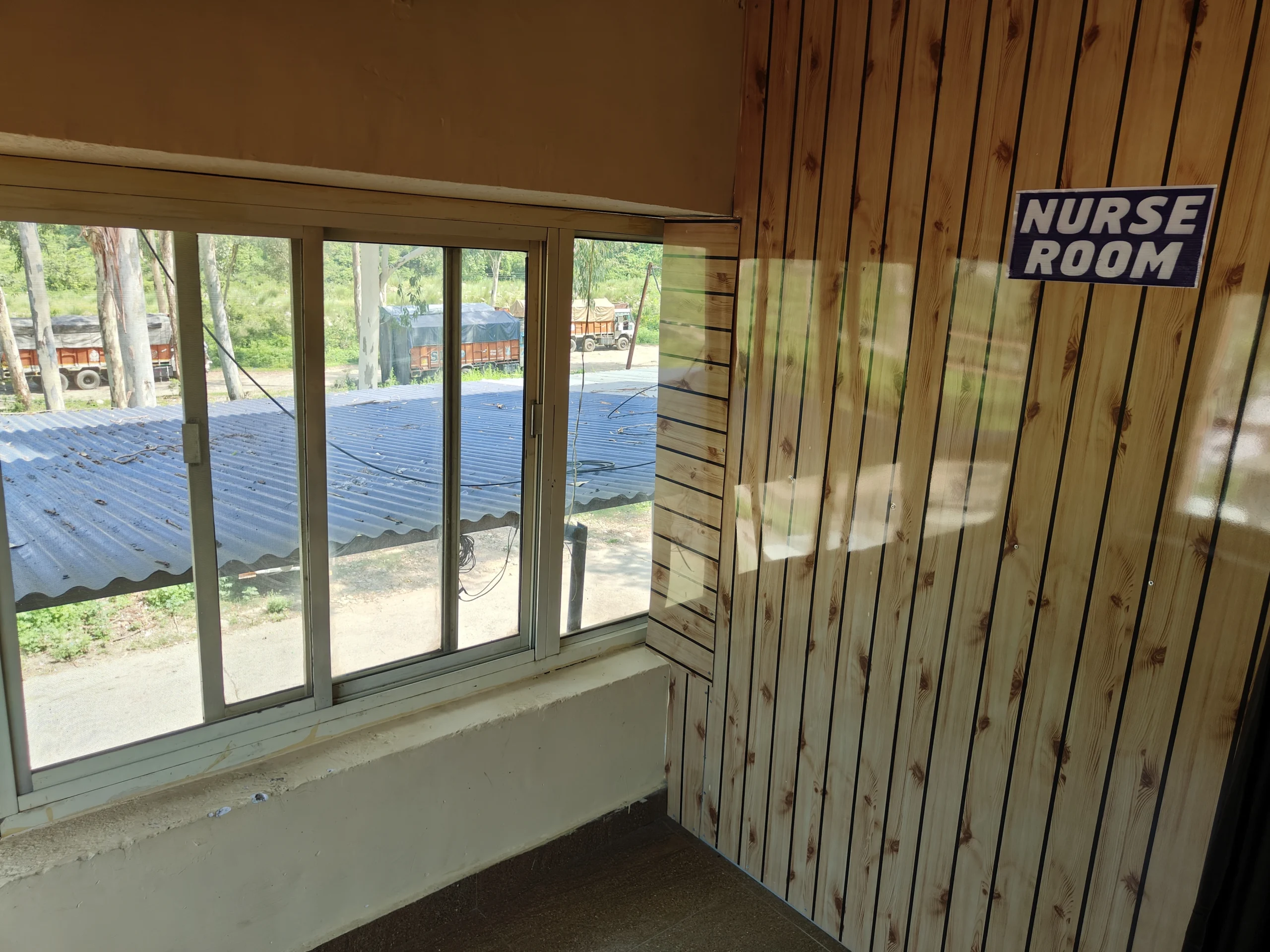
Withdrawal from smack, chitta, sharab, goliyan or street buprenorphine handled with the right medication, vitals monitored on a schedule and nursing cover through the night. Where there has been injecting, screening happens here rather than later. Worth reading the chitta withdrawal timeline and prescription drug detox before the admission.
Psychiatric and psychological therapy
Individual sessions and CBT with our consultant psychiatrist and psychologist, aimed at the depression, anxiety, anger or trauma that is almost always sitting underneath the nasha and that nobody has treated yet.
12-step programme and group therapy
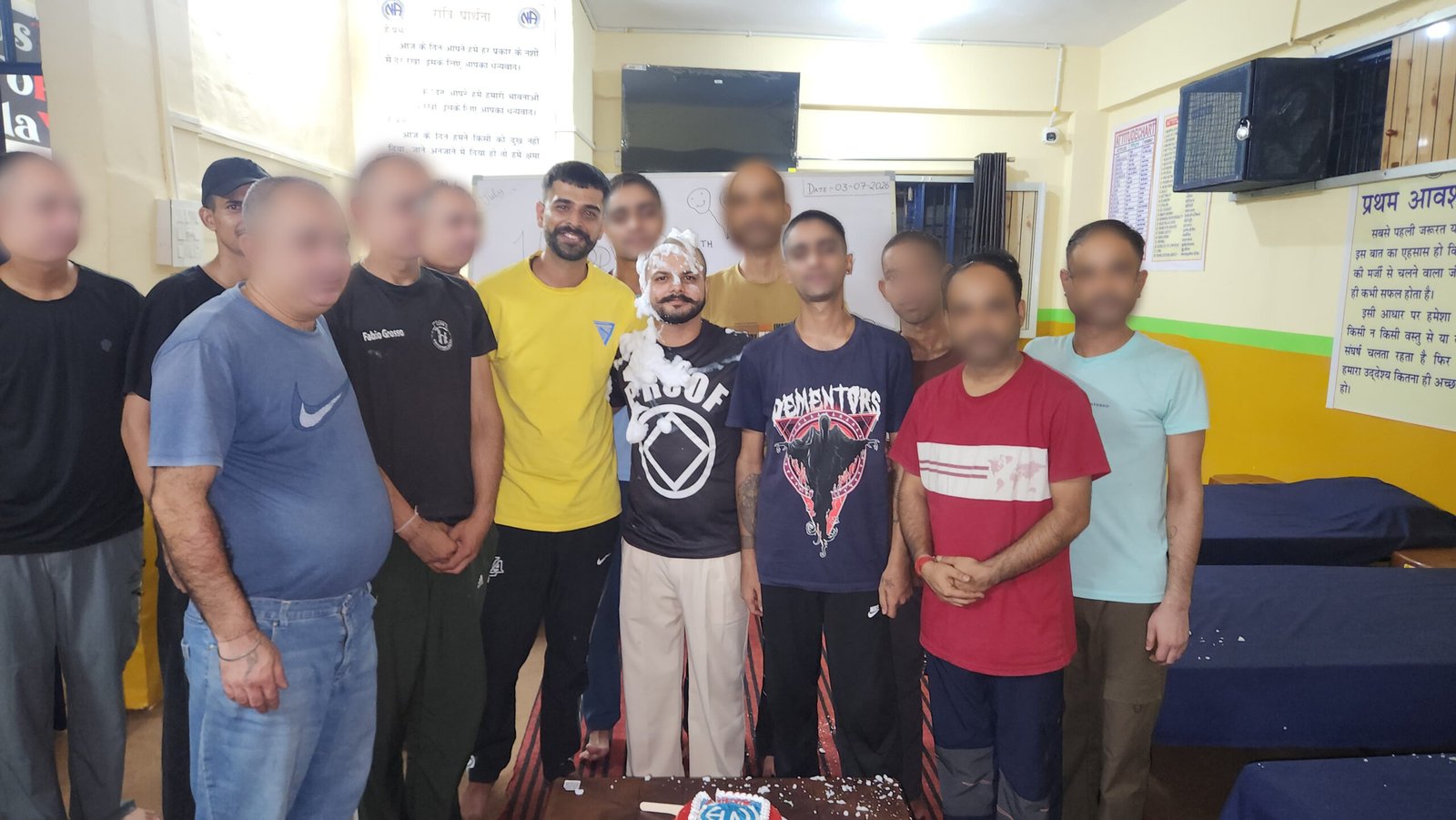
A meeting every single day, which is where men stop managing their families' feelings and start being honest in front of people who cannot be fooled. Asked afterwards what shifted, most residents name this room rather than the pharmacy.
Yoga, meditation and fitness
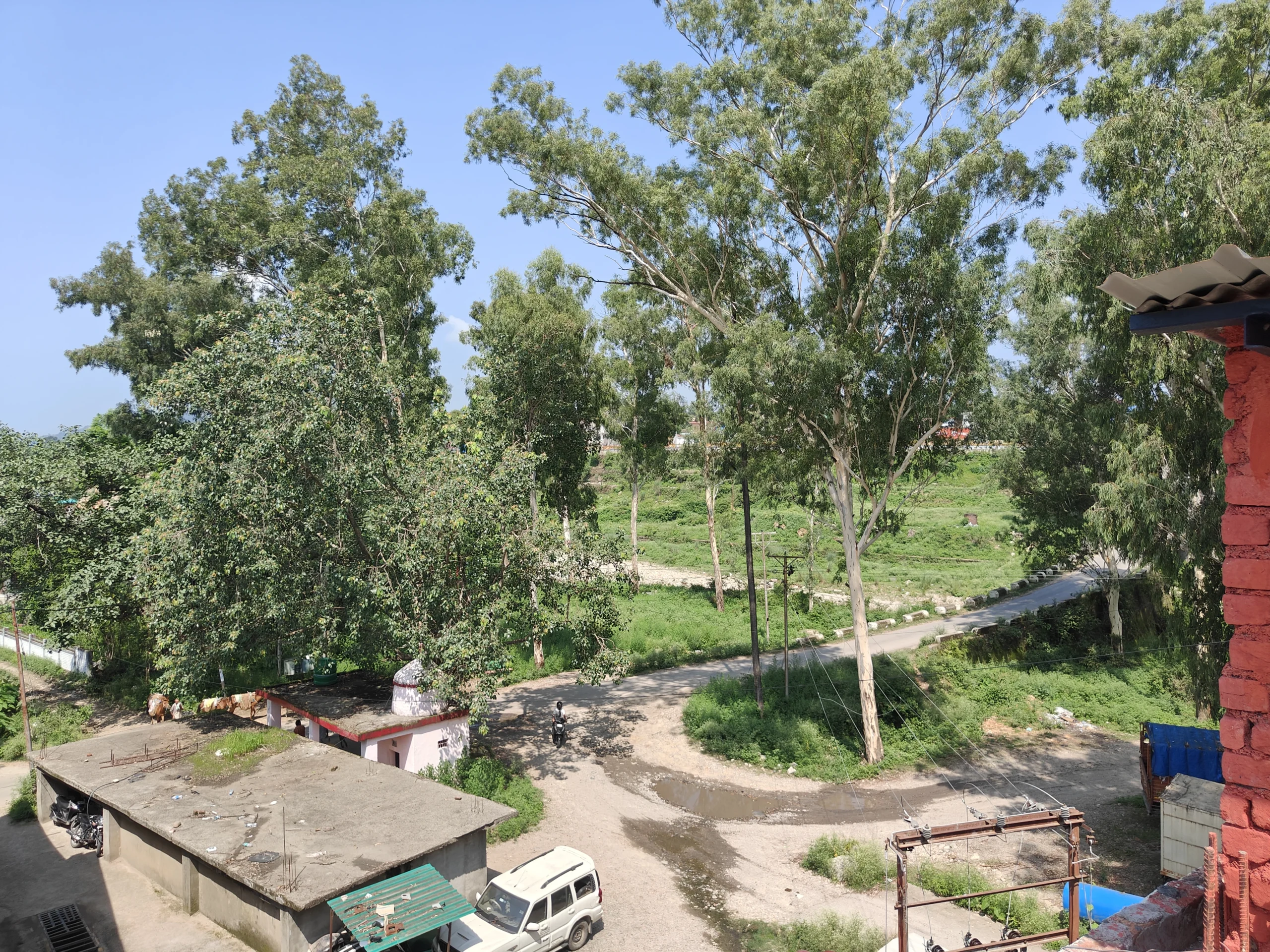
The morning opens with yoga and breathwork in the open air with the Dhauladhar in front of it. For a man who has spent years in Delhi traffic and Delhi air, the first fortnight of mountain mornings does more than the timetable suggests.
Family counselling
Parents, wives and brothers learn what dependence actually is, why trust returns in stages, and how to support him without the small payments that have been funding the nasha. For families using a nasha mukti kendra in Delhi from a distance, these run on the phone and on video between visits. In Hindi: भर्ती कराने से पहले.
Relapse prevention
Before discharge he writes the plan himself: his triggers, his early warning signs, the three people he rings, and what his first thirty days back in Delhi look like hour by hour, including which numbers come off the phone, which apps come off it, and what he does about the two friends he used with.
Aftercare and follow-up
Nobody's file closes on the day they leave. Scheduled follow-up calls, review check-ins, continued guidance for the family through the fragile first months, and a helpline that stays open to him and to you at no further charge.
Billing is monthly, so a 30 day programme is one month, 60 days is two and 90 days is three, with no package price and nothing held back. Said plainly: thirty days is enough to get him off the substance, eating, sleeping and physically steady again, which is a real gain and is sometimes the limit of what a household can arrange. What thirty days will not generally do is reverse four years on smack or two decades on sharab, and that is why the 90 day programme exists. We have written separately on what a short detox admission can and cannot achieve, and a nasha mukti kendra in Delhi that lets a man walk out after ten days is not doing him a kindness.
Life here
A day at the centre
At any good nasha mukti kendra in Delhi the timetable itself is therapeutic. Nothing in it is allowed to drift, because craving fills whatever gaps you leave open. Any nasha mukti kendra in Delhi or rehab centre in Delhi you are considering should hand you its timetable, hour by hour, before you admit him.

Morning
Early wake up, yoga and meditation on the lawn, breakfast, then group therapy and one to one counselling, with the doctor's round and medication at fixed times.
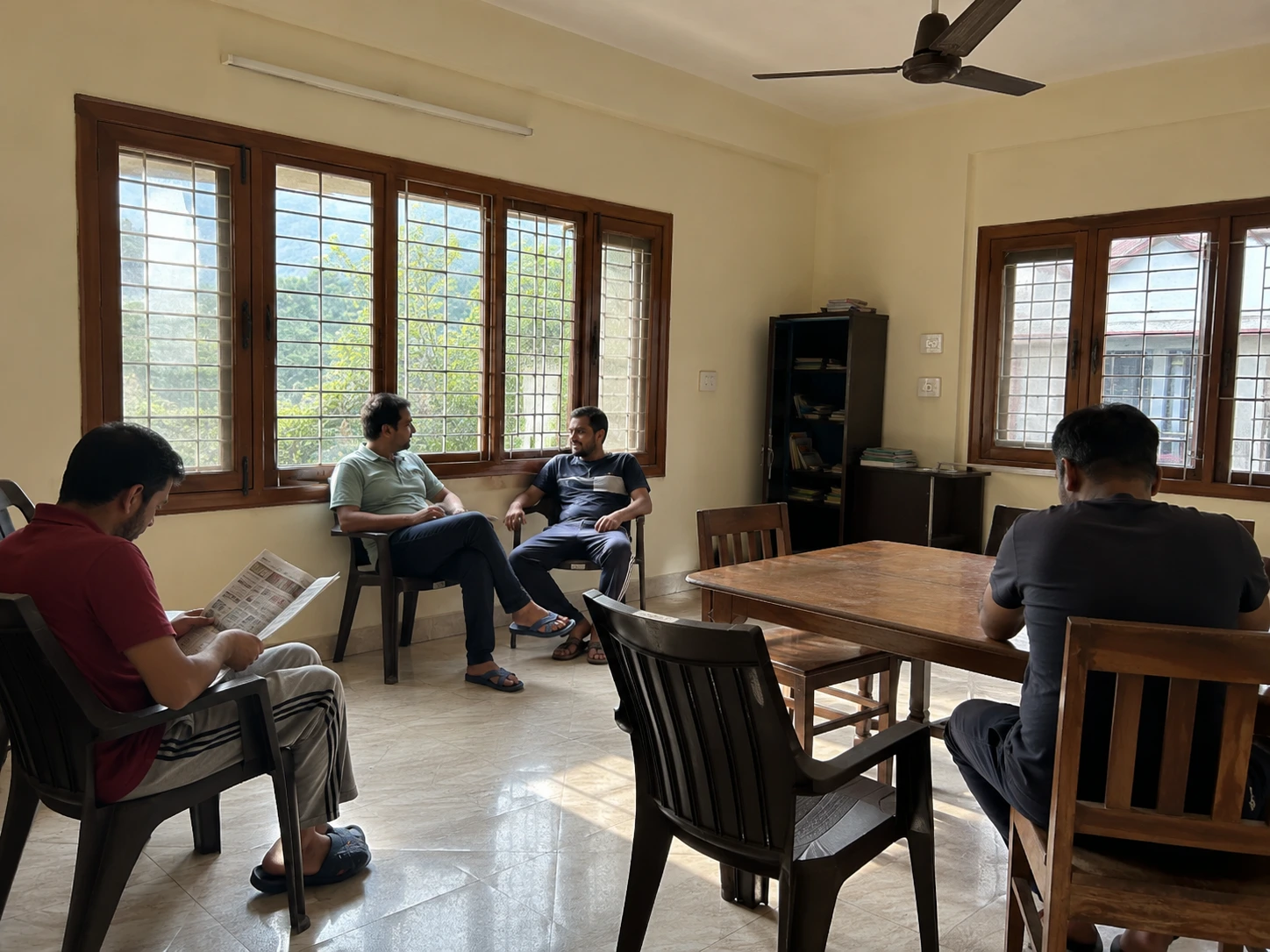
Afternoon
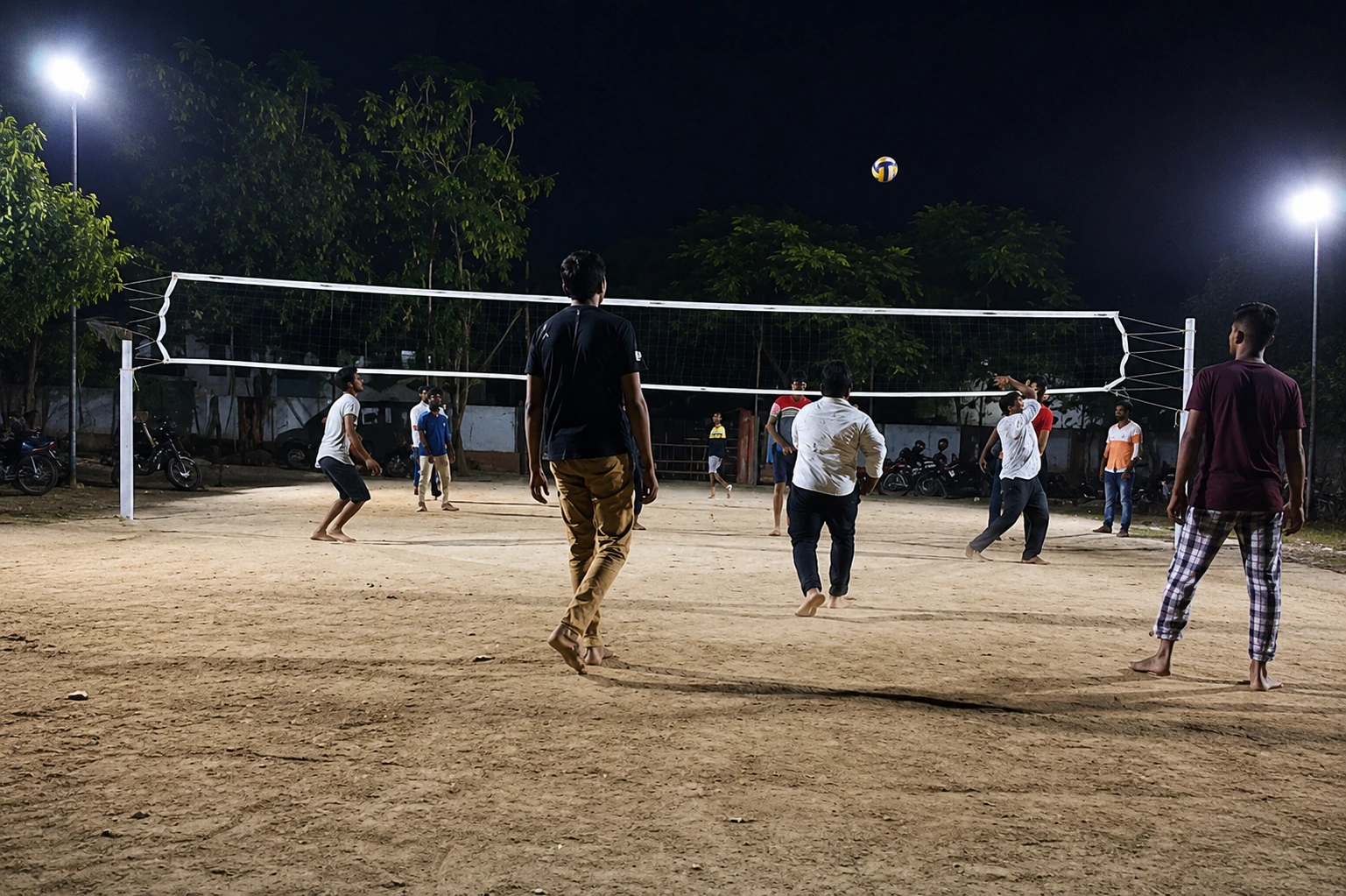
Rest, reading, vocational and skill work, fitness and games. The psychiatrist's reviews and booked family calls fall here, and men admitted that morning begin to find their feet.

Evening
Sport, a 12 step meeting, reflection and a written daily log, with fixed meal and sleep times. The same lights-out hour seven nights a week, with no exception made for Sunday.
Admission
Admission from Delhi: first day, visits and calls
These are the six questions every family asks a nasha mukti kendra in Delhi or de-addiction centre in Delhi on the first call, answered plainly so you know what you are walking into.
When he refuses help
A man saying no is the illness talking, and it predicts nothing about whether a nasha mukti kendra in Delhi would work for him. Nearly everyone who has completed the programme here refused at first. Our counsellors will rehearse the conversation with you and help you stop the small payments that quietly keep the nasha funded. Our guide on helping someone who refuses to go to rehab sets out what works and what backfires. We will also explain plainly what supported admission under the Mental Healthcare Act 2017 does and does not permit, rather than offering to send men to collect him.
What to bring
His Aadhaar or any government photo ID, a photo ID for whoever signs the admission papers, and every strip, bottle and prescription you can find, even the ones that look legitimate. Bring any old discharge summaries, IHBAS or hospital papers or test reports. Clothes for the season, and warm ones for the hills from October. Mention fits, liver disease, TB, hepatitis, HIV, diabetes, heart trouble or psychiatric medicine at the assessment.
The first day and first week
Medical and psychiatric assessment, vitals, a written plan, and detox beginning the same day where it is needed. Expect the opening week to be the worst of it: no proper sleep, aching limbs, a short fuse and constant requests to be taken home. There is nursing cover on every shift and the doctor goes through each case once a day. Most men find the routine somewhere in the second week.
Visits and phone calls
Both are written into the nasha mukti kendra in Delhi treatment plan, usually from the point where the worst of stabilisation is behind him. Phone him mid-withdrawal and the conversation becomes pleading from him and negotiating from you, and the week of progress it undoes has to be made again. For Delhi families the family counselling runs on video between visits, so you are not travelling every fortnight to take part.
Food and daily care
Simple, fresh, nutritious vegetarian food from our own kitchen on a fixed timetable, because years of smack, tablets or sharab leave a body badly depleted. The B Caring and A Caring plans carry an upgraded diet. Where diabetes or liver disease requires something specific, the kitchen follows the doctor's written instruction.
After discharge, and if he slips
He leaves our nasha mukti kendra in Delhi with a written relapse prevention plan and scheduled follow-ups, and we work through how he returns to a Delhi job, a Delhi commute and a Delhi phone without returning to the supply. If he slips, tell us early. Caught within days, a slip is a conversation and a change to the plan. Concealed for a month, it is usually another admission.
Fees and accommodation
Nasha mukti kendra fees for Delhi families, stated in full
The clinical treatment at our nasha mukti kendra in Delhi is identical in every plan. The same doctors, the same therapy sessions, the same daily routine and the same round the clock nursing apply to every man here regardless of what his family pays. What changes between plans is where he sleeps and what he eats, and nothing else.
Shared Residential Care
A place in our shared residential quarters with meals from the trust kitchen. Medical detox, doctor and psychiatrist reviews, individual counselling, group therapy, the 12 step programme, yoga, fitness, family counselling and every activity at the centre are all inside this figure.
Deluxe room, twin sharing
A deluxe room shared with one other resident, with an upgraded diet. Quieter, with room to rest properly between sessions. The clinical programme is exactly the same.
Private room, single occupancy
A private room for one with an upgraded diet. The most personal space we offer, and the plan Delhi professionals most often choose when discretion weighs as heavily as the treatment itself.
Medically supervised detox
Charged once, whichever plan you choose. It covers detox medication, monitoring of vitals and round the clock nursing through withdrawal under our psychiatrist's supervision. Nothing else is ever added to the monthly figure, and you hear about this one before you leave home.
Every plan includes
- Accommodation and all meals
- All prescribed medication
- Doctor and psychiatrist reviews
- Individual counselling and group therapy
- Yoga, fitness and every activity at the centre
- Family counselling and aftercare follow-ups
Why the figure is what it is
Because Eshan Charitable Trust is a registered charitable trust with no profitability model. Nobody owns this to profit from it and no investor is waiting on a return, so the price is assembled from what the month actually costs: the bed, three meals a day, the nursing shifts that carry him through withdrawal, and the logged hours our doctor, psychiatrist, psychologist and counsellors put into his case. There is no commercial mark-up sitting on top of any of it.
It matters more for a Delhi family than almost anywhere, because the gap in this market is so wide. The government route costs nothing and we will send you there when it fits. At the other end, private and luxury residential care in and around Delhi is routinely quoted in lakhs per month. For a household that has already watched an outpatient attempt fail and cannot reach those rates, there has historically been very little in between. We are not claiming to be the least expensive option available to you. What we will say is that among registered residential centres with a psychiatrist on the roll, medically supervised detox, a 30, 60 or 90 day programme, family counselling and aftercare all inside one monthly figure, a nasha mukti kendra in Delhi terms at Rs 12,500 a month sits in a different order of cost, and that is deliberate.
Where money is what is stopping you, raise it on the first call to any nasha mukti kendra in Delhi instead of quietly deciding not to ring. We have written openly about what rehab actually costs across the region, about the most affordable options available, and about where health insurance and Ayushman Bharat do and do not help. Hindi readers may prefer our note on सबसे सस्ता नशा मुक्ति केंद्र and what that phrase should and should not mean.
If something falls outside the plan, a referral to an outside hospital, a specialist test, transport, the family is consulted before a rupee of it is spent. Nothing is added after admission.
Speak to admissions about fees: +91 62304 15581Free and government care
Delhi's free and government options, honestly listed
Delhi has more public de-addiction provision than almost any Indian city, and if it fits your situation you should use it and keep your money. A nasha mukti kendra in Delhi that pretends the public system does not exist is selling you something, and a de-addiction centre in Delhi that calls the free route useless is selling you harder. Here is what actually exists, taken from the Delhi government's own published list.
Government hospitals with beds
IHBAS at Dilshad Garden (40 beds), Sahyog Detox Centre at Sewa Kutir run by the WCD Department (50), RML Hospital (30), Deep Chand Bandhu Hospital at Ashok Vihar (30), and smaller units at LBS Khichripur, GB Pant at Delhi Gate, Dr B.R. Ambedkar Hospital Rohini and Pt. Madan Mohan Malaviya Hospital Malviya Nagar. Safdarjung also runs a service. The NDDTC run by AIIMS sits just outside the city at Ghaziabad.
Eleven government-aided centres
Run by NGOs under the National Action Plan for Drug Demand Reduction: SPYM at Vasant Kunj, Dakshinpuri, Daryaganj and Kotla Mubarakpur; Manav Paropkari Sanstha at Khanpur and Mahipalpur; Turning Point Foundation at Alipur; Samaj Sewa Sangh at Dilshad Colony; Muskan Foundation at Amberhai in Dwarka; and Bhartiya Parivardhan Sanstha at Nand Nagri. Between them, 195 beds.
Helplines and the legal route
The national de-addiction helpline is 14446, Tele MANAS is 14416 and the MANAS helpline is 1933. See also Nasha Mukt Bharat Abhiyaan and the Delhi Department of Social Welfare. Where a consumption case is pending, ask a lawyer about Section 64A of the NDPS Act before anything else is decided.
Where the government route works
It works, and costs nothing, when a man wants to stop, is still functioning, and can attend a clinic and come back, and no honest nasha mukti kendra in Delhi will tell you otherwise. The clinical standard at IHBAS or AIIMS NDDTC is as good as anything money buys in this city, and anybody who tells you otherwise is selling. If that describes your son or your husband, start there, ahead of every private number on your list, ours included. Our general comparison of government versus private de-addiction care goes through the trade-off properly, and our list of government nasha mukti kendras covers the hill states.
And where it does not
It struggles at exactly one point, and the arithmetic at the top of this page is why. Around 365 government beds in a city of two crore people means that for an adult man who needs a long residential stay, the honest answer is often a wait. The window in which a man agrees to go is usually a single morning. When an outpatient attempt has been tried twice and has not held, when he cannot get through a clean week inside his own routine, or when there is untreated psychiatric illness underneath, a residential bed stops being optional, and the question becomes which nasha mukti kendra in Delhi actually has one available this week.
Who will be with him
The people your son or husband will actually meet
You are handing somebody you love to strangers at a nasha mukti kendra in Delhi you met a week ago. A staff list with names, qualifications and a council registration number is the single most useful thing a nasha mukti kendra in Delhi can put in front of you, far more useful than a photograph of a building. Every hour of every person below sits inside the monthly fee.

Dr. Devasheesh Sharma
Consultant Psychiatrist
MBBS, DNB (Psychiatry)
HPMC Reg. No. 5263
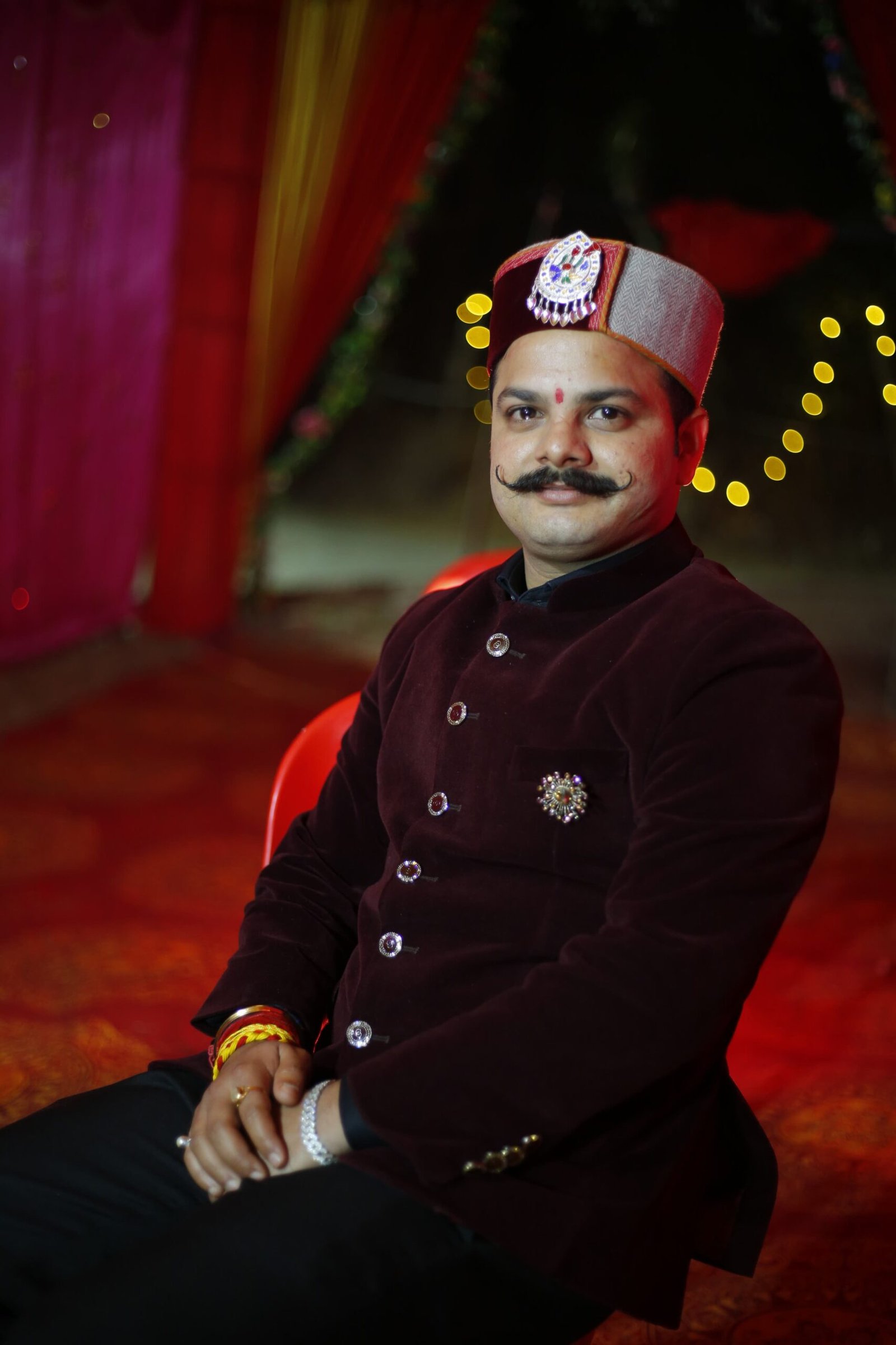
Eshan Pathania
Founder & Managing Trustee
Five years in recovery himself, and in the building every day
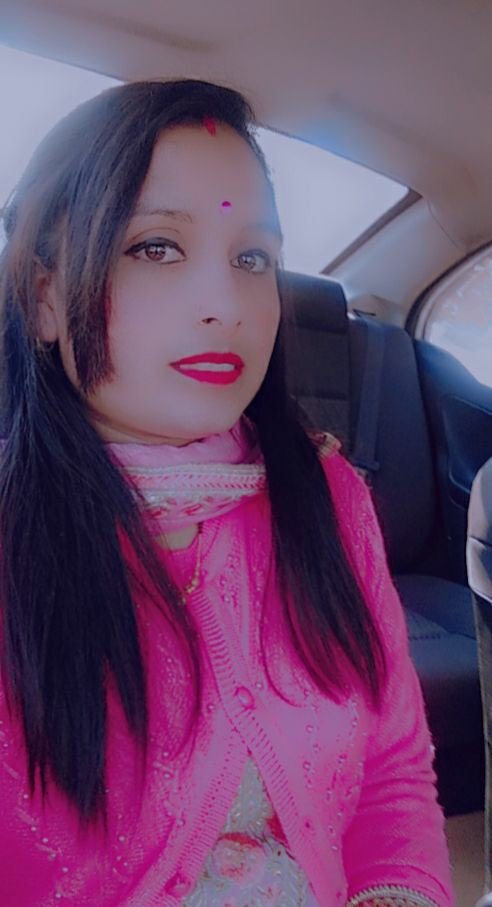
Shivani Rana
MSW Counsellor
Individual counselling and family support
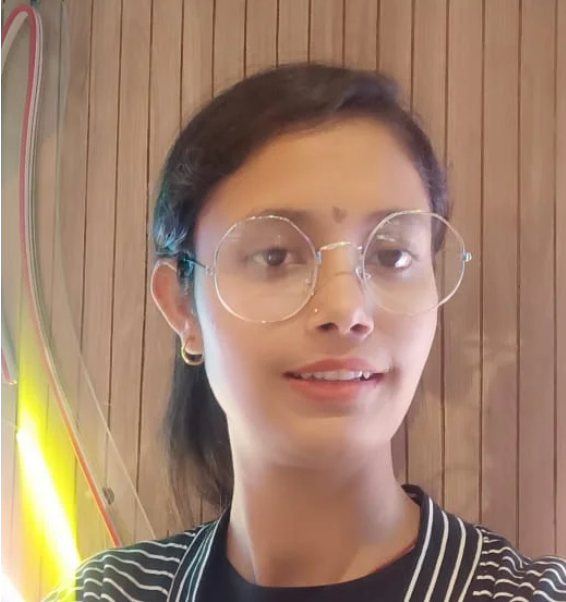
Vanshika
Psychologist
Group therapy and relapse prevention
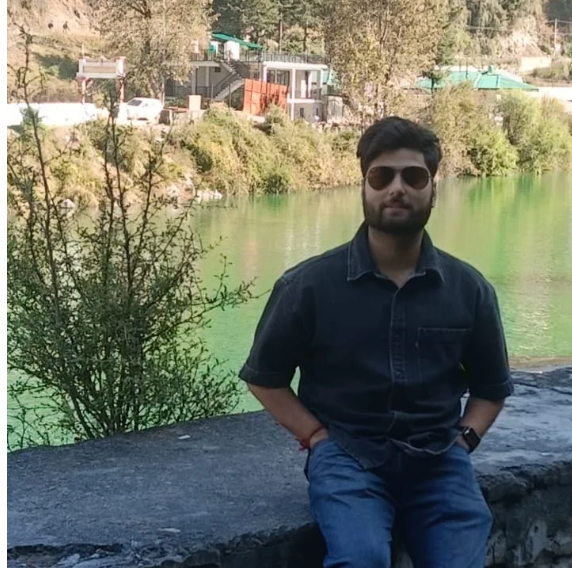
Rakshit Sharma
D. Pharma
Medication management and medical support
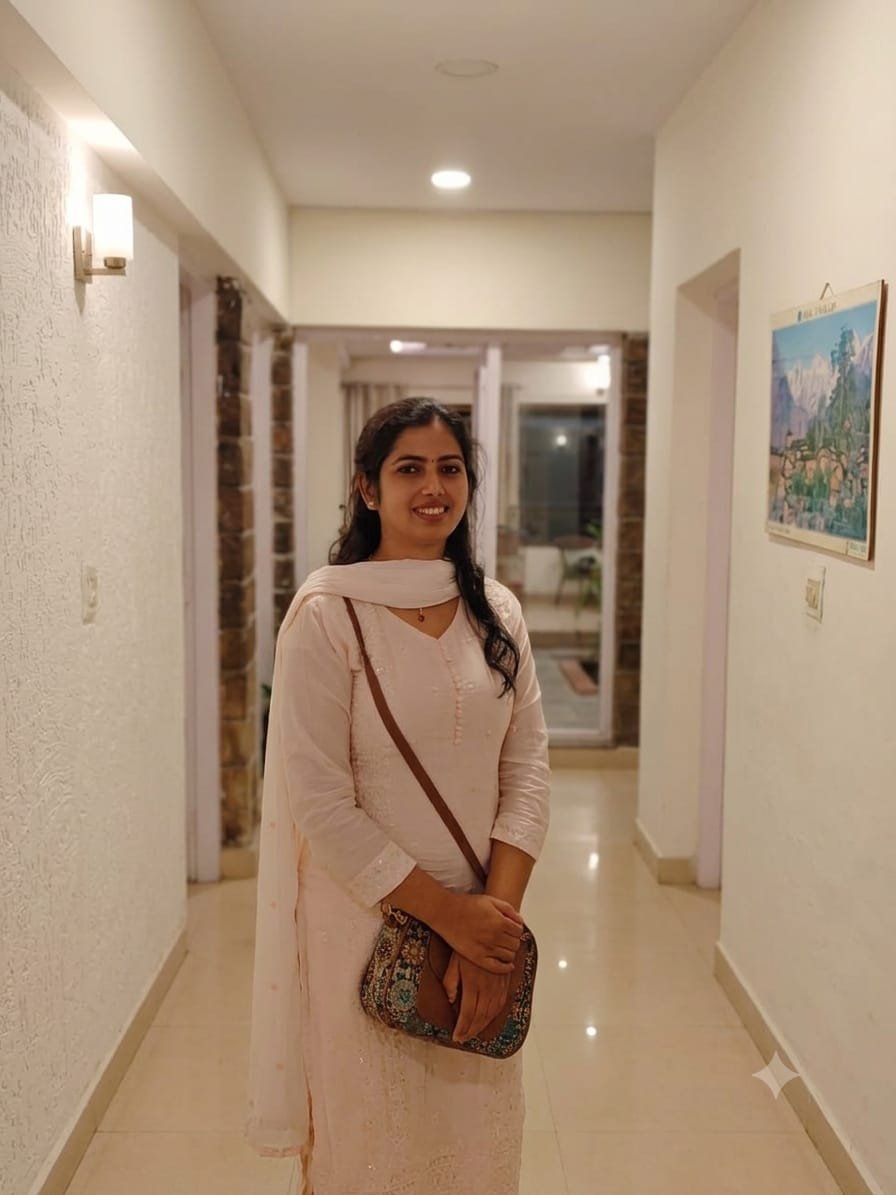
Counsellor
MSW Counsellor
12 step programme and emotional support
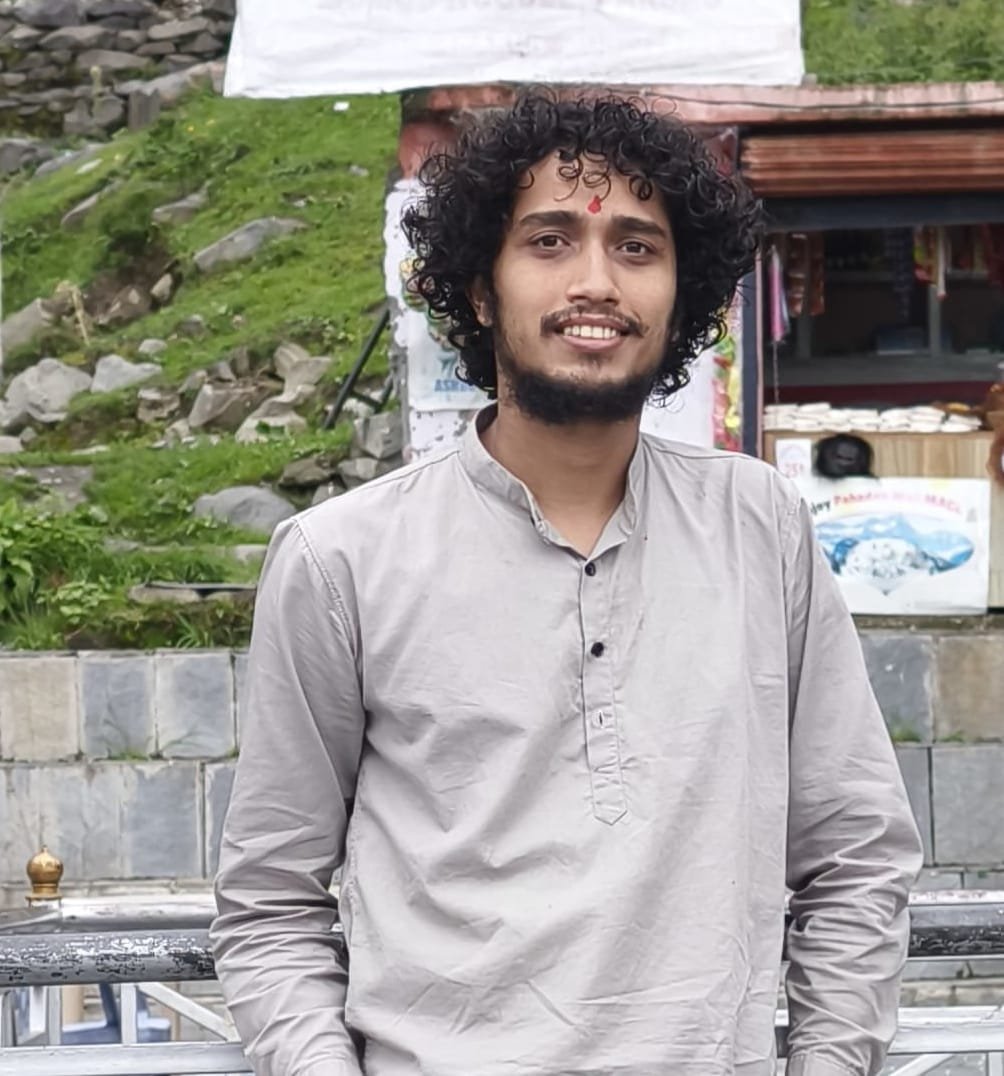
Abhishek
Yoga & Wellness
Daily morning practice and breathwork
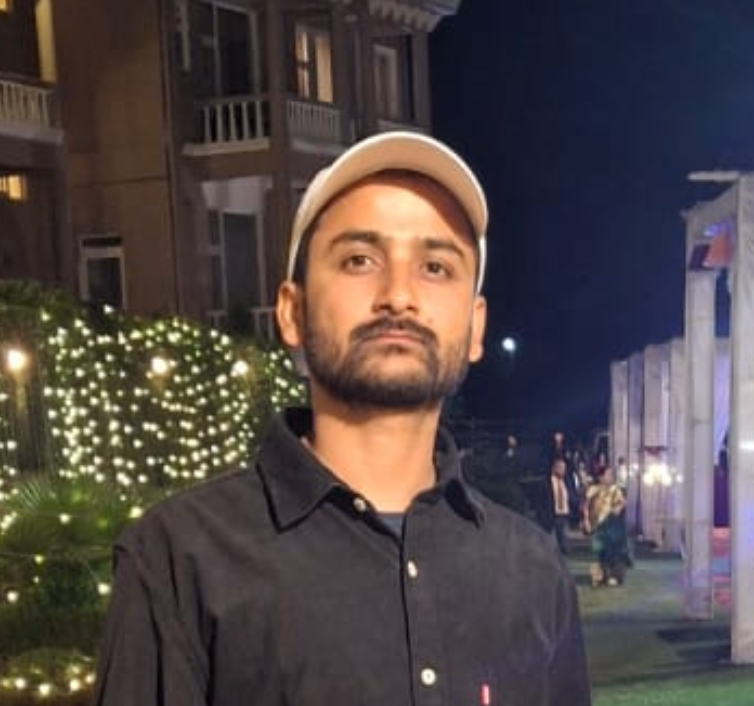
Pankaj Guleria
Vocational Trainer
Skill development and daily vocational work

Nursing team
Round the clock care
Awake on every shift, including through the night
Kitchen & housekeeping
Daily living
Three fresh meals a day and a clean building
Ask any nasha mukti kendra in Delhi you ring for the same list, with the psychiatrist's council registration number, and ask who is awake on site at three in the morning. It is a short question, and the answer tells you most of what you need to know. If the person on the phone cannot name a doctor, you are not speaking to a treatment facility.
In their own words
Men who finished the programme
The question underneath every first call to a nasha mukti kendra in Delhi is whether any of this works at all, after everything already tried at home. We do not publish recovery percentages, because nobody who publishes them can support them. These three are the most honest answer we can give.
I had written myself off long before I reached this nasha mukti kendra. Nobody shouted at me and nobody locked me in a room. They treated me like a man worth saving, and I walked out of here with my life back in my own hands.
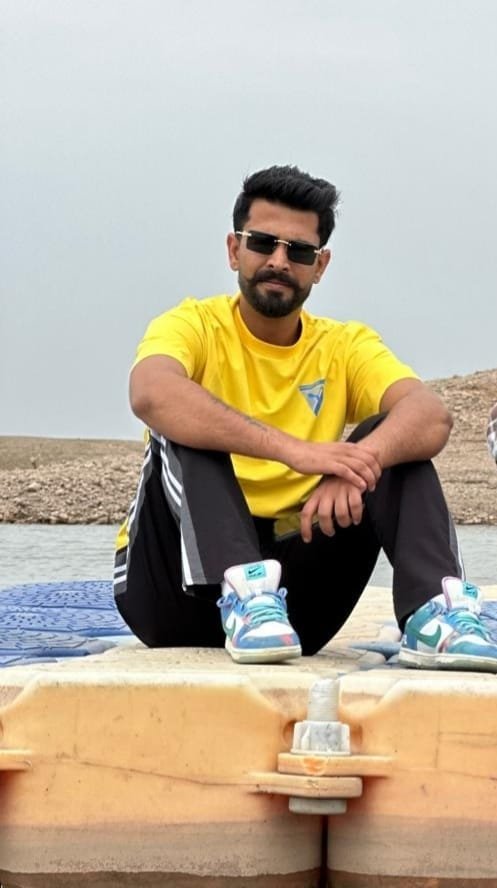 DinkarCompleted the 90-day programme
This is real medical care, not punishment, and that is the whole difference between here and the places I had been before. The counselling made me face things I had been running from for years. I left with a plan written down, and I still follow it every morning.
 FarhanCompleted the 60-day programme
Yoga at six with the mountains in front of us, the group meetings, and staff who would not give up on me even when I tried to make them. Piece by piece this de-addiction programme put me back together, and my family has me again.
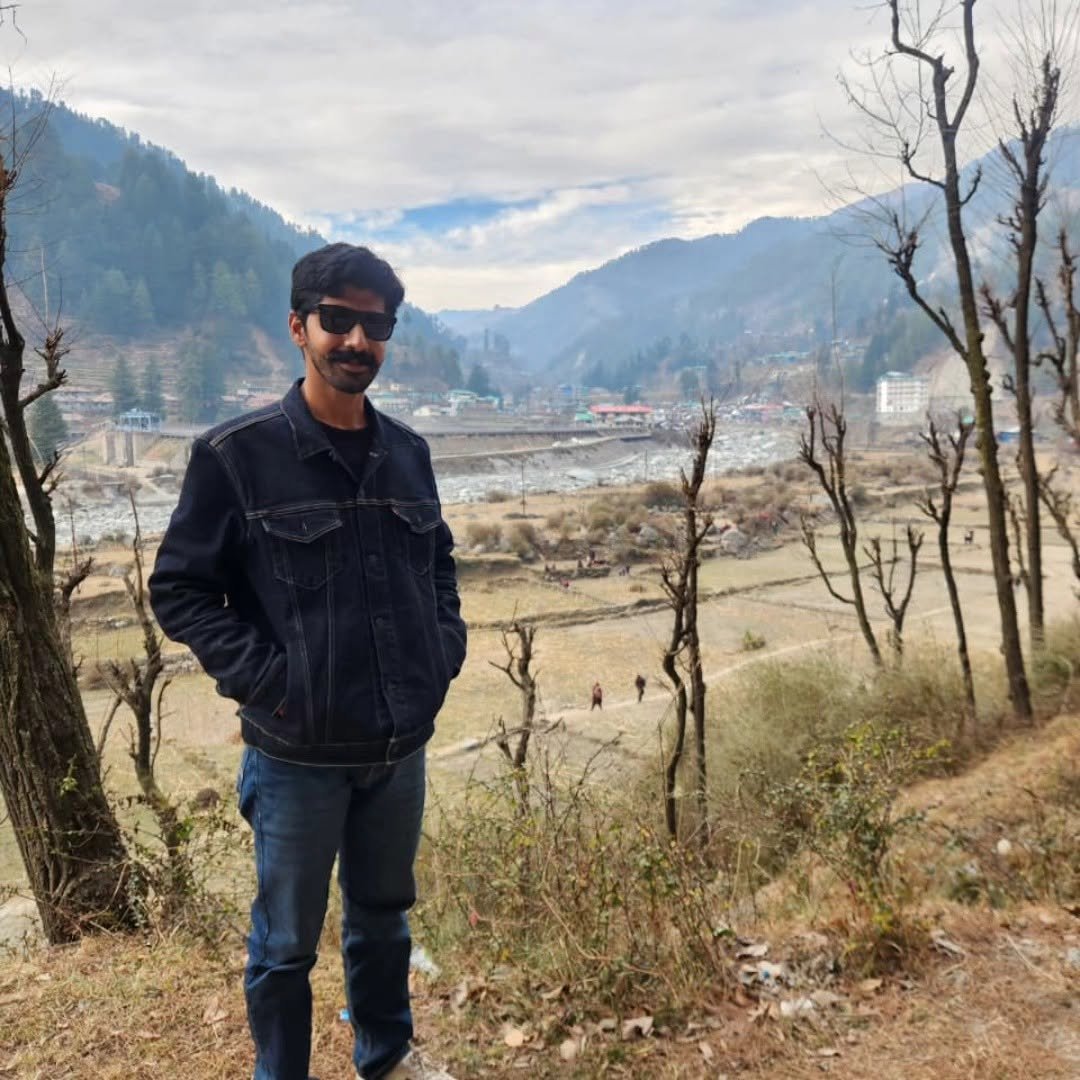 AyushCompleted the 90-day programme
No resident's town, colony or employer is ever named here, and no figure is attached to any of it. Every man above completed a 30, 60 or 90 day programme with us. If you want to speak to a family who has been through this before you commit, say so on the call and we will ask one whether they are willing.
Getting here from Delhi
One phone call, then one journey
Admission to our nasha mukti kendra in Delhi is arranged on the phone before anybody travels, which matters more for a Delhi family than for anyone else, because you are the ones most likely to be ringing six numbers in six states on the same afternoon, and most of them will not be a registered nasha mukti kendra in Delhi at all. Call +91 62304 15581. A counsellor takes the history, tells you plainly whether this needs a residential bed at all, and if it does, fixes your slot and tells you exactly what to bring. The assessment then starts the day you arrive rather than after a wait.
Men reach us from Delhi and the NCR by road and by rail, and families routinely travel up, settle him in and return the same week. Visits and family counselling are written into the treatment plan, and between visits the family sessions run on video, so you are not making the journey every fortnight in order to take part.
If he is in a state where he cannot be moved safely, say so on the call. There are situations where the right answer is a hospital emergency department in Delhi tonight rather than a journey to any nasha mukti kendra in Delhi tomorrow, and we will tell you that instead of taking a booking. For an overdose or a seizure, go to the nearest hospital first and ring us afterwards.
Open 24x7. Admissions any day of the week, including Sundays and public holidays.
Everywhere we serve, and everything we have written
Our full network and reading library
Delhi sits at the centre of this. The supply that reaches every nasha mukti kendra in Delhi comes down from the hills and across from Punjab, and the men who go home from here go back to all of it. Below is every area our nasha mukti kendra in Delhi takes admissions from and every guide we have written, including the local reporting from the districts the supply actually moves through.
Delhi, the NCR and the plains
- Eshan Charitable TrustOur main page: the trust, the registration and the whole programme
- Nasha mukti kendra in PunjabThe state page, and the belt most Delhi supply routes run through
- AmritsarChitta, the border districts and what admission looks like
- LudhianaIndustrial Punjab, migrant labour and tablet dependence
- JalandharRehab and de-addiction care in the Doaba belt
- Sharab treatment in JalandharAlcohol dependence specifically, and when detox is unsafe at home
- HoshiarpurThe district bordering Himachal, and the chitta route through it
- PathankotThe junction between Punjab, Jammu and the Kangra valley
- MehatpurThe Punjab border town and the Una industrial belt beside it
- JammuResidential care for families in the Jammu region
- UttarakhandThe other hill state Delhi families most often ask about
Where the centre sits: Kangra and Himachal
- Kangra districtThe district our residential centre is in, and the whole valley around it
- DharamshalaThe district headquarters and the Mcleodganj belt above it
- PalampurThe tea belt, and students across the Palampur sub-division
- BaijnathBaijnath, Paprola and the upper Kangra tehsils
- NurpurThe Punjab-facing end of Kangra, where the chitta route arrives
- JwalamukhiDehra, Jwalamukhi and the Dehra Gopipur belt
- UnaThe industrial corridor on the Punjab border
- HamirpurThe district with the highest coaching and student population
- BilaspurBilaspur, Ghumarwin and the Kiratpur highway belt
- MandiThe largest district by sub-divisions, and a serious chitta problem
- ChambaChamba, Dalhousie, Bharmour and the remotest tehsils
- PangiThe hardest valley in the state to reach a doctor from
- SirmaurNahan, Rajgarh and the lower Sirmaur belt
- Paonta SahibThe industrial town on the Haryana and Uttarakhand border
- KinnaurThe tribal district, apple money and heavy sharab use
- Lahaul and SpitiThe high valleys, and what winter closure means for treatment
- Substance use treatment in HimachalThe state-wide picture of what treatment exists and where
Chitta, smack and the supply belt
- चिट्टा नशा: पूरी गाइडHindi explainer on what chitta is and what it does to the body
- कांगड़ा में चिट्टा छोड़ने का इलाजTreatment and detox explained in Hindi, step by step
- Chitta among young men in MandiHow the habit spreads through a district's colleges and bus stands
- Overdose deaths in MandiWhat an overdose actually looks like, and what to do in the moment
- Overdose in ChambaWhy the cases cluster where treatment is furthest away
- Overdose in ShimlaA state capital's version of the same problem
- Anti-drug campaigns in Kullu and ManaliThe valley the hashish sold in Delhi actually comes from
- नशे के खिलाफ जन अभियानWhat a public campaign can and cannot do on its own
- Emergency addiction helpWhat counts as an emergency, and who to ring first
Sharab and alcohol dependence
- Alcohol addiction treatmentHow sharab dependence is actually treated, start to finish
- Alcohol detox treatmentWhy withdrawal from sharab can kill, and why it needs supervision
- Signs of alcoholismThe markers that separate heavy drinking from dependence
- Alcohol addiction recoveryWhat the first year after a residential stay really looks like
- Sharab treatment in MandiAlcohol dependence in a district where it outnumbers everything else
- Sharab treatment in Kullu and ManaliTourism, seasonal work and year-round drinking
- Alcohol rehabilitation in ChambaResidential treatment for long-term drinking
Goliyan, bhang and charas
- Goliyon ka nasha treatmentTablet dependence, and why it is the hardest kind to name at home
- Prescription drug addiction symptomsWhat to look for when the strip came from a chemist
- Prescription drug detoxTapering safely, and why stopping suddenly is dangerous
- Bhang addiction symptomsWhen daily cannabis use has stopped being recreational
- Bhang addiction treatmentTreating cannabis dependence, including the psychiatric side
- Bhang and charas detoxWhat withdrawal looks like, and how long it lasts
- Chitta detoxMedically supervised detox from smack and heroin
- Chitta withdrawal symptomsThe hour by hour timeline of the first week
Before you choose a centre
- The reality of nasha mukti kendrasWhat the unregistered end of this industry actually does
- Rehab centre or nasha mukti kendra?The two words mean different things, and the difference matters
- How to choose a rehabilitation centreThe checks to run before any money changes hands
- Government or private?An honest comparison, including where government care wins
- What rehab actually costsReal figures across the region, not a range to ring about
- The most affordable optionsWhere to look when money is the thing stopping you
- सबसे सस्ता नशा मुक्ति केंद्रWhat that phrase should and should not mean in Hindi
- Insurance and Ayushman BharatWhere they help with de-addiction treatment and where they do not
- The NDPS Act explainedIncluding Section 64A, and what voluntary treatment protects
Comparing centres, district by district
- Best rehabilitation centre in HimachalThe state-wide comparison, with what each district has
- Top 5 in ChambaWhat is actually available in the district
- Top 4 in KulluOptions in the valley, compared honestly
- Top 4 in ManaliIncluding which ones are registered
- Best rehabilitation centre in ChambaWhat to weigh in a district with very little provision
- Residential rehabilitation in ChambaWhat a residential stay involves and who needs one
- Rehabilitation centre in KulluTreatment options across the Kullu valley
- Options across Kullu and ManaliA side by side look at the whole valley
- Government centres in ShimlaThe free options in the state capital and how to use them
- Government centres in ManaliWhat the public system offers in the valley
For the family
- Warning signs to look forThe changes families notice first, and the ones they miss
- घर में कोई चिट्टा ले रहा है?How to be sure, and what to do next, in Hindi
- Signs of a chitta nasha addictPhysical and behavioural markers, described plainly
- When he refuses to goWhat works, what backfires, and what the law allows
- भर्ती कराने से पहलेWhat to ask and check before admitting anybody anywhere
- भर्ती से पहले: ज़रूरी बातेंThe documents, the questions and the costs, in Hindi
- What happens insideThe daily routine, hour by hour, with nothing hidden
- The psychology of addictionWhy willpower is the wrong frame for this illness
- चिट्टा कैसे छोड़ेंThe practical Hindi guide to stopping and staying stopped
- Yoga for stress and anxietyWhat the morning practice here is actually for
Treatment, and talking to us
- All treatment servicesEvery programme we run, with what each one covers
- Chitta nasha treatmentThe full residential pathway for smack and heroin dependence
- What a 20-day detox can doAnd, honestly, what it cannot
- Government nasha mukti kendrasThe free list, with how to actually get a bed
- SolanSolan district and the BBN pharmaceutical belt
- NalagarhThe Nalagarh and Ramshehar belt
- BaddiAsia's largest pharma hub, and what that means locally
- KasauliKasauli, Dharampur and the Parwanoo belt
- Frequently asked questionsThe questions families ask us most, answered in one place
- Contact usPhone, WhatsApp, email and the full address
Questions Delhi families actually ask
Nasha mukti kendra in Delhi: everything, answered plainly
Forty-one questions, taken from real first calls to our nasha mukti kendra in Delhi, from across the city and the NCR. If your question is not here, ring and ask it. Nobody will be put on hold and nobody will be sold anything.
Delhi, your district, and where to start
Is there a nasha mukti kendra in Delhi?
Yes, several, and you should know what each kind is before you ring any of them. Delhi has nine government hospitals running de-addiction services and eleven government-aided NGO centres holding 195 beds between them, which is genuine provision and costs nothing. It also has the busiest private rehab advertising market in India, in which some centres are excellent, many are unregistered, and a large number of the pages that rank are lead-generation sites that sell your phone number to whoever pays most. We are a registered charitable trust whose own trust deed is registered in Delhi, with 30, 60 and 90 day residential programmes for men at Rs 12,500 a month, taking admissions from every Delhi district and across the NCR. Our counsellors answer at any hour on +91 62304 15581, and if a government bed fits your situation better we will tell you so on that call. Judge us by the same checks you would apply to any other nasha mukti kendra in Delhi, and judge us before you pay anybody.
Where is your centre and where is the trust registered?
The trust is a Delhi-registered charitable trust: Eshan Charitable Trust, Regd. No. 2025/19/IV/123, Book No. IV, Volume 4067, executed at the office of the Sub-Registrar-I, Kashmere Gate, Delhi, dated 14 February 2025. You can verify that yourself at Kashmere Gate, which is more than most centres advertising to Delhi families can offer. The residential campus is at Near FCI Godown, Village Tanda Kholi, Ward No. 7, PO Kholi, Tehsil and District Kangra, Himachal Pradesh 176001, beside the government medical college at Tanda, under Provisional Registration Sr. No. 193 from the HP State Mental Health Authority. Admission is arranged on the phone first so you travel once, knowing exactly what happens when you arrive. A Delhi-registered trust running a registered residential building is a rarer combination in this market than it should be, so ask every nasha mukti kendra in Delhi you ring where its trust is registered and where its building is registered, because the two answers are not the same question.
Which areas of Delhi do you take admissions from?
All of them, and we mean all eleven districts rather than the three that advertise well. Central Delhi, New Delhi, North, North West, West, South West, South, South East, East, North East and Shahdara, down to the colony level: Karol Bagh, Paharganj, Daryaganj, Rohini, Pitampura, Jahangirpuri, Sultanpuri, Rajouri Garden, Janakpuri, Tilak Nagar, Uttam Nagar, Mohan Garden, Dwarka, Najafgarh, Palam, Vasant Kunj, Hauz Khas, Saket, Malviya Nagar, Mehrauli, Chhatarpur, Madangir, Sangam Vihar, Lajpat Nagar, Kalkaji, Okhla, Jamia Nagar, Badarpur, Laxmi Nagar, Mayur Vihar, Patparganj, Trilokpuri, Seelampur, Jafrabad, Gokulpuri, Nand Nagri, Bhajanpura, Karawal Nagar, Mustafabad, Dilshad Garden, Vivek Vihar, Seemapuri, Narela, Burari, Alipur, Bawana and everywhere in between. The full district by district list is further up this page. No district is treated as a lower priority, and no colony is told to ring a different nasha mukti kendra in Delhi because of where it sits on the map.
Do you take admissions from Noida, Gurgaon, Ghaziabad and Faridabad?
Yes, on identical terms, and from across the National Capital Region: Noida, Greater Noida, Ghaziabad, Indirapuram, Vaishali, Vasundhara, Sahibabad, Loni, Gurgaon, Manesar, Faridabad, Ballabgarh, Sonipat, Kundli, Bahadurgarh, Rewari, Palwal, Meerut and Baghpat. Delhi's drug market has never respected the border, and when the city came under enforcement pressure police themselves noted traffickers shifting stock across to Noida. One point worth knowing if you live on this side of the line: a registration certificate only covers the state that issued it. If a centre in Haryana or Uttar Pradesh is quoting you, ask which State Mental Health Authority issued its certificate and check that against the address on its letterhead. An NCR family gets the same assessment, the same bed and the same fee as a family inside the city, because a nasha mukti kendra in Delhi terms is useless if it stops at the border the supply never respected.
Are you the best nasha mukti kendra in Delhi?
Nobody can honestly answer that about themselves, and a centre that does should worry you. What we can do is give you the things that let you judge: a registration number you can verify, a psychiatrist named with his council registration, a fee stated in full with nothing added later, a residential programme that is not a fortnight in disguise, and a building you are welcome to walk into unannounced. Apply the same six checks from the section above to every centre on your list, ours included. If a government bed in Delhi fits your situation, that is the better answer and we will say so. The best nasha mukti kendra in Delhi terms, for your family, is the one that is registered, honest about money, and has a bed when he finally says yes. Ask the question the other way round: not which is the best nasha mukti kendra in Delhi, but which one can I verify, afford and get a bed at this week.
My son lives in a hostel or PG in Delhi. Is this for us?
This is one of the most common calls we take from Delhi, and often the hardest because nobody at home has seen a single day of it. Delhi University's North Campus is on the police hotspot list with students named as buyers, Mukherjee Nagar and Laxmi Nagar hold tens of thousands of young men in paying guest accommodation, and the first sign a family in another state gets is usually an attendance warning or a request for money that does not add up. If he is in a hostel, a PG or a rented room, you are not late by his standards; you are seeing it at the point most families do. Ring and give us the history, including the money. Our pages on the warning signs and what a chitta nasha addict looks like will tell you what to look for before you confront him. We take a great many hostel and PG cases, and they are among the strongest arguments for a residential nasha mukti kendra in Delhi families can reach quickly, because nothing in a shared room changes on its own.
Chitta, smack and injecting
My son is taking chitta in Delhi. What do I do first?
Make one phone call today and stop every rupee reaching him. Chitta, which is what smack and street heroin are called across north India, is physically addictive within weeks, and a man on it is not choosing this in any sense you would recognise. Do not try a detox at home and do not lock him in a room, because both fail and both make the next attempt harder. What he needs is a medically supervised detox at a registered nasha mukti kendra in Delhi followed by months of therapy, and what you need is to stop funding the habit while that is arranged. Read चिट्टा कैसे छोड़ें and घर में कोई चिट्टा ले रहा है, then ring +91 62304 15581. A counsellor will take the history and tell you honestly whether a residential bed is needed. A nasha mukti kendra in Delhi that tells you to try one more month at home with a man on chitta is not being kind to you, it is avoiding the work.
What does chitta withdrawal actually look like?
It begins within six to twelve hours of the last dose and peaks across the second and third day. Expect muscle and bone pain, cramps, vomiting, diarrhoea, a running nose, sweating alternating with chills, gooseflesh, no sleep at all, and a craving that is physically painful rather than merely psychological. Chitta withdrawal is rarely fatal in itself, which is exactly why families attempt it at home, and why most of those attempts collapse on the second night. With proper medication under a psychiatrist's supervision, the worst of it is manageable and nobody has to suffer through it to prove anything. The full timeline is on our chitta withdrawal symptoms page, and the medical side on chitta detox. Ask any nasha mukti kendra in Delhi to describe that first week hour by hour before you admit him; one that cannot has not thought about it.
He is injecting. There are syringes in the house.
Treat this as urgent rather than as another stage of the same problem. Police in North East Delhi and Shahdara have described exactly this: syringes alongside opioid tablets, and an intravenous cocktail of buprenorphine with pheniramine maleate that one DCP called dangerous and highly addictive. Injecting adds abscesses, collapsed veins, and the risk of hepatitis B, hepatitis C and HIV from shared needles. Tell us on the first call that he is injecting, because it changes the admission: screening for blood-borne infection happens on day one rather than at some later review, and the detox is written differently. Do not wait for him to agree to a test before you ring. Injecting cases are the most urgent admissions any nasha mukti kendra in Delhi handles, and they should never be put on a waiting list.
He only smokes smack, he does not inject. Is that less serious?
It avoids the needle risks, and that is a real difference, but it is not a milder dependence. The DCP for North East Delhi put it plainly: smack remains the common substance abused there, usually smoked using what users call a panni pipe. Smoked chitta reaches the brain fast, builds tolerance fast, and produces the same physical withdrawal. In practice, what smoking usually means is that he is earlier in the same progression rather than on a different road, and many men who inject began by smoking. The advantage of acting now is that his veins and his liver are still intact. The disadvantage of waiting is everything in the previous answer. Smoked or injected, it is the same drug and the same dependence, and it is treated on the same programme at this nasha mukti kendra in Delhi, at the same fee, with no surcharge for a harder case.
He orders on WhatsApp and it arrives by delivery. How do we cut the supply?
You will not cut it from the outside, and that is the hard truth of the Delhi model. The Crime Branch has busted an inter-state cartel supplying students through courier services, taking orders on WhatsApp, Instagram and Facebook, with payment by UPI. There is no corner to avoid and no dealer to be warned off, because the supply reaches him wherever he is and leaves no trace you can see. What you can do is cut the money: no cash, no UPI access, no cards, no quiet loans from an uncle, no small payments for petrol that are not for petrol. Then get him into an environment where the phone is not in his hand for a stretch of months. That separation, more than anything else, is what a residential programme actually buys you. This is the single biggest practical difference between a nasha mukti kendra in Delhi and one in a small town: here the supply is in his pocket rather than at a corner he has to walk to.
It is cocaine and MDMA, not chitta. Does that change the treatment?
It changes the detox and not the programme. Delhi Police have tied cocaine and MDMA specifically to Chhatarpur, Mohan Garden, Nawada and Uttam Nagar, and a single 48-hour drive recovered 159.8 g of cocaine and 101.1 g of MDMA across the city. Stimulant withdrawal does not look like opioid withdrawal: instead of physical agony you get a crash, heavy sleep, flat mood, days of exhaustion and a craving that returns in waves for weeks. What follows is the same residential structure, because the therapy, the group work and the relapse prevention are what hold either way. Families often arrive insisting this is only weekend use. Count the weekends, honestly, across the last six months, then ring us. Stimulant cases are treated on the same 30, 60 or 90 day programme as every other admission at this nasha mukti kendra in Delhi, with no separate fee and no separate wing.
He only smokes ganja or charas. Is that really an addiction?
Daily cannabis can absolutely become a dependence, and Delhi's seizure figures tell you how much of it is around: 237.46 kg of ganja and 5.18 kg of hydroponic cannabis in one weekend, against barely a kilogram of heroin. The hashish sold here as Malana cream comes down from the Parvati valley in Kullu. Where it needs treatment is when the day is built around it, when stopping brings irritability, no sleep and no appetite, or when there is paranoia, panic or a psychotic episode underneath it, which we see in young men in this city more often than families expect. See bhang addiction symptoms, bhang and charas detox and bhang addiction treatment. If it is genuinely occasional and nothing else is going on, you do not need us, and we will say so. Where there is psychosis or panic underneath the cannabis, that needs a psychiatrist rather than a lecture, and it is treated inside the programme at this nasha mukti kendra in Delhi.
Sharab and alcohol
Sharab chhudane ka ilaj: what works for alcohol in Delhi?
Sharab is the largest substance problem in this city by a very long way, and the quietest. The national AIIMS survey found 14.6 per cent of Indians aged 10 to 75 currently using alcohol, around 16 crore people, with 5.7 crore in harmful or dependent use. Delhi's own enforcement figures include 398 excise cases and 53,448 quarters of illicit liquor seized in a single drive. The treatment at a residential nasha mukti kendra in Delhi is a medically supervised detox, then psychiatric assessment because depression or anxiety is almost always underneath it, then months of therapy and the 12 step programme, then family counselling and a written relapse plan. Our pages on alcohol addiction treatment and alcohol detox set out the whole pathway. Sharab is the reason most families ring a nasha mukti kendra in Delhi, even though chitta gets all the headlines, and it is the one we are asked about least publicly.
Is stopping sharab suddenly dangerous?
It can kill, and this is the single most important thing on this page. Alcohol withdrawal in a long-term heavy drinker can produce seizures and delirium tremens, and untreated delirium tremens carries a real mortality rate. Chitta withdrawal is agony but rarely fatal; sharab withdrawal is the one that puts men in intensive care. So if he has been drinking heavily every day for years, do not let anybody, including him, decide to stop cold at home on a Sunday. If he is shaking in the morning, sweating, retching, seeing or hearing things, or has ever had a fit while cutting down, he needs medical supervision rather than resolve. In Delhi that can mean a hospital emergency department tonight. Ring us and we will tell you plainly which it is. If there is any doubt at all, ring a doctor or a de-addiction centre in Delhi before he stops rather than after something has gone wrong.
He only drinks at weekends and with friends.
Then look at what the weekends cost rather than at how many there are. Dependence is not measured in units; it is measured in whether he can stop when he intends to, whether the amount has crept up, whether he drinks to steady himself rather than to enjoy it, whether money and promises are going missing, and whether the week is arranged around the weekend. A man can drink twice a week in Greater Kailash and be far more dependent than somebody drinking nightly in a village. Our page on the signs of alcoholism goes through this properly. The weekend framing is the most common thing a Delhi family is told, and it is usually the last defence before a man admits the rest. Count the money as well as the weekends, because that is usually the number that settles the argument for good.
His liver is already damaged. Is it too late?
No, and that is not consolation, it is physiology. A liver that has been damaged but not yet cirrhotic recovers substantially once the drinking stops, and even where there is established disease, stopping changes the outlook more than any medicine will. Bring every report, scan and prescription you have to the assessment, and tell us about jaundice, swelling in the abdomen or legs, vomiting blood, or any previous admission. The detox is written around the liver when the liver is the problem, the kitchen follows the doctor's written instruction, and if he needs hospital care first rather than a residential bed, we will say so instead of taking a booking. What recovery actually looks like covers the first year. Bring the reports, because a nasha mukti kendra in Delhi that admits a man with advanced liver disease without reading his papers is gambling with him.
Will he be able to drink normally afterwards?
Almost certainly not, and anybody promising you controlled drinking after dependence is selling hope rather than treatment. For a man whose drinking has reached the point of a residential admission, the realistic goal is abstinence, and the honest reason is that tolerance does not reset. Men who try to drink moderately after two years sober are usually back at their old quantity within weeks, because the brain picks up where it left off rather than where it started. This is one of the harder conversations in family counselling, particularly in a city where business and social life run on a drink in hand, and it is better had before discharge than after the first wedding. This is worth settling in family counselling rather than discovering at a wedding six months after discharge.
Goliyan and prescription tablets
He is taking tablets from the chemist. Is that the same thing?
Medically, yes, and in Delhi this is probably the most under-recognised dependence of all. Those 2,640 buprenorphine tablets and 287 pheniramine injections recovered in a single police drive did not come out of a field; they came off a counter. A city this size has a chemist on every corner and an enormous informal market in strips. Goliyon ka nasha produces real physical dependence, a withdrawal that can include seizures where benzodiazepines are involved, and a taper that must be managed rather than stopped abruptly. See goliyon ka nasha treatment, the symptoms and prescription drug detox. Goliyon ka nasha is the most under-treated dependence in this city, and the one a nasha mukti kendra in Delhi is least often asked about.
But a doctor prescribed it. Does that not make it legitimate?
It did at the start, and that is what makes it so hard for a family to name. The pattern we see is a legitimate prescription for sleep, pain, anxiety or a back injury, then a dose that climbs, then more than one doctor, then strips bought without a prescription at all, then a man who cannot get through a day without them and insists he is on medicine rather than nasha. Bring every strip and every prescription to the assessment, including the ones that look above board, and do not let him throw them away first. Our psychiatrist needs the actual drug, the actual dose and how long it has run, because a taper written on guesswork is dangerous. Bring the actual strips, every one of them, because a taper written from a guess is more dangerous than no taper at all.
Which tablets are involved most often?
In the cases that reach us from Delhi, most commonly benzodiazepines such as alprazolam, nitrazepam, clonazepam and diazepam; opioid tablets including tramadol and buprenorphine, the latter often taken intravenously with pheniramine; codeine-based cough syrups; and painkillers taken far beyond any sensible dose. Men frequently combine them with sharab, which is more dangerous than either on its own and a common route to an accidental overdose. We do not publish doses or combinations on this page, deliberately, because that information helps nobody. What matters is that you bring the strips to the assessment and let the psychiatrist write the taper. Tell us the real drug and the real dose at the assessment, and nothing you say goes anywhere outside this nasha mukti kendra in Delhi.
Fees, money and free options
Nasha mukti kendra in Delhi fees kitni hoti hai?
Across Delhi and the NCR the honest range runs from free in a government hospital or an aided NGO centre, through roughly Rs 15,000 to Rs 40,000 a month in ordinary private centres, to a lakh or more a month in the luxury end of the market, and the published figure is frequently not the final one. With us it is Rs 12,500 a month for shared residential care, Rs 25,000 for a deluxe twin-sharing room and Rs 40,000 for a private room, with a one-time Rs 6,000 charge for medically supervised detox at admission. That is the whole figure. Nothing is added after admission, and if something ever falls outside it, the family is consulted before a rupee is spent. Our page on what rehab actually costs has the wider comparison. Ask every nasha mukti kendra in Delhi on your list for the full figure in writing before anybody travels, and treat a refusal as the answer.
What does Rs 12,500 a month actually include?
Accommodation, three fresh meals a day, all prescribed medication, doctor and psychiatrist reviews, individual counselling, group therapy, the daily 12 step meeting, yoga and fitness, vocational activity, family counselling, the written relapse prevention plan and aftercare follow-up calls after discharge. In other words, every clinical element of the programme. The only thing charged separately is the one-time Rs 6,000 for medically supervised detox at admission, and you are told about that on the phone before you leave home. The clinical treatment is identical in all three plans: the same doctors, the same therapy, the same routine, the same nursing cover. What the higher plans buy is the room and the diet, not better medicine. Nothing above is an optional extra, and nothing is quietly charged later, which is the most common complaint families bring us about the last centre they tried.
Is there a free nasha mukti kendra in Delhi?
Yes, and if it fits your situation you should use it and keep your money. The government route includes IHBAS at Dilshad Garden with 40 beds, the Sahyog Detox Centre at Sewa Kutir with 50, RML and Deep Chand Bandhu with 30 each, smaller units at several other hospitals, and eleven government-aided NGO centres with 195 beds between them, from SPYM at Vasant Kunj and Daryaganj to Bhartiya Parivardhan at Nand Nagri. The national helpline is 14446. The one constraint is arithmetic: around 365 beds for a city of two crore people means a long residential admission often involves a wait, and the morning a man agrees to go is usually the only morning you get. Try the free route first anyway. We will tell you where to ring. Start with the free route, and treat this nasha mukti kendra in Delhi as the answer for when a bed is needed this week rather than in three.
Why is a charitable trust so much less expensive than a private Delhi rehab?
Because there is no profitability model behind it. Eshan Charitable Trust is a registered charitable trust, nobody owns it to profit from it, and no investor is waiting on a return. That removes the single largest component of a private fee. What is left is what the month genuinely costs: the bed, the food, the nursing shifts that carry a man through withdrawal, and the logged hours of the doctor, psychiatrist, psychologist and counsellors. A private centre in Delhi has to cover rent in a city with some of the most expensive real estate in the country, a marketing budget to outbid everyone else for your search, and a margin on top. We have none of those three, and the difference lands in the fee rather than in the quality of the medicine. That is also why we can say the figure out loud on a public page instead of asking you to ring for a quotation, which is what most of the market does.
Will insurance or Ayushman Bharat cover this?
Sometimes, partly, and not in the way most families hope. Many private health policies exclude treatment for substance use outright, or cover only the acute hospital part of a detox rather than a residential rehabilitation stay. Ayushman Bharat covers certain hospital packages at empanelled hospitals, which is a different thing from a 30, 60 or 90 day residential programme at a trust. Read the exclusions clause of your own policy rather than relying on an agent's summary, and ask your insurer in writing. Our page on insurance and Ayushman Bharat for de-addiction goes through it in detail. We do not make claims about cover we cannot guarantee. Get the answer from your insurer in writing rather than from any nasha mukti kendra in Delhi, ours included, because we do not control what they pay.
How long should he stay, and can we pay month by month?
We run 30, 60 and 90 day programmes, and the doctor recommends one at the assessment rather than leaving a frightened family to guess. Thirty days gets a man through detox and physically steady. Sixty gets the therapy properly started. Ninety is what a long chitta or sharab history usually needs, because the work that prevents the next relapse takes longer than the detox that ends this one. Billing is monthly, so thirty days is one month, sixty is two and ninety is three, with no lump sum and no lock-in. If the money only stretches to thirty days, start there and tell us, rather than not ringing at all. We have written about what a short detox admission can and cannot achieve. Where money is the obstacle, say so on the first call. There is no package, no lock-in and no deposit held back, so a family can start with one month and extend it when they see how he is doing.
Admission, consent and the family
He refuses to go. What now?
Nearly every man who has completed this programme refused at first, so his refusal predicts nothing about whether treatment would work. What it means is that the next few weeks are about the family rather than about him. Our counsellors will rehearse the conversation with you, tell you which arguments make things worse, and help you stop the small payments and the quiet rescues that keep the nasha funded while everybody waits for him to decide. Read helping someone who refuses to go to rehab and, in Hindi, भर्ती कराने से पहले. Then ring us. Most men agree somewhere between the second and the sixth serious conversation, and the point is to be ready with a bed when he does. Being ready matters more than being persuasive: have a nasha mukti kendra in Delhi chosen, verified and on the phone before the morning he agrees.
Can you send people to pick him up?
No, and you should be wary of any centre in this city that offers it. Forcibly collecting an adult man is not treatment, it is not legal, and it hands him a grievance that will sit under every therapy session for months. The Mental Healthcare Act 2017 does provide a narrow route for supported admission where a person lacks the capacity to decide and there is a serious risk, and it comes with medical assessment, documentation and review requirements rather than a van. We will explain exactly what that route permits in your situation and what it does not. In most cases the honest answer is that the family has more leverage than it realises, and it is financial rather than physical. Any de-addiction centre in Delhi offering to collect a grown man by force is telling you exactly how it will treat him once the gate closes.
Will anybody find out? My husband's office cannot know.
This is the first question most Delhi families ask, ahead of anything clinical, and it is a reasonable one in a city where a government posting, an armed forces career, a judicial appointment or a family business can turn on a rumour. Nothing is disclosed to an employer, a neighbour, a relative or anybody else without written consent. No resident's name, colony or employer appears on this website or anywhere else. No photographs are published without consent. Enquiries made through the form on this page reach our counsellors and nobody else, and they are never sold or shared, which is more than can be said for several of the pages ranking alongside this one. For many households here, discretion is part of the clinical problem rather than a vanity, and we treat it that way. Confidentiality is a legal duty for a registered mental health establishment under the Mental Healthcare Act 2017, not a courtesy, and that applies to every registered nasha mukti kendra in Delhi.
Can we visit him, and can he phone us?
Yes to both, written into the treatment plan, usually from the point where the worst of stabilisation is behind him. Both are restricted during withdrawal for one reason only: a phone call in the middle of it becomes pleading from him and negotiating from you, and the week of progress it undoes has to be made again from the start. For Delhi families the family counselling sessions run on video between visits, so you take a full part without travelling every fortnight. When you do visit, you will see the building, meet the staff and speak to him without anybody standing over you. If a centre will not let you visit at all, that is the end of the conversation with that centre. A nasha mukti kendra in Delhi that will not let a family visit at all has told you what it is, and the conversation should end there.
Do you admit women?
No. We are a men-only residential centre, and we say so plainly rather than taking an enquiry and then explaining. Mixing men and women in one residential building needs separate wings, separate staff and separate night cover, and a centre that does it without those things is being unsafe rather than inclusive. If you are looking for a woman, ring the national helpline on 14446 or Tele MANAS on 14416, and ask IHBAS at Dilshad Garden and the Delhi Department of Social Welfare about women's provision in the city. Ring us anyway if it helps to talk it through; we will point you at what we know rather than leaving you with a dead end. We say this on the first call rather than after you have travelled, which is the least any nasha mukti kendra in Delhi owes a family.
What age do you admit from?
We take adult men, that is eighteen and above. For anybody younger, residential care needs to be a specialist children's or adolescent service with the safeguards that go with it, and we will tell you where to look rather than taking an admission we should not. If the boy is a minor, start with a child and adolescent psychiatry service, and know that the national AIIMS survey counted roughly 4.6 lakh children in inhalant dependence, which is to say this starts far younger than most families assume. For a young man just over eighteen, the earlier the admission the better the outcome, and that is one of the few things in this field that is not disputed. For a man in his early twenties, a residential admission now is worth more than any amount of waiting to see whether he grows out of it.
Registration, safety and results
Are you actually registered, and how do I check?
Provisional Registration Sr. No. 193, issued by the Himachal Pradesh State Mental Health Authority, Shimla, under Sections 66(4) and 66(11) of the Mental Healthcare Act 2017, dated 14/05/2026. The trust itself is registered in Delhi: Eshan Charitable Trust, Regd. No. 2025/19/IV/123, Book No. IV, Volume 4067, at the office of the Sub-Registrar-I, Kashmere Gate, dated 14 February 2025. Both certificates hang on the wall and you are welcome to take them down and read them when you visit. Ask every centre on your list for the same two things, and ask which State Mental Health Authority issued the certificate, because one state's certificate does not cover a building in another. Registration is the first thing to check at any rehab centre in Delhi, ahead of the fee, the photographs and the reviews.
Who is the doctor, and is somebody awake at night?
Our consultant psychiatrist is Dr. Devasheesh Sharma, MBBS, DNB (Psychiatry), Himachal Pradesh Medical Council Registration No. 5263. He supervises every detox and reviews each resident. There is nursing cover awake on site on every shift, including through the night, which is when withdrawal is at its worst and when a man is most likely to try to leave. Ask both of these questions of everybody you ring, in exactly these words: name the doctor and give me his council number, and tell me who is physically awake in the building at three in the morning. A centre that cannot answer either is not a treatment facility, whatever the signboard says. Those two questions, asked of every nasha mukti kendra in Delhi on your shortlist, will remove most of the bad options in an afternoon.
What is your success rate?
We do not publish one, and we would ask you to treat any centre quoting you ninety per cent with real suspicion. There is no agreed definition of success in this field, no independent audit of anybody's claim, and no honest way to follow up every man for five years. What we will tell you is what actually moves the odds, because this part is well established: completing the programme he was admitted for rather than walking out at the end of detox, attending aftercare, the family changing its own behaviour alongside him, and treating the depression, anxiety or trauma underneath the nasha rather than only the substance. The national AIIMS survey found that just one in twenty people dependent on illicit drugs had ever received inpatient care at all. Getting him in is the hardest step. Be suspicious of a published figure from any nasha mukti kendra in Delhi, because there is no independent body auditing a single one of them.
What if he relapses after going home to Delhi?
Tell us early. Relapse is common in this illness and is a reason to adjust the plan rather than to start the shame cycle again. Caught within days, a slip is a phone call, an honest group meeting and a change to the aftercare plan. Concealed for a month, it is usually another admission. The specific Delhi risk is that the supply never had a geography: the courier app and the two friends he used with are still on the phone he walks home to. That is why the relapse prevention plan written before discharge names which numbers come off the phone, which apps go, and what the first thirty days back in the city look like hour by hour. Aftercare calls and the helpline carry on at no further charge. Tell us rather than hiding it, and tell us early; a nasha mukti kendra in Delhi that shames a man for a slip will not see the next one coming.
Is a rehab centre the same as a nasha mukti kendra?
In everyday Delhi usage the two words are used interchangeably, and in law neither word means anything by itself. What matters is whether the building is registered as a mental health establishment, whether a psychiatrist supervises the detox, and whether there is a therapy programme rather than only a locked door. Some places calling themselves a rehab centre are excellent and some calling themselves a nasha mukti kendra are excellent; the signboard is not the variable. We have written about the difference between the two terms and about what the unregistered end of this industry actually does, which is worth ten minutes before you hand anybody money. What matters is the registration, the doctor and the programme, not whether the board outside says rehab centre in Delhi or nasha mukti kendra.
He has a court case under the NDPS Act. Does treatment help?
Possibly, and this needs a lawyer rather than a centre. Section 64A of the NDPS Act provides immunity from prosecution for a person charged with consumption of a small quantity who volunteers to undergo medical treatment for de-addiction at a recognised facility, subject to conditions. Whether it applies in your son's case turns on the charge, the quantity and the stage of proceedings, and nobody at a rehab centre should be advising you on that. Speak to a criminal lawyer first, then ring us and we will tell you what documentation we can provide. Our explainer on how the NDPS Act works covers the background, and Delhi recorded roughly 1,800 NDPS cases last year, so this is not a rare question. Speak to the lawyer first and the nasha mukti kendra in Delhi second, in that order.
Can we visit before admitting him?
Please do, and come unannounced if you would rather. Walk the whole building, look at the rooms and the kitchen, take both certificates off the wall and read them, speak to the counsellors without us standing over you, and ask any resident who is willing what the place is like. A centre that needs notice before you can see where your son will sleep is telling you something. Many Delhi families prefer to admit on the same visit, which is fine: the assessment happens the day you arrive and detox begins that day where it is needed. Others come to look first and return the following week, which is also fine. Nothing is held against a family that takes its time. Come unannounced. A nasha mukti kendra in Delhi that needs notice before you can see where your son will sleep has told you something important for free.
What should I say on the first phone call?
Whatever you know, in any order, in Hindi or English. What helps most is the substance and how long, how much and how recently, any previous attempts or admissions, any fits, jaundice, TB, hepatitis, HIV, diabetes or heart trouble, any psychiatric diagnosis or medication, whether he is injecting, whether he knows you are calling, and what the money situation is. If you do not know some of it, say so. You are not being assessed. Nobody will be put on hold, nobody will be pushed, and if a government service in your own district is the better answer you will be told that. The number is +91 62304 15581, answered 24x7, and the counsellor who picks up will be the one who takes the history. Ring once and you will know within ten minutes whether this nasha mukti kendra in Delhi is worth your time, which is the whole point of answering the phone ourselves.
Talk to us
One call from Delhi, and the waiting stops
You have most likely been reading pages like this one for hours, and almost every rehab centre in Delhi has wanted your phone number before it would tell you anything. Here is everything a nasha mukti kendra in Delhi should tell you before it asks for anything, with no form in the way. The form below is for when it is easier than talking.
Eshan Charitable Trust
Answered 24x7, including nights, Sundays and public holidays. Hindi, Punjabi or English.
Residential centre
Near FCI Godown, Village Tanda Kholi, Ward No. 7, PO Kholi, Tehsil & District Kangra, Himachal Pradesh 176001
Trust registration
Regd. No. 2025/19/IV/123, Book No. IV, Vol. 4067, Sub-Registrar-I, Kashmere Gate, Delhi, dated 14 February 2025
Centre registration
Provisional Reg. Sr. No. 193, HP State Mental Health Authority, Shimla, dated 14/05/2026
Email
eshancharitabletrust@gmail.com
If this is an emergency, an overdose, a seizure, unconsciousness or a man talking about ending his life, go to the nearest hospital in Delhi now and ring us afterwards. Free national helplines: de-addiction 14446, Tele MANAS 14416, MANAS 1933. More at Nasha Mukt Bharat Abhiyaan.
Delhi has about two crore people and roughly 365 government de-addiction beds. Do not wait for one.
A government registered nasha mukti kendra in Delhi and de-addiction centre for men, taking admissions from all eleven Delhi districts and across the NCR. A charitable trust registered at Kashmere Gate, Delhi, so residential care is Rs 12,500 a month · No waiting list · Admissions any day · Completely confidential · Open 24x7 · Provisional Registration Sr. No. 193, HP SMHA Shimla