It usually starts with small things. Money goes missing from a purse. A strip of burnt silver foil turns up behind the cupboard. Your son, brother or husband sleeps all day, snaps at everyone in the evening, and has a new excuse every time you ask a simple question. Somewhere inside, you already suspect it: ghar mein koi chitta le raha hai.
If that is where you are tonight, please read this slowly. You are not the first family in Kangra to face chitta, and you are not too late. Young men in Himachal do come off chitta and rebuild their lives, and in most of those stories there is a family that refused to give up.
This guide was put together by the team at Eshan Charitable Trust, a registered nasha mukti kendra in Kangra, and medically reviewed by a psychiatrist. It covers what families ask us every day: what chitta is, chitta ki pehchan, how to talk to him, what chitta withdrawal feels like, what to do in an overdose, how chitta addiction is treated, how to choose the best rehabilitation centre, and how to protect his recovery once he is home. We also cover sharab (शराब), charas (चरस), bhang (भांग) and goliyon ka nasha (गोलियों का नशा), because many young men use more than one thing.
- Stay calm. Shouting, beating or locking him in a room usually makes chitta addiction worse, not better.
- Never fund it. Do not give him money for chitta, and never buy chitta for him "so he does not suffer".
- Talk to someone trained. A doctor, a counsellor, or the free helplines 14446 and 14416 can guide your next step.
- Choose treatment carefully. Look for a registered nasha mukti kendra with medical detox and a long programme, not a 15 day lock-up.
- In an emergency, call first. If he cannot be woken, is breathing slowly or has tiny pupils, call 108 or 112 immediately.
What is chitta, and why is chitta addiction spreading so fast?
What chitta actually is
Chitta is the street name for heroin sold across North India. The word simply means "white" in Punjabi, after the colour of the powder. Heroin is an opioid made from morphine, which comes from the opium poppy. What reaches Kangra is almost never pure. The Tribune describes chitta as a white or brownish powder made from heroin and laced with toxic chemicals, sold under names like smack, brown sugar or synthetic heroin. Because nobody knows what a packet has been mixed with, every dose of chitta is a gamble.
How chitta is taken
Most young people start by smoking it. The powder is heated on a strip of silver foil and the smoke is breathed in through a rolled currency note or an empty pen tube. Some snort it. As the body gets used to chitta, many move to injecting, because a smaller amount gives a stronger effect. Injecting brings a whole new set of dangers: infections, abscesses, damaged veins, and the spread of HIV and hepatitis C through shared syringes.
Why chitta addiction takes hold so quickly
Opioids like heroin act on the brain's reward and pain system. The first few times feel warm and calm, and every worry seems to melt away. Very quickly, the brain adjusts. The same amount stops working, so more is needed. MedlinePlus, the US National Library of Medicine's health site, explains that opioids cause physical dependence, and that over time more of the drug is needed for the same effect. Doctors call this tolerance.
This is why willpower alone rarely works. By the time a family notices, he is often not using chitta to feel high anymore. He is using it to avoid feeling sick. If you want to understand what is happening inside his head, our article on the psychology of addiction explains it in more depth.
Why Kangra families are seeing more of it
Police in Kangra say most of the heroin reaching the district comes in from Punjab and Jammu and Kashmir. But the people selling it locally are mostly our own boys. In 2024, Kangra police registered 149 NDPS cases and arrested 245 people, and 215 of them were residents of Himachal. Officials have also said that some chitta users, including boys from well-off homes, start selling chitta themselves to pay for their own daily dose, pulling new and younger users into the chain.
Add boredom, unemployment, pressure from friends, videos of drug use shared on social media, and the old idea that nasha is "a man's thing", and it becomes easier to see how chitta reached villages in the Kangra valley that had never seen hard drugs a decade ago.
Chitta in Kangra and Himachal: what the numbers say
Many families feel this is happening only in their home. It is not. Here is what police, the state government and news reports have shared over the last two years.
NDPS cases registered across Himachal from January to November 2025, about 28% more than the same period in 2024. Source: Outlook India
young people who died of drug overdose in Himachal from 2023 to 2025, as shared in the state assembly. Source: ETV Bharat
people arrested in 149 NDPS cases in Kangra district in 2024, and 215 of them were from Himachal. Source: The Tribune
of young people up to age 30 in de-addiction centres covered by a state survey were found to be addicted to chitta. Source: ETV Bharat
The overdose figures deserve a second reading. According to the Chief Minister's statement during the 2026 budget session, eight young people died of drug overdose in Himachal in 2023, 31 in 2024 and 27 in 2025. Behind each of those numbers is a mother and father who never imagined it would be their son.
What has happened around Palampur and Kangra in 2026
- May 2026A 13 year old boy was caught near Gaggal with about 130 grams of chitta on an HRTC bus going from Amritsar to Baijnath. Police said drug networks are now using children as carriers.
- May 2026Palampur police recovered chitta from a car near Suradi in Palampur sub-division, and two of the three people arrested were from Punjab.
- May to June 2026Under Operation Naya Savera, CIA Kangra and Palampur police broke an interstate heroin network. Sixteen people were arrested, 167.18 grams of chitta was seized, transactions of nearly ₹80 lakh were uncovered, and police found eight distribution points spread across the district.
- July 2026Two women were arrested in Palampur with chitta, part of a wider pattern of women being used as couriers and sellers.
- September 2026Police seized chitta hidden under a mattress in Baijnath and near Old Kangra Road, and days later recovered 67.62 grams from a taxi in Shahpur.
Most of these seizures are small, a few grams at a time. That is exactly what should worry parents. It means chitta is being sold in small packets, close to homes, schools and bus stands, to ordinary young people.
What the government is doing about chitta
The Himachal government launched a statewide Anti-Chitta Awareness Campaign on 15 November 2025. Since then, 234 panchayats have been placed under special surveillance, properties of chitta smugglers are being demolished, and the state has announced rewards of ₹5,000 to ₹10 lakh for information that helps police catch traffickers. Officials say families are also increasingly calling 112 to seek help for a family member, a sign that the shame around addiction is slowly breaking.
On the treatment side, the state is building rehabilitation facilities, including one at Dr Rajendra Prasad Government Medical College, Tanda, and has started 108 "Disha" counselling centres in health institutions. These are welcome steps. But a Tribune investigation found that Kangra still had too few government rehab beds, which is why most families end up at private centres. That makes choosing the right nasha mukti kendra very important, and we explain exactly how to do that further down.
Chitta ki pehchan: warning signs that someone at home is using chitta
No single sign proves anything. A tired, moody young man may simply be stressed about exams or work. What matters is a pattern that builds over weeks. If several of the signs below sound familiar, it is time to act, calmly and quickly.
Signs on the body
- Very small, "pinpoint" pupils, even in dim light
- Nodding off mid-sentence, heavy eyelids, slow speech
- Constant scratching and scratch marks on the arms or face
- Weight loss, poor appetite and constipation
- Runny nose, yawning, sweating and body pain when he has not used
- Needle marks, and full sleeves even in the summer heat
Signs in behaviour
- Lying about where he was and who he was with
- New friends he will not introduce, phone always face down
- Long stretches locked inside the bathroom
- Sudden anger, or tears, over simple questions
- Dropping studies, work, cricket, the gym or old friends
Signs in money and the home
- Cash going missing from purses and wallets
- Gold, phones, gas cylinders, utensils or tools disappearing
- Borrowing from relatives with a new story each time
- Always needing money urgently, often small amounts
Things you might find
- Strips of silver foil with black burn lines
- Rolled currency notes, empty pen tubes, lighters
- Tiny plastic pouches or folded paper packets
- Syringes, bent spoons, cotton with brown stains
Families across Himachal have lost jewellery, savings and even the trees on their land to a son's chitta habit. In one part of Mandi, local reporting described young men who gave chitta to their own parents, disguised as medicine, to keep a steady supply going. If money and valuables are quietly disappearing from your home, please do not ignore it.
About home drug tests: urine test kits are sold at chemists, but a negative result does not rule out chitta use, and testing someone by force can destroy trust. A doctor can arrange proper testing as part of a full assessment, which is usually the better route.
Not just chitta: sharab, charas, bhang and goliyon ka nasha
Many young men who use chitta also drink or take pills, and many families come to a nasha mukti kendra for alcohol alone. Here is a short guide to the other substances Himachal families deal with most often.
Sharab (शराब): alcohol
Alcohol is the most common substance used in India. The national survey by AIIMS for the Ministry of Social Justice found that 14.6% of people aged 10 to 75 drink. Watch for morning drinking, hidden bottles, shaking hands until the first drink, missed work and anger at home.
After months of heavy daily drinking, stopping suddenly can cause seizures and delirium tremens, which is a medical emergency. So sharab chudane ka ilaj should always begin with a doctor. Read our guide to alcohol addiction recovery for more.
Charas and ganja (चरस, गांजा)
Himachal has a long history with cannabis, and many people treat charas as harmless. Regular heavy use can bring red eyes, poor memory, low motivation, and in some young people anxiety, paranoia or even psychosis.
Charas ganja treatment is mostly counselling and therapy, along with care for any mental health problem underneath the habit.
Bhang (भांग)
Bhang is cannabis too, usually eaten or drunk. Because it acts slowly, people often take more before they feel anything, and end up badly intoxicated or panicky.
A daily bhang habit is still a habit, and the treatment approach is similar to charas: counselling, routine and support.
Goliyon ka nasha (गोलियों का नशा): pills and syrups
This covers painkillers like tramadol, cough syrups with codeine, and sleeping or anxiety pills like alprazolam. They are often mixed with chitta or sharab. The World Health Organization warns that opioids combined with alcohol or sedative medicines raise the risk of breathing stopping.
Stopping some sleeping pills suddenly after heavy use can also cause seizures, so detox from pills must be supervised by a doctor.
Mixed use: the most dangerous pattern
Chitta at night, sharab at a wedding, a few pills to sleep: this pattern is common, and it is the one most likely to end in an overdose. If he uses more than one substance, tell the doctor everything, because it changes how detox has to be done. At our nasha mukti kendra in Kangra, we treat chitta, heroin, smack, sharab, charas, ganja, bhang, opium, doda, bhukki, tramadol, codeine syrup, alprazolam and mixed use.
From first use to recovery: the chitta addiction journey in one picture
This picture shows how chitta addiction usually develops, and how the road back works. Every person is different, but most families will recognise their own story somewhere on it.
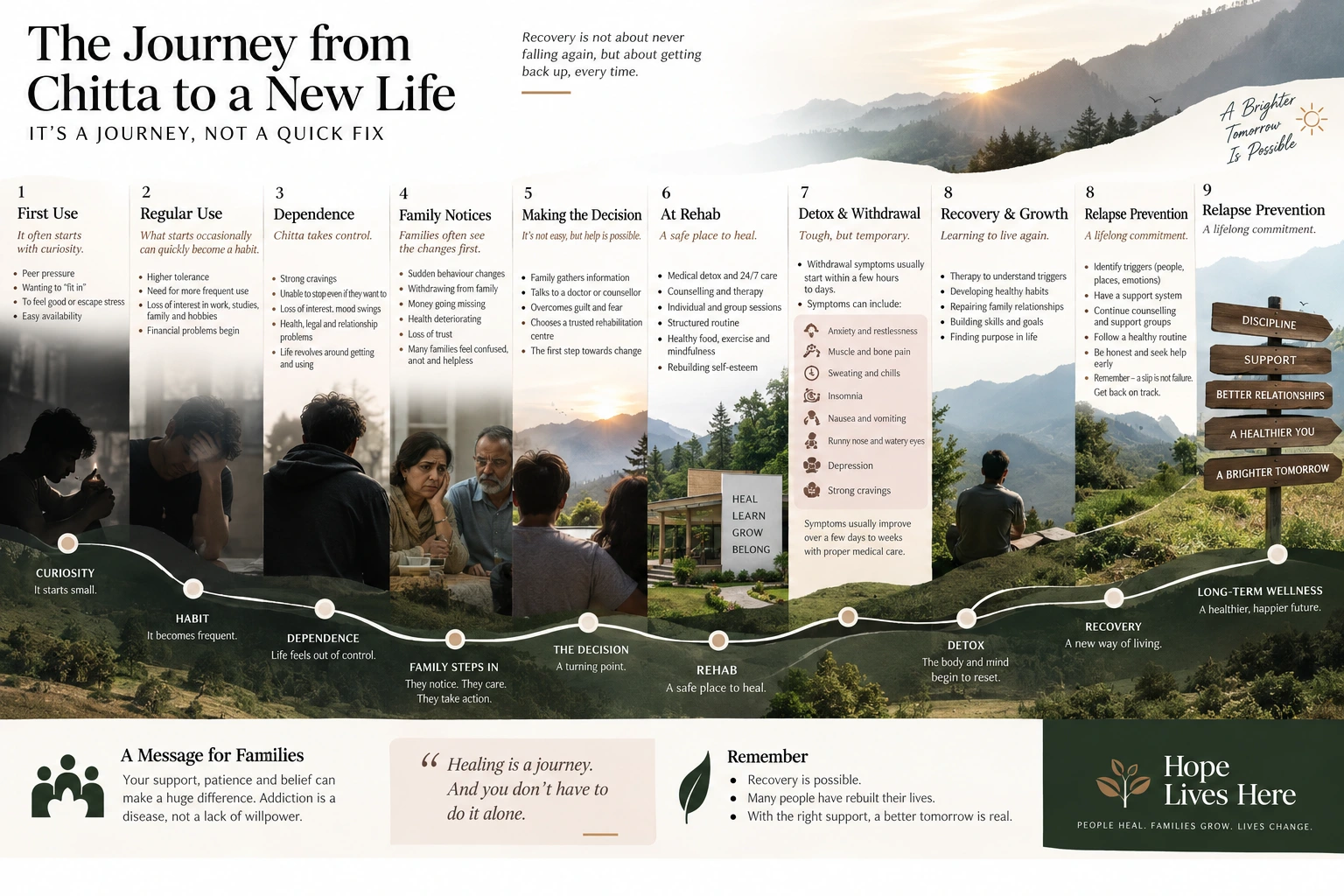
- Curiosity and first useUsually offered by a friend, "just once", and often smoked on foil.
- Regular useWeekends at first, then more often. Money starts to disappear.
- DependenceHe now needs chitta to feel normal. Without it, he feels sick.
- CrisisLies, theft, fights, a lost job or college seat, sometimes an arrest or an overdose.
- The family actsFacts are gathered, a doctor or counsellor is called, and a registered centre is chosen.
- Medical detoxWithdrawal is managed safely, with medicines and round-the-clock care.
- RehabilitationCounselling, group therapy, routine, yoga and family sessions over several months.
- Coming homeA gradual return with a plan, a daily routine and regular follow-up.
- Relapse preventionKnowing the triggers, spotting early warning signs, and knowing exactly what to do if he slips.
Ghar mein koi chitta le raha hai: what should the family do first?
The first week after you find out is when families make the most mistakes, almost always out of fear. Here is a calm, step by step plan that we share with every family who calls us.
- Do not act in panic tonightConfronting him at one in the morning, when he is high or angry, rarely ends well. Give yourself a day to think clearly.
- Collect facts quietlyWrite down what you have noticed and when: money missing, things found, changes in sleep, mood and friends. Facts are harder to argue with than feelings.
- Get the whole family on one pageParents, wife, brothers and sisters should agree on what you will say and what you will not do. If even one person secretly gives him money, the plan falls apart.
- Stop paying for the habitLock away cash and jewellery. Pay his phone bill, fees or bike EMI directly instead of handing over money. Keep giving food, a bed and love. You are cutting off chitta, not your son.
- Talk to a professionalCall the free Tele MANAS helpline 14416, the national de-addiction helpline 14446, or a psychiatrist. You can also call a registered nasha mukti kendra just to ask questions. A good one will never pressure you.
- Pick the right moment to talkTalk when he is sober and calm, usually in the morning, in private, with one or two people he trusts. Not in front of relatives, and never in the middle of a fight.
- Get a medical check-upChitta often brings infections, weight loss and liver problems, and injecting carries a risk of HIV and hepatitis C. For some young men, a doctor's visit is also an easier first step than the word "rehab".
- Plan the treatment togetherDecide on detox and rehab, visit the centre, check its registration, and fix a date. The sooner, the better.
- Look after yourselves tooParents and wives carry enormous stress, guilt and fear. Family counselling is part of good treatment, not an extra.
What to say, and what to avoid
| Try saying | Try to avoid |
|---|---|
| "I love you, and I am scared for you." | "You have destroyed this family." |
| "I found foil in your room on Tuesday, and money is missing from my purse." | "The whole village knows what you are." |
| "We will stand with you through treatment." | "If you loved us, you would just stop." |
| "We have spoken to a doctor. Will you come with us to meet them?" | "Swear on your mother you will never touch it again." |
| "This is not about blame. It is about getting you well." | Threats that you know you will not carry out. |
In a case reported by The Tribune, a woman in Kangra was caught with about 7 grams of chitta. She told police she had bought it for her addicted son because she could not bear to watch him suffer. Her love is completely understandable. But buying chitta keeps the addiction alive, can lead to an overdose, and possessing it is a crime under the NDPS Act. Withdrawal is painful, and a doctor can make it bearable. Call for medical help instead.
Should we go to the police?
There is a difference between getting treatment for a user and reporting a supplier. If you know who is selling chitta in your area, you can report it without giving your name through the Drug Free Himachal app, the MANAS helpline 1933, or 112.
For the person using chitta, treatment is the goal. Section 64A of the NDPS Act protects a user facing a small-quantity consumption case from prosecution if he volunteers for de-addiction treatment at a hospital or institution run or recognised by the government, and completes it. If he already has a police case against him, please speak to a lawyer about how this applies.
How to talk to someone who refuses help for chitta addiction
Almost every family hears the same lines: "I can stop whenever I want", "It was only once", "You are overreacting". Denial does not mean he is a bad person. It is part of addiction, and it comes from fear and shame.
What usually works better than shouting
- Speak about specific things you have seen, not about his character.
- Use "I" sentences like "I am worried" and "I cannot sleep", instead of "You are a liar".
- Offer a clear choice: treatment with the family's full support, or the family stops covering for him. That means no money, no excuses to relatives, and no paying off his debts.
- Bring in someone he respects: a mama, an older cousin, a teacher, a coach, or someone who has recovered from chitta himself.
- Ask a counsellor to guide a family meeting. A planned, calm conversation with a professional present works far better than a surprise ambush.
- Keep the door open. If he says no today, tell him you will ask again, and mean it.
He does not need to be 100% willing on day one. Many men who walk into treatment unsure find their motivation during the first few weeks, once the fog of withdrawal lifts and they start talking to people who have been exactly where they are.
Is it legal to take someone to a nasha mukti kendra by force?
Families often ask about "pickup services" that arrive at night and take a person away. Please be very careful. Under the Mental Healthcare Act, 2017, people with substance use problems have legal rights. Admission is normally voluntary. Admission without a person's consent is allowed only in limited situations, after assessment by qualified mental health professionals, and with legal safeguards and review.
Tying someone up, beating him or dragging him out of the house is not treatment, and it can be a crime. If you believe he is a danger to himself or to others, speak to a psychiatrist first about what the law allows in your situation.
Chitta withdrawal symptoms: what happens, day by day
Chitta withdrawal is the reason so many young men who genuinely "want to quit" go back within a day. Knowing what to expect helps the family stay calm, and helps him understand that it passes.
| Time since the last dose | What he may go through |
|---|---|
| 6 to 12 hours | Restlessness, anxiety, yawning, runny nose, watery eyes, sweating and strong craving. MedlinePlus notes that symptoms usually begin within 12 hours of the last heroin use. |
| Day 1 to 3, the hardest days | Pain in the muscles and bones, stomach cramps, diarrhoea, nausea and vomiting, goosebumps, large pupils, no sleep, anger, and begging for "just one last dose". |
| Day 4 to 7 | The physical symptoms slowly ease. Weakness, poor sleep and low mood remain. |
| Weeks to months | Cravings, low mood, poor sleep, irritability and trouble enjoying anything. This is when relapse is most likely, which is why rehab continues long after detox. |
Timings vary with how much chitta he used, for how long, and whether he also used alcohol or pills.
Is chitta withdrawal dangerous?
For a healthy adult, opioid withdrawal on its own is extremely painful but usually not life threatening, according to MedlinePlus. The real dangers sit around it:
- Dehydration from vomiting and diarrhoea, especially in a body already thin and weak from chitta.
- Depression and dark thoughts in the first days, when everything feels hopeless.
- Mixed withdrawal. If he also drinks heavily or takes sleeping pills, stopping those can cause seizures and delirium, which can be fatal without treatment.
- Overdose after detox. MedlinePlus explains that most opioid overdose deaths happen in people who have just detoxed, because their tolerance has dropped and the old dose is now too much for the body.
That last point surprises most families. The days right after a home detox, a short rehab stay, or time in jail are some of the most dangerous days of all.
Why locking him in a room at home is risky
Many families try to handle chitta withdrawal at home: lock the door, take away the phone, wait it out. We understand why. But without medicines the pain is severe, he may break out or turn violent, and if he reaches a dealer after three days without chitta, his usual dose could stop his breathing. A home detox should only ever happen under a doctor's direct guidance.
What medically supervised detox looks like
In a proper chitta detox, a doctor examines him, checks for other substances and infections, and gives medicines to ease the pain, diarrhoea, anxiety and sleeplessness. Fluids, food and sleep are restored, and a psychiatrist looks for depression or anxiety that may need treatment too.
Some people do better on opioid substitution treatment, where a doctor prescribes a controlled medicine such as buprenorphine under close supervision. The Himachal government has announced opioid substitution therapy centres at medical colleges and district hospitals. A psychiatrist can tell you which path suits him best.
Chitta overdose: the signs, and what to do in the next five minutes
The World Health Organization says an opioid overdose can be recognised by three signs together:
Other signs include blue or grey lips and fingertips, snoring or gurgling sounds, a limp body, and cold, clammy skin.
- Try to wake himShout his name and rub hard on the centre of his chest with your knuckles.
- Call for help right awayCall 108 for an ambulance or 112. Say clearly that he is not breathing properly after taking drugs.
- If he is breathing, turn him on his sideThe recovery position stops him choking if he vomits.
- If he is not breathing, start CPRIf you know how, begin CPR. The call operator can guide you if you do not.
- Stay with himStay until help arrives, and hand the doctors any packets, pills or syringes you find.
Do not put him in cold water, slap him hard, make him walk around, pour salt water or milk into his mouth, or leave him to "sleep it off". These waste precious minutes.
In hospital, doctors can use a medicine called naloxone, which quickly reverses an opioid overdose, and the WHO has called for wider access to it. What matters most is time, so never wait to see whether he gets better on his own. Remember too that the risk of a chitta overdose is highest after a break from using, such as after detox or rehab.
Chitta ka ilaj: how chitta addiction is actually treated
Chitta addiction is a health condition, not a character flaw, and it can be treated. Good treatment works on four things at once: the body, the mind, daily habits and the family. Here is what each part looks like at a good nasha mukti kendra.
A full assessment on the first day
A doctor and a counsellor take a complete history: what he uses, how much, for how long, any past treatment, his physical and mental health, legal troubles and the situation at home. This shapes the whole treatment plan.
Medically supervised detox
The first week or so is about getting chitta out of his body safely, with medicines, fluids, food and close monitoring, as described in the withdrawal section above.
Psychiatric care
Many young men who use chitta are also living with depression, anxiety, trauma or attention problems. When both are treated together, recovery has a much better chance of holding. Doctors call this dual diagnosis care.
Counselling and therapy
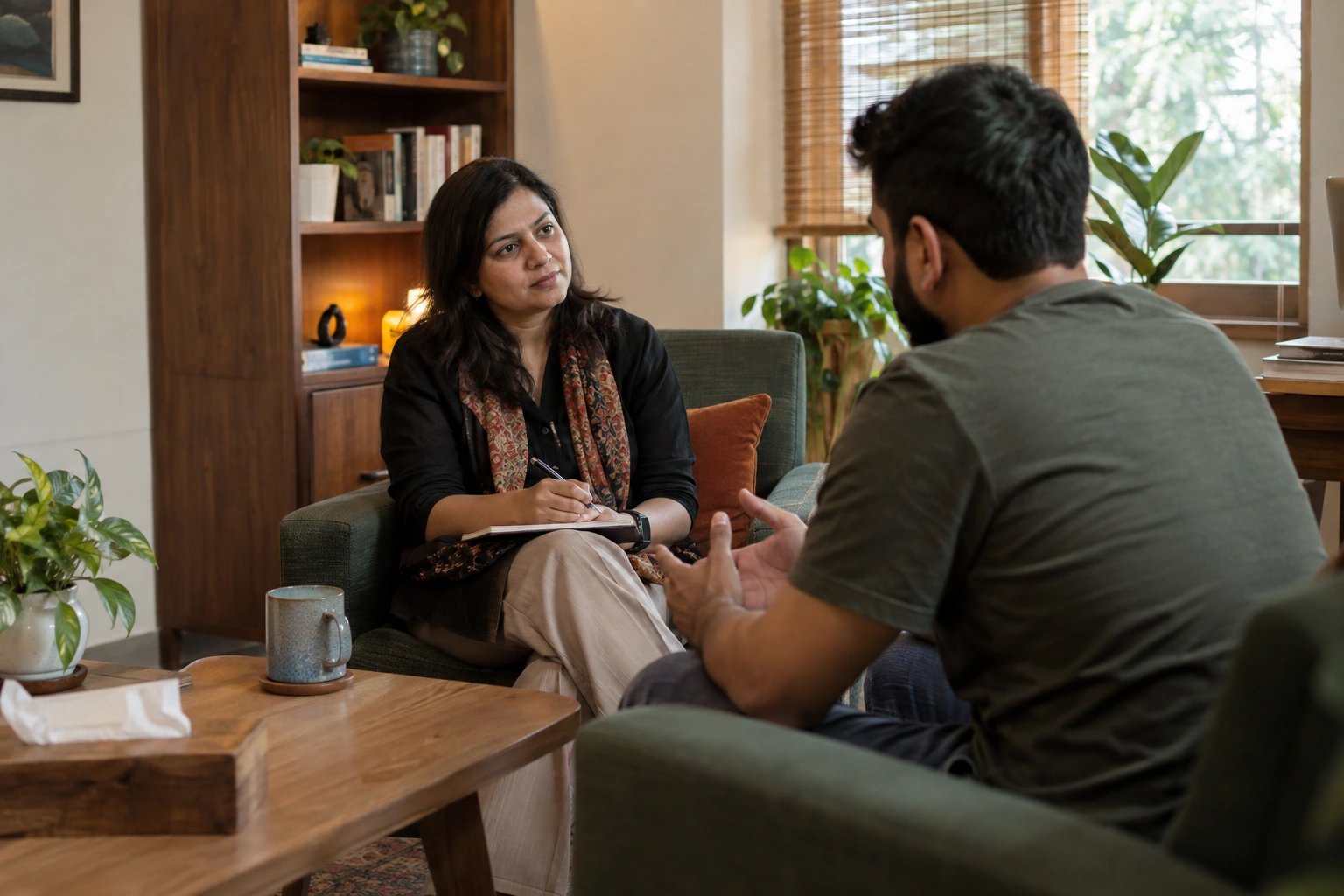
Individual counselling helps him understand why he started and how to cope differently. Approaches such as cognitive behavioural therapy (CBT) teach him to spot the thoughts and situations that set off a craving. Group therapy and the 12-step programme let him hear from other men going through the same struggle, which breaks the shame that keeps people using.
Family counselling
Chitta changes the whole family, not just the person using it. Family sessions help parents and wives rebuild trust, set healthy limits, and learn how to support recovery without turning into full-time police officers.
Routine, yoga and fitness
A fixed routine of waking, meals, exercise and sleep repairs a body that chitta has worn down. Yoga, breathing and meditation help with anxiety and cravings. Our article on yoga for stress and anxiety explains why this matters so much in early recovery.
Skills and a future to return to
Vocational training and a plan for work or studies give him something to look forward to, which is one of the strongest protections against relapse.
Aftercare
Follow-up counselling, family check-ins and a written relapse prevention plan continue after discharge. Recovery does not end at the gate of the centre.
How long does rehab take for chitta addiction? Why 15 days is rarely enough
Many centres advertise 15 or 30 day packages. Detox alone takes about a week, and all it does is clear the drug from the body. The brain changes, habits, friendships and triggers that built up over years do not change in two weeks. Longer, structured treatment gives new habits time to settle.
At Eshan Charitable Trust, the residential programme runs for 180 days in eight stages:
- Admission and assessmentA full medical, psychiatric and family history, and a personal treatment plan.
- Medically supervised detoxSafe, monitored withdrawal with medicines, fluids and rest.
- Psychiatric and psychological therapyTreatment for depression, anxiety or trauma, and one-to-one counselling.
- 12-step programme and group therapyDaily groups where men learn from each other's honesty.
- Yoga, meditation and fitnessA daily routine that rebuilds the body and calms the mind.
- Family counsellingSessions that help the family heal alongside him.
- Relapse preventionMapping triggers, practising refusal skills and building a plan for home.
- Aftercare and follow-upSupport that continues after he returns to his family.
We do not promise a cure or quote a success rate, and no honest centre can. What a longer programme gives is time: time for the body to heal, for the mind to clear, and for the family to heal alongside him.
Relapse prevention: protecting recovery after he comes home
Relapse means going back to using after a period of staying clean. It is common in addiction, just as it is in other long-term health conditions like diabetes or high blood pressure, and it does not mean treatment has failed. What matters is catching it early and responding fast.
Common triggers in Himachal homes
- Old friends, and the dealer's number still saved in his phone
- Places where he used to buy or use chitta
- Cash in hand, especially on salary day
- Boredom, and no work or studies to fill the day
- Stress, arguments at home and loneliness
- Weddings, festivals and parties where sharab flows freely
- Feeling "cured" after a few good months and letting the routine slip
Teach the whole family one simple word: HALT. It stands for Hungry, Angry, Lonely and Tired. These four states make cravings much stronger, and all four are easy to notice at home.
Early warning signs of a relapse
- Skipping counselling sessions or support meetings
- Old friends coming back into his life
- Lying again, even about small things
- Money going missing, or new demands for cash
- Staying out late, sudden anger or low mood
- Pinpoint pupils, sleepiness, or withdrawal signs coming back
A family plan for the first 90 days at home
- A new phone number, with the dealer and old using friends deleted
- A daily routine: wake-up time, work or training, exercise, meals and sleep
- Limited cash, with spending explained openly
- No alcohol kept in the house
- Weekly follow-up with his counsellor, plus family sessions
- Support meetings, such as Narcotics Anonymous, where available
- A written plan for what he will do when a strong craving hits
- Praise for effort, not just for results
What to do if he uses chitta again
Stay calm. Do not say "all that money was wasted". Call his counsellor or the centre the same day, and remind him that one slip does not erase months of hard work. Watch him closely for signs of overdose, because his tolerance is lower now than it used to be. Sometimes a short return to treatment is needed, and that is perfectly fine.
How to choose the best rehabilitation centre or best nasha mukti kendra
Search "best nasha mukti kendra near me" or "best rehabilitation centre in Kangra" and you will find dozens of websites all calling themselves the best. Some are genuinely good. Some are dangerous. Here is how to tell the difference.
The law: every rehab centre must be registered
Under the Mental Healthcare Act, 2017, substance use problems count as mental illness, and de-addiction and rehab centres are mental health establishments. No such establishment can run without registering with the State Mental Health Authority. In Himachal, that is the Himachal Pradesh State Mental Health Authority (HPSMHA). A new centre first receives provisional registration while it meets the authority's minimum standards for buildings, staff and treatment, and district inspection teams can check it. The authority has also published lists of authorised centres so that families can check.
What goes wrong at unregistered or badly run centres
The warnings are real. The HPSMHA once shut two centres in Parwanoo after two residents died within three months. One of them had reportedly not been examined by a medical officer, and families had been charged for services that were never provided. The authority has also said that threats and physical force were being used at some centres in the name of rehabilitation.
In Una, police found centres holding 50 men where permission was only for 25. And a Tribune investigation in Kangra found centres running without proper licences or psychiatrists, with allegations of abuse, people confined for six months or more, and hefty fees with no regulation.
A 10-point checklist before you admit him
- A registration certificate from the HPSMHA, shown to you, with a number you can verify
- A psychiatrist who actually reviews residents, and a doctor available for emergencies
- Medically supervised detox, not "cold turkey" in a locked room
- Trained staff: a psychologist, counsellors, a nurse and a pharmacist
- A written treatment plan and a clear programme length
- Fees in writing, showing what is and is not included
- Family counselling, and a clear policy on visits and phone calls
- Clean rooms, proper food, and space for exercise and fresh air
- Aftercare and follow-up after discharge
- Honest conversation, with no "100% cure" promises or guarantees
Red flags: walk away if you see these
- "100% cure in 15 days" claims
- A "pickup service" that takes people by force
- No doctor or psychiatrist on record
- Refusing to show the registration certificate
- Families never allowed to visit or call
- Cash only, with no receipts
- Chains, locked rooms, or any sign of beatings
You have every right to visit before admitting anyone, to ask questions and to see the rooms. The best rehabilitation centre or best nasha mukti kendra for your family is simply the one that passes these checks and welcomes your questions, not the one with the biggest advert.
Government help and helplines for families in Himachal
Whether or not you choose a private centre, these free services are worth knowing. Save them in your phone today, before you need them.
| Number or service | What it is for |
|---|---|
| 14446 | National toll-free de-addiction helpline under the Nasha Mukt Bharat Abhiyaan, for counselling and referral |
| 14416 or 1-800-891-4416 | Tele MANAS: free, 24x7 mental health support from the Government of India, in your own language |
| 112 | Emergency response for police, fire and ambulance. Families in Himachal also use it to ask for help with addiction |
| 108 | Ambulance for medical emergencies, including an overdose |
| 1933 | MANAS helpline of the Narcotics Control Bureau, to report drug trafficking (as shared by Himachal Police) |
| Drug Free Himachal app | Himachal Police app to report drug selling without revealing your name |
Government de-addiction centres in and around Kangra
- District De-Addiction Centre, Prayas Bhawan, Dharamshala, run by the District Red Cross Society, Kangra: 01892-224408
- De-Addiction and Rehabilitation Centre, Nurpur, also run by the Red Cross: 01893-221200
- District Red Cross office, Dharamshala: 01892-224888 (details reported by UNI)
- Dr Rajendra Prasad Government Medical College, Tanda: its Centre of Excellence of Mental Health has been named the state's nodal institution for de-addiction and rehabilitation
- Disha centres: 108 counselling and early intervention centres in health institutions across Himachal
- For women: the Nav Jeevan Women's De-Addiction and Rehabilitation Centre at Mashobra near Shimla, Himachal's first government-run centre for women
Eshan Charitable Trust is a private, registered charitable centre. We would always rather a family gets help somewhere than nowhere, so please use these services if they suit your situation better.
Rehab near me: finding a nasha mukti kendra in Kangra, Palampur and Dharamshala
Most families type "rehab near me" or "nasha mukti kendra near me" into Google in a moment of crisis. Near matters. Parents and wives need to be able to visit and attend family counselling. But the right kind of distance matters too: for recovery, he needs to be away from his old friends, his dealer and his usual routes for a while.
Eshan Charitable Trust is at Village Tanda Kholi, beside the FCI godown and near Dr Rajendra Prasad Government Medical College, Tanda, in Kangra district. Families come to us from across the valley. If you are searching locally, these pages have details for your area:
Serving families across Palampur
Palampur, with its tea gardens and villages spread across the valley, has seen a steady run of chitta arrests through 2026. If you live in Palampur, Baijnath, Jaisinghpur, Panchrukhi or Nagrota Bagwan and you are searching for a rehab centre near me or the best rehab centre in Palampur, you can call us at any hour for guidance, even if you are not ready to admit anyone yet. Our rehab centre in Palampur page has more for local families.
Serving families across Palampur and the wider Kangra valley.
Myths about chitta that keep families stuck
Myth: "He will stop if he really loves us."
Chitta changes the brain's reward system. Love matters enormously, but it cannot switch off withdrawal. Treatment does that part of the work.
Myth: "Get him married and he will settle down."
Marriage does not treat chitta addiction. It often adds a wife, and later a child, to the harm. Treat first, then plan the future.
Myth: "Trying it once cannot hurt."
Street chitta can be mixed with anything, and an overdose can happen the very first time. Every regular user started with "just once".
Myth: "A secret medicine in his food will make him quit."
Powders sold as "bina bataye nasha chudane ki dawa" are unproven and can be unsafe. Giving any medicine without a doctor and without his knowledge can seriously harm him.
Myth: "Rehab is basically jail."
A good, registered rehab is a place of care, with doctors, counselling, food, yoga and family visits. A place that feels like a jail is a red flag, not a rehab.
Myth: "If he relapses, rehab failed."
Relapse is common in recovery. A quick, calm response keeps it a slip instead of a full return to chitta.
Eshan Charitable Trust: an affordable nasha mukti kendra for Himachal families
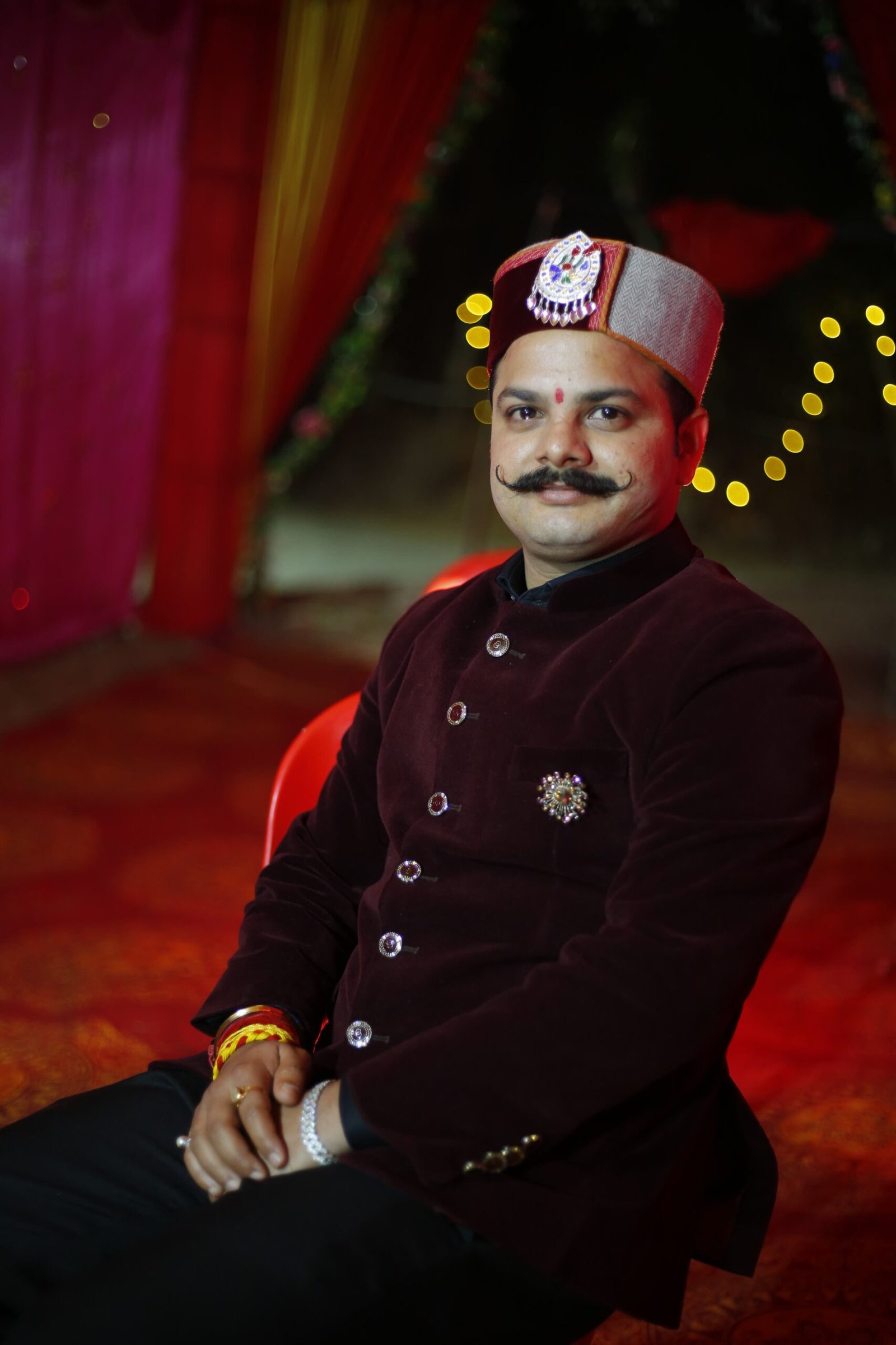
Eshan Pathania, Founder and Managing Trustee
Why Eshan Charitable Trust exists
Eshan Pathania, the founder and managing trustee of Eshan Charitable Trust, has been in recovery himself for five years. He knows what chitta does to a young man, and what it does to the people who love him.
He also saw something else. Many families in Himachal simply could not afford what private rehab centres were charging, so their sons went without treatment, or ended up in cheap, unregistered places that did more harm than good. His answer was a registered, medically supervised nasha mukti kendra that ordinary Himachali families can actually afford, with the fees written down clearly from the very first phone call.
That idea is why the trust exists, and why our fees are kept as low as we can keep them. Eshan is personally involved in running the centre, and residents know they are talking to someone who has sat exactly where they are sitting.
Fees at our nasha mukti kendra, stated plainly
| Plan | Room and diet | Fee |
|---|---|---|
| Shared Residential Care | Shared room, standard diet | ₹12,500 per month |
| B Caring | Deluxe room, twin sharing, upgraded diet | ₹25,000 per month |
| A Caring | Private room, single occupancy, upgraded diet | ₹40,000 per month |
| Medically supervised detox | Once, at admission | ₹6,000 one time |
The treatment is exactly the same in every plan. Only the room and the diet change. Every plan includes accommodation and meals, prescribed medicines, doctor and psychiatrist reviews, counselling, group therapy, yoga, fitness, all activities and family counselling. Anything outside the centre, such as a hospital referral or transport, is discussed with the family first.
What families can check for themselves
- HP State Mental Health Authority, Shimla: Provisional Registration Sr. No. 193, under Sections 66(4) and 66(11) of the Mental Healthcare Act 2017, issued 14/05/2026. The certificate can be inspected at the centre.
- Registered charitable trust: Regd. No. 2025/19/IV/123, Book No. IV, Vol. 4067, Office of the Sub-Registrar-I, Kashmere Gate, Delhi, 14 February 2025.
- A 180-day, eight-stage programme that starts with medically supervised detox.
- A team that includes a psychologist, MSW counsellors, a pharmacist, a staff nurse, a yoga and wellness instructor and a vocational trainer.
- Open 24x7 for calls and WhatsApp on +91 62304 15581.
Who we can admit
Our centre is residential and for men only, aged 18 and above, with no upper age limit. We treat chitta, heroin, smack, brown sugar, sharab, charas, ganja, bhang, opium (afeem), doda, bhukki, tramadol, codeine syrup, alprazolam, cocaine, MDMA, injecting use and mixed use. For women, please see the government Nav Jeevan centre listed above, or call Tele MANAS on 14416.
Questions families ask about chitta addiction and rehab
Ghar mein koi chitta le raha hai toh sabse pehle kya karein?
Stay calm and do not confront him while he is high or angry. Quietly note what you have seen, make sure nobody in the family gives him money, and speak to a doctor, a counsellor or the free helplines 14446 and 14416. Then choose a moment when he is sober to talk, and plan treatment at a registered nasha mukti kendra.
What is chitta, and is it the same as heroin, smack or brown sugar?
Chitta is the North Indian street name for heroin, an opioid made from morphine. What is sold as chitta is usually impure and mixed with other chemicals. Smack and brown sugar are other names for impure heroin. All of them carry the same risk of addiction and overdose.
How can I tell if my son is using chitta?
Look for a pattern over weeks: very small pupils, nodding off, constant scratching, weight loss, lying, new secretive friends, money or jewellery going missing, and burnt silver foil, rolled notes or lighters in his room. A runny nose, yawning, sweating and body pain when he has not used can be early chitta withdrawal.
Chitta ka ilaj kya hai? Can chitta addiction be treated?
Yes, chitta addiction can be treated. Treatment usually includes medically supervised detox, psychiatric care, counselling and therapy, group work such as the 12-step programme, family counselling, a healthy daily routine, and aftercare to prevent relapse. Longer, structured programmes give the best chance of lasting change.
Can someone quit chitta at home without going to a rehab centre?
Some people do, but it is hard and risky without medical support. Withdrawal is very painful, relapse in the first days is common, and using again after a few clean days can cause an overdose because tolerance has dropped. If you try a home detox, do it only under a doctor's direct guidance.
What are chitta withdrawal symptoms and how long do they last?
Symptoms usually start within 6 to 12 hours of the last dose with restlessness, yawning, a runny nose, sweating and craving. They peak over days one to three with body pain, stomach cramps, diarrhoea, vomiting and no sleep, and ease over about a week. Cravings, low mood and poor sleep can continue for weeks or months.
Is chitta withdrawal dangerous?
Opioid withdrawal on its own is very painful but usually not life threatening in a healthy adult. It becomes dangerous with dehydration or depression, or when heavy alcohol or sleeping pill use is being stopped at the same time, because those can cause seizures. The biggest danger is an overdose if he uses again after a short break.
What should we do if someone overdoses on chitta?
If he cannot be woken, has pinpoint pupils or is breathing slowly, call 108 or 112 immediately. Rub hard on his chest and shout his name. If he is breathing, turn him on his side. If he is not breathing, start CPR if you know how. Stay with him and give the doctors any packets or syringes you find.
Should we give him money or buy chitta so he does not suffer?
No. Buying or paying for chitta keeps the addiction going, can lead to an overdose, and possessing chitta is a crime under the NDPS Act. Withdrawal pain can be managed safely by a doctor, so call for medical help instead.
My son refuses to go to rehab. What can we do?
Keep calm and keep the conversation going. Talk about specific things you have seen, ask a counsellor to guide a family meeting, bring in someone he respects, and stop covering for the addiction with money or excuses. Many young men agree after a planned, respectful conversation, and motivation often grows once treatment begins.
Is it legal to take someone to a nasha mukti kendra by force?
Admission is normally voluntary under the Mental Healthcare Act, 2017. Admission without consent is allowed only in limited situations after assessment by qualified mental health professionals, with legal safeguards. Tying someone up or dragging him away is not treatment and can be a crime. Speak to a psychiatrist about what is allowed in your situation.
How long does rehab take for chitta addiction? Is 15 or 30 days enough?
Detox alone takes about a week, and it only clears the drug from the body. Changing habits, thinking and triggers takes months, which is why many good programmes last several months. The programme at Eshan Charitable Trust runs for 180 days in eight stages.
What happens if he relapses after rehab?
Relapse is common and does not mean treatment failed. Stay calm, contact his counsellor or the centre the same day, watch closely for overdose because his tolerance is lower, and restart support quickly. Sometimes a short return to treatment is needed.
How do I find the best rehabilitation centre near me in Kangra?
Look for a centre registered with the HP State Mental Health Authority, with a psychiatrist, medically supervised detox, trained counsellors, family counselling, written fees and aftercare. Visit before admitting, ask to see the registration certificate, and avoid any place that promises a 100% cure or uses force.
Which is the best nasha mukti center near me for families in Palampur and Dharamshala?
The best choice is a registered centre that your family can visit easily and that offers medical detox, psychiatric care, counselling and a long programme. Eshan Charitable Trust in Tanda Kholi, Kangra, serves families from Palampur, Dharamshala and across the valley, and you can call +91 62304 15581 at any hour for guidance.
How can I check if a nasha mukti kendra is registered in Himachal?
Ask the centre for its HP State Mental Health Authority registration certificate and note the number, then confirm it with the authority in Shimla. A genuine centre will show the certificate without hesitation. Eshan Charitable Trust holds Provisional Registration Sr. No. 193, which can be inspected at the centre.
Are there government de-addiction centres in Kangra?
Yes. The District Red Cross Society runs a District De-Addiction Centre at Prayas Bhawan, Dharamshala, on 01892-224408, and a De-Addiction and Rehabilitation Centre at Nurpur on 01893-221200. Dr Rajendra Prasad Government Medical College, Tanda, has been named the state's nodal institution for de-addiction.
What are the fees at Eshan Charitable Trust nasha mukti kendra?
Monthly fees are ₹12,500 for Shared Residential Care, ₹25,000 for B Caring with a deluxe twin-sharing room, and ₹40,000 for A Caring with a private room. Medically supervised detox is ₹6,000, charged once at admission. The treatment is the same in every plan.
What is included in the fee?
Every plan includes accommodation and meals, prescribed medicines, doctor and psychiatrist reviews, counselling, group therapy, yoga, fitness, all activities and family counselling. Anything outside the centre, such as a hospital referral or transport, is discussed with the family first.
Do you treat sharab, charas, bhang and goliyon ka nasha too?
Yes. Along with chitta, heroin and smack, we treat alcohol, charas, ganja, bhang, opium, doda, bhukki, tramadol, codeine syrup, alprazolam, cocaine, MDMA, injecting use and mixed use.
Sharab chudane ka ilaj kya hai? Does secret medicine in food work?
Alcohol addiction is treated with medically supervised detox, followed by counselling, therapy and family support. Stopping suddenly after heavy daily drinking can cause seizures, so a doctor should guide detox. Powders sold to be mixed secretly into food are unproven and can be unsafe, and should not be used.
Does Eshan Charitable Trust admit women?
No. Our residential centre is for men aged 18 and above. For women, the government's Nav Jeevan Women's De-Addiction and Rehabilitation Centre at Mashobra near Shimla is an option, and the free Tele MANAS helpline 14416 can guide you.
Will our family's details be kept confidential?
Yes. The Mental Healthcare Act, 2017 gives every person in treatment a right to confidentiality, and a registered centre must keep residents' and families' information private except where the law requires disclosure.
Can the family visit and join counselling?
Yes. Family counselling is a core part of the programme at Eshan Charitable Trust, and families are encouraged to stay closely involved. Call us for the current visiting and phone call schedule.
Which helpline numbers can families in Himachal call?
Call 14446 for the national de-addiction helpline, 14416 for Tele MANAS mental health support, 108 for an ambulance, and 112 for any emergency. To report drug selling, use the MANAS helpline 1933 or the Drug Free Himachal app.
Can chitta cause death even if someone uses it only sometimes?
Yes. Street chitta is mixed with unknown substances and its strength keeps changing, so even occasional use can cause an overdose, especially when it is combined with alcohol or pills, or taken after a break from using.
A last word for the family
If you have read this far, the person you are worried about is lucky to have you. Chitta is powerful, but it is not stronger than a family that stays calm, gets good help and keeps showing up.
Start with one small step today. Save the helpline numbers. Write down what you have seen. Or simply call and ask your questions. You do not need to have everything figured out to begin, and you do not have to do this alone.
Sources and references
Every number and news report in this guide comes from the sources below. We have not named any person arrested, any victim, or any family.
- World Health Organization. Opioid overdose, fact sheet, 29 August 2025.
- MedlinePlus, US National Library of Medicine. Opiate and opioid withdrawal.
- MedlinePlus, US National Library of Medicine. Delirium tremens.
- NDDTC, AIIMS New Delhi, for the Ministry of Social Justice and Empowerment. Magnitude of Substance Use in India, 2019.
- Government of India. The Mental Healthcare Act, 2017, India Code.
- Ministry of Health and Family Welfare. Tele MANAS, National Tele Mental Health Programme.
- Ministry of Social Justice and Empowerment. Nasha Mukt Bharat Abhiyaan.
- The Tribune. 90% accused under NDPS Act in Kangra are Himachal youth.
- Outlook India. Himachal intensifies anti-chitta drive amid rising drug abuse, January 2026.
- ETV Bharat. 66 drug overdose deaths in Himachal over three years, April 2026.
- The Tribune. Kangra police bust interstate drug cartel, arrest 16 under Operation Naya Savera, June 2026.
- The News Himachal. 13-year-old caught carrying chitta in HRTC bus in Kangra, May 2026.
- UNI. Three held with heroin in Palampur, May 2026.
- Himtimes. 3 women among 7 held for possessing chitta in separate cases in Kangra, July 2026.
- The News Himachal. Kangra police seize 18.81 grams of chitta in two drug cases, September 2026.
- The News Himachal. Kangra police recover 67.62 grams of chitta from taxi, September 2026.
- The Tribune. Himachal's uphill war against drugs, May 2026.
- The News Himachal. Himachal intensifies war on drugs, 234 panchayats under special surveillance, May 2026.
- Himachal Headlines. Himachal's Anti-Chitta model to be replicated in other states, May 2026.
- India Narrative. Drug crisis killing youths in Punjab, grips Himachal, December 2025.
- The Tribune. Drug crisis escalates, families face emotional ruin.
- The Tribune. Lack of govt rehab centres in Kangra worsens drug crisis.
- The Tribune. Following inmates' deaths, 2 de-addiction centres shut.
- The Tribune. 14 Himachal de-addiction centres close down during pandemic.
- The Tribune. Rehab centres under scanner in Una district.
- The Tribune. CM launches portal listing rehabilitation centres.
- The Tribune. Advisory board for de-addiction and rehab to be constituted.
- UNI. Red Cross de-addiction centres in Dharamshala and Nurpur helping hundreds recover, May 2026.
- The Policy Edge. Himachal Pradesh launches first government-run women's de-addiction centre, June 2026.
- The Tribune. Checking drug menace in Mandi district: helplines and reporting.
- National Informatics Centre. Drug Free Himachal mobile app.
- The News Radar. Chitta addicts in a Mandi belt introduce own parents to drugs, February 2025.
- The Tribune. Chitta consumption up, drug abuse high on agenda in Himachal.

Dr. Devasheesh Sharma, MBBS, DNB (Psychiatry)
Psychiatrist. Himachal Pradesh Medical Council Reg. No. 5263.
Dr. Aditya Thakur, MBBS
Registered medical practitioner. Himachal Pradesh Medical Council Reg. No. 6218.
Eshan Charitable Trust Team
The counsellors and staff at our nasha mukti kendra in Kangra, who work with families affected by chitta, sharab and other nasha every day. Last reviewed on 21 September 2026.
This guide is for information and support. It does not replace a consultation with a doctor or psychiatrist who can examine the person you are worried about.