
Alcohol Addiction Treatment in Kullu and Manali
Sharab is the single most common reason families from Kullu and Manali call us. This page explains how alcohol addiction treatment in Kullu and Manali actually works: what medical detox involves, why stopping at home can be dangerous, what it costs, and which government and private options exist in the valley. We admit men from every part of both valleys, from Manali, Vashisht and Naggar down through Bhuntar to Banjar and Anni.
Reviewed by Dr. Devasheesh Sharma, MBBS, DNB (Psychiatry)
HPMC Reg. No. 5263. Also reviewed by Dr. Aditya Thakur, MBBS, HPMC Reg. No. 6218.
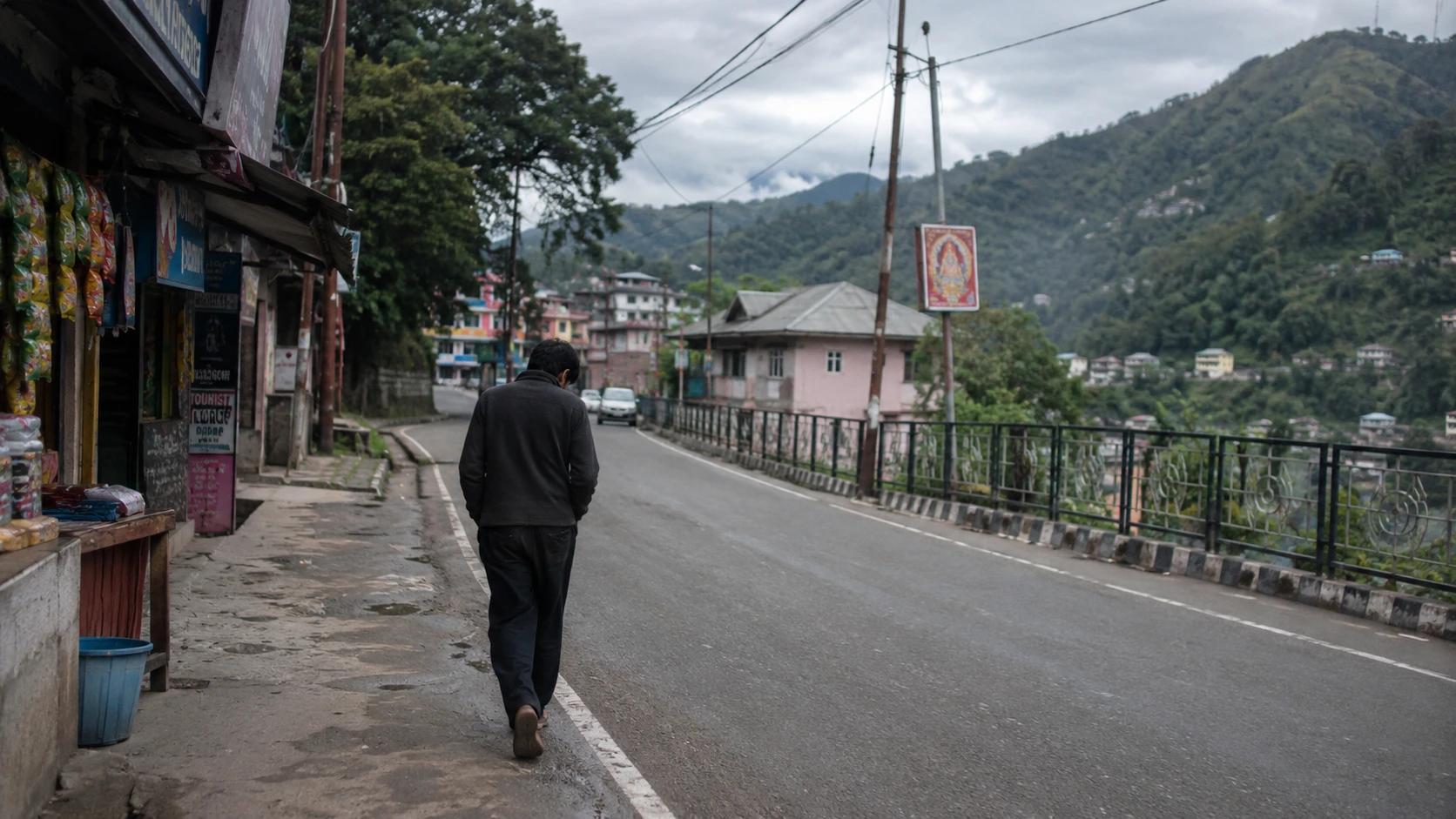
Alcohol addiction in Kullu and Manali follows the season
Most families who come to us for alcohol addiction treatment in Kullu and Manali describe the same pattern. Families in Manali say it again and again. Through the tourist months a man is working, earning, and drinking heavily with it. Hotel staff, taxi drivers, cafe workers and trekking guides finish late, drink late, and nobody calls it a problem because the money is coming in. Then the season ends, the valley empties, and the drinking does not stop. By January there is no work to hide behind.
In Kullu the rhythm is the apple season instead, but it works the same way. Weeks of hard labour and cash in hand, then a long gap. Add the winter, when the roads are bad and there is nowhere to be, and a habit that looked social in June looks like dependence by February.
Lahan is the part families underestimate most. Home-brewed liquor has no measure on it. A man drinking lahan has no idea how much alcohol he is actually taking in, and his withdrawal when he stops is every bit as dangerous as it would be from bottled spirits, sometimes worse. Excise teams destroyed roughly 2,600 litres in drums near Chachogi in a single operation, and about 1,000 litres more in the Naggar forest area, which tells you the scale it is produced at.
It stays hidden until winter
He still goes to work. He has never been violent. He drinks in the evening, at home. That description fits most of the men we admit from Manali, and it is exactly why it goes unaddressed for years.
Tourism changes what is normal
In a valley where drinking is part of the trade, the line between heavy social drinking and dependence gets blurred. The test is not how much, it is whether he can stop.
Help is thin on the ground
There are good government options at Bhuntar, but bed numbers are small and most are focused on drug dependence. Families searching for a rehab near me or a nasha mukti kendra near me in Kullu often find very little that is genuinely medical for sharab.
When does he need alcohol addiction treatment in Kullu and Manali?
Drinking every evening is not automatically an addiction. These are the signs that separate a heavy habit from dependence, and the ones families here tend to notice last.
Signs in him
- He needs sharab to relax, to sleep, or to steady himself in the morning
- Hands shake, he sweats or feels sick until the first drink
- He drinks more than he meant to, almost every time
- He has tried to cut down and could not hold it for more than a few days
- He hides bottles, drinks alone, or lies about how much
- He keeps drinking although his liver, his work or his marriage is suffering
- Money disappears with no clear explanation
Signs in the house
- Evenings are organised around whether he has had a drink yet
- Children have learned to read his mood before they speak to him
- Promises to stop, made sincerely, broken within a week
- The off-season is dreaded rather than looked forward to
- You have started checking, counting, or hiding things yourself
- Nobody outside the family knows the real picture
A fuller list is in our guide to the warning signs of drug and alcohol addiction, and signs of alcoholism goes into the medical picture.
He does not have to want it on day one
The commonest reason families wait years is that he refuses. Treatment still works. Many men become willing in the first fortnight, once the drinking stops and their thinking clears. Do not threaten, do not argue when he is drunk, and call us before you raise it with him so a counsellor can tell you what to say. Our guide on helping someone who refuses to go to rehab covers the conversation in detail.
Stopping sharab suddenly at home can kill
This is the part of alcohol addiction treatment families in Kullu and Manali most often get wrong, usually with good intentions. Locking a daily drinker in a room to dry out is not brave, it is dangerous.
What withdrawal does
Symptoms can start within hours of the last drink: shaking, sweating, racing heart, nausea, agitation and sleeplessness. For a long-term heavy drinker this is not discomfort, it is a medical event.
Seizures and delirium tremens
Severe alcohol withdrawal can cause fits and delirium tremens, with confusion, hallucinations and dangerous swings in blood pressure and temperature. Both can be fatal without treatment.
What supervised detox looks like
Medication to control withdrawal, fluids, vitamins, sleep and food managed around the clock, with a doctor reviewing him daily. One to two weeks, and he is through the worst of it safely.
Never try secret dosing. Families ask us constantly whether there is a medicine that can be mixed into his food to make him stop drinking without telling him. There is not one that is safe. Giving such a drug without his knowledge can cause a violent reaction if he then drinks, and recovery that he has no part in does not hold anyway.
Equally, do not assume it is too late because he has been drinking twenty years. Older long-term drinkers often respond well. They simply need more careful medical attention through detox, which is precisely what supervised treatment is for. More in alcohol detox treatment and what alcohol recovery looks like over the first year.
30, 60 and 90 day residential treatment
Detox is the first stage of all three, never the whole of any of them. How long a man stays depends on how long he has been drinking, how many times he has relapsed before, and whether there is depression or anxiety underneath it. The psychiatrist sets the length after assessment and you get it in writing.
Detox and stabilisation
For alcohol caught relatively early, with no previous relapse. Gets him off sharab safely, restores sleep and appetite, and sends him home with a plan he understands.
- Weekend or seasonal heavy drinking, not yet daily
- First time in any treatment
- Medically stable, with family clearly behind him
Therapy that has time to work
For daily drinking over several years, or for a man who has been detoxed before and relapsed because nothing followed it. Four to six weeks of counselling after his head clears.
- Daily sharab for five years or more
- One or two previous relapses
- Detox done before at home or a government centre, with no therapy after
- Low mood, anxiety or sleep problems alongside the drinking
Rebuilding the routine
For very long-term drinking with physical complications, three or more relapses, or alcohol combined with chitta nasha or pills. Long enough to treat what sits underneath and put a routine in place.
- Twenty years or more of drinking, with liver or neurological complications
- Three or more relapses
- Depression, bipolar disorder or psychosis alongside the addiction
- Alcohol taken together with chitta, bhaang or tablets
- No work to return to, or drinking friends next door
What is included at every length
Medically supervised detox, psychiatrist assessment and reviews, individual counselling, group therapy and 12-step work, yoga and meditation every morning, all meals and accommodation, family counselling at no extra charge, a written relapse prevention plan, and follow-up after discharge by phone or video for families back in the valley. See what happens in a rehab centre day by day.
Chitta nasha, bhaang and tablets in the Kullu valley
A lot of the men we admit from Kullu and Manali are not drinking alone. Alcohol with chitta, or alcohol with sleeping tablets, is common and considerably more dangerous than either on its own.
Chitta nasha
Adulterated heroin, arriving up the highway from Punjab, Haryana and Delhi. Strength varies batch to batch, which is why overdose takes men who have used the same amount for months. Mixing chitta nasha with alcohol multiplies the risk of stopping breathing.
Chitta nasha treatment →Bhaang and charas
Charas has been part of this valley for generations and is widely assumed to be harmless. Daily bhaang or charas use can bring anxiety, memory problems, flat motivation, and in some men paranoia or psychosis. The step from charas to chitta is short here, because the contacts already exist.
Bhaang addiction treatment →Tablets, doda and bhukki
Tramadol, alprazolam and codeine syrups, usually starting with a real prescription. Doda, bhukki and poppy husk still affect older men, drivers and labourers across the valley. All of these need a slow supervised taper, never an abrupt stop.
Prescription drug detox →Overdose will not wait for an admission process
Pinpoint pupils, slow or stopped breathing, blue lips, unresponsive after using: that is an overdose and it is an emergency. Get to Regional Hospital Kullu or the Manali hospital immediately, or call an ambulance. Do not wait and do not worry in that moment about who finds out. See emergency addiction help in Kullu and Manali. Once he is medically stable, call us and we will arrange assessment quickly.
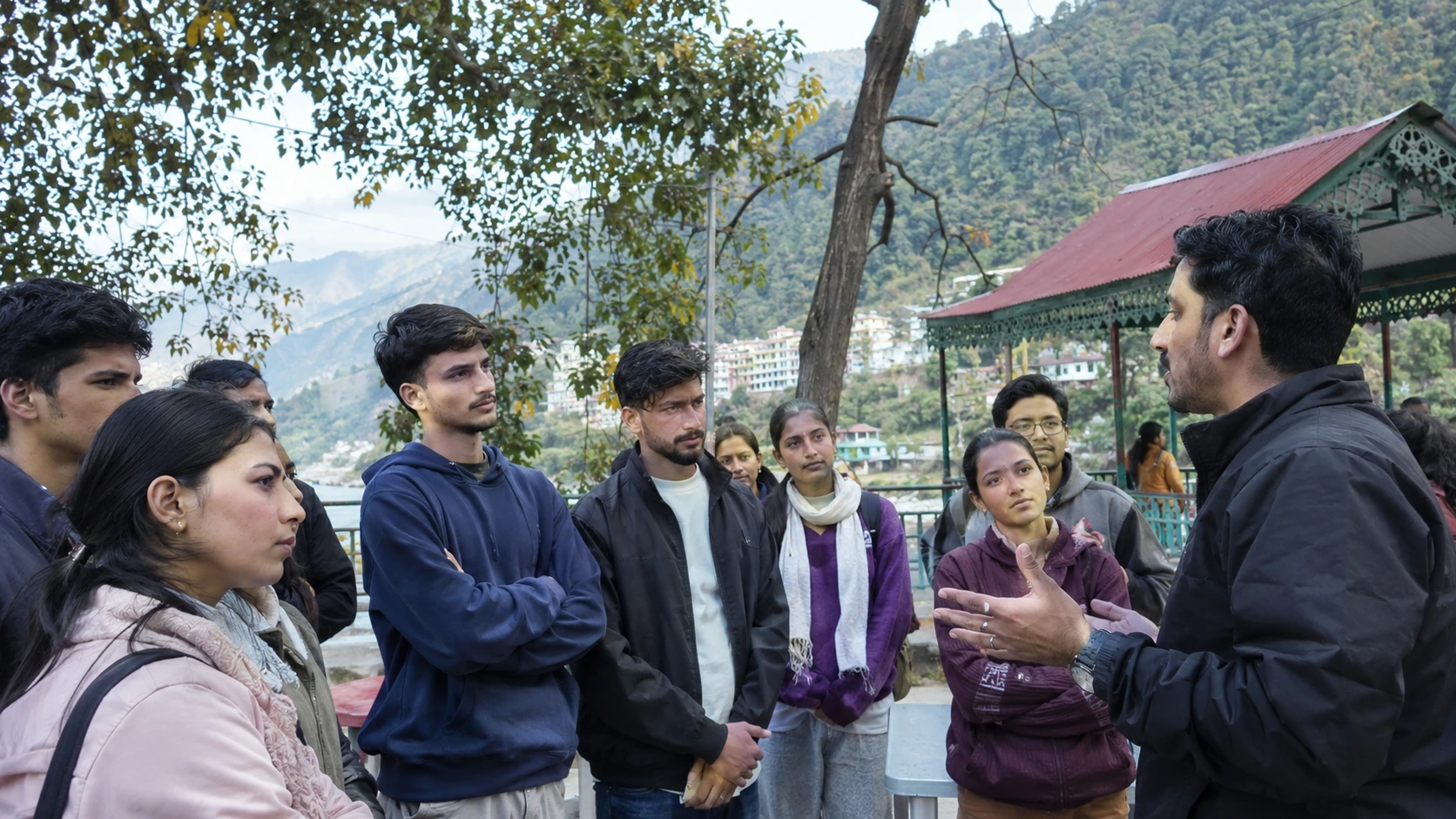
Families we treat from across Kullu and Manali
If you have been searching for a rehab near me or a nasha mukti kendra near me from any of these places, we take admissions from all of them. The list is not decorative, these are the towns and villages our residents actually come from.
Manali and above
- Manali
- Old Manali
- Vashisht
- Aleo
- Dhungri
- Simsa
- Rangri
- Prini
- Jagatsukh
- Shuru
- Bahang
- Shanag
- Palchan
- Kothi
- Solang
- Gulaba
- Burua
- Hamta
- Sethan
Naggar and the upper valley
- Naggar
- Patlikuhl
- Katrain
- Raison
- Jana
- Chachogi
- Duara
- Fozal
- Shirad
Kullu town and around
- Kullu
- Dhalpur
- Akhara Bazaar
- Sarvari
- Sultanpur
- Gandhi Nagar
- Rupi
- Jindour
- Bhekhli
Valley floor
- Bhuntar
- Shamshi
- Mohal
- Bandrol
- Bajaura
- Khokhan
- Garsa
- Dobhi
- Bhuin
- Mashgan
- Shillihar
Parvati valley
- Jari
- Kasol
- Manikaran
- Chhalal
- Pulga
- Barshaini
- Tosh
- Malana
Banjar, Sainj and the Anni belt
- Banjar
- Jibhi
- Shoja
- Sainj
- Larji
- Aut
- Shrikot
- Gharatgad
- Thraimbla
- Anni
- Nirmand
- Nithar
- Luhri
- Karshaigad
Kullu and Manali on the map
By road
From Manali it is about 230 km and 6 to 7 hours: down through Patlikuhl, Kullu, Bhuntar and Aut to Mandi, then the Jogindernagar road through Baijnath and Palampur. From Kullu town it is about 195 km and 5 to 6 hours on the same route.
By bus
Take a Mandi bus from Manali bus stand or Kullu's Dhalpur stand, change for a Dharamshala, Kangra or Pathankot service, and get down at Tanda Medical College. An auto covers the last stretch. Call before you set out so the team can prepare.
By air or rail
Kullu district has no railway. Pathankot is the nearest broad gauge station, roughly two hours by taxi. Bhuntar airport is close to Kullu but the wrong direction; Gaggal near Dharamshala is the nearest airport to us.
Why families choose treatment outside the valley
Distance is part of the treatment, not a drawback. Early recovery is at its most fragile in the first few weeks, and a man cannot practise refusing a drink when the same friends, the same thekas and the same evening routine are waiting outside his gate. Most families from Kullu and Manali tell us afterwards that the separation was the thing that made the difference. Visiting and call schedules are shared at admission, and follow-up after discharge runs by phone or video so you do not have to travel for it.
Looking for a rehab near me: government options in Kullu and Manali
We would rather you got good treatment somewhere than poor treatment from us. If cost or distance rules out a residential stay, start here. Ring the OPD first and ask what is actually available this week, because bed numbers are small.
Integrated De-addiction and Rehabilitation Centre, Bhuntar
Kullu's first government centre, roughly 10 km below Kullu town. Its Addiction Treatment Facility was set up in 2022 with support from the National Drug Dependence Treatment Centre at AIIMS. Reported capacity is around 20 beds for men and 15 for women, with a further 30-bed block announced. Ask about the OPD first.
Women's de-addiction centre, Bhuntar
Run under the Kullu Red Cross Society, with around 15 beds offering free residential care of about a month, plus OPD and family counselling. Our own centre is male only, so this is where we refer women from the valley.
Regional Hospital Kullu
Psychiatry OPD for a formal assessment at low cost, with an addiction treatment facility established in 2022. A good first step if you want a doctor's opinion before deciding anything. The Manali hospital handles emergencies locally.
Free national helplines
The national de-addiction helpline is 14446 and Tele MANAS is 14416. Both are free and both will talk to a family member, not only to the person using. Use them at any hour.
"Government approved" does not mean government run
Plenty of private centres in the valley put "government approved" or "sarkari" on the board. Every private centre in Himachal is required to be registered with the HP State Mental Health Authority in Shimla, so ask to see that registration and ask who the psychiatrist is. If they will not show you the registration or the living area, walk away. Read government versus private nasha mukti kendra, government nasha mukti kendra in Manali and the reality of nasha mukti kendras in Himachal.
What alcohol addiction treatment costs
We are a registered charitable trust with no investors, so fees cover the cost of care and nothing more. Every resident gets the same psychiatrist-led treatment. The only difference between the plans is the room.
| Plan | Room | Per month | 30 days | 60 days | 90 days |
|---|---|---|---|---|---|
| Essential Care | Shared room | ₹12,500 | ₹18,500 | ₹31,000 | ₹43,500 |
| Comfort Care | Twin sharing, upgraded diet | ₹25,000 | ₹31,000 | ₹56,000 | ₹81,000 |
| Premium Care | Private room, most one-to-one time | ₹40,000 | ₹46,000 | ₹86,000 | ₹1,26,000 |
Included
- Psychiatric assessment and all doctor reviews
- Medically supervised detox and routine detox medication
- Individual counselling, group therapy and 12-step work
- Yoga, meditation and fitness every day
- Accommodation and all meals, cooked on site
- Family counselling, at no extra charge
- Written relapse prevention plan and aftercare follow-up
If the fee is beyond you
Call anyway. We look at each family's situation and reduce fees where we can, and instalments can usually be arranged. We provide proper bills and documents for insurance claims, though many Indian policies still exclude alcohol and drug treatment, so check with your insurer first.
More detail in rehab centre fees in Himachal Pradesh, the most affordable nasha mukti kendra in Himachal and whether Ayushman and health insurance cover nasha mukti treatment.
Be careful with centres far cheaper than this
A fee of a few thousand rupees a month usually means no psychiatrist, no real therapy and sometimes force used in place of medicine. For alcohol in particular that is dangerous, because untreated withdrawal is what kills people. The cost reappears later as a relapse or a hospital admission.
Who will be treating him
The first question worth asking any centre is who holds the medical responsibility, and whether you can meet them. Ask us, and ask everyone else you are considering.
Dr. Devasheesh Sharma
Every admission begins and ends with his assessment. He sets the detox protocol, prescribes and later tapers medication, treats the depression or anxiety that so often sits under long-term drinking, and decides whether a man needs 30, 60 or 90 days. He is also the one who will tell a family honestly when someone is medically unstable and needs a hospital before residential care.
Rakshit Sharma
Medication management through detox and after.
Vanshika
Group therapy and relapse prevention planning.
Shivani Rana
Individual counselling and family support.
Meena Devi
12-step work and daily emotional support.
Kheema
Nursing cover and observation during withdrawal.
Abhishek
Morning yoga, breathing practice and fitness.
Pankaj Guleria
Skills training for men in longer programmes.
Nursing and care staff
Doctor and nursing cover 24 hours, with Dr. RPGMC Tanda minutes away.
Four steps, and it can happen today
The helpline runs 24 hours, including nights, Sundays and holidays. Most admissions happen within a day or two of the first call. Ring before you leave the valley so the team can prepare and check for medical needs.
Call or WhatsApp
A counsellor takes the history: how much sharab, for how long, what has been tried, what his health is like. You get honest advice on that call, including whether residential care is even the right step.
Visit or video call
Come and see the rooms and the kitchen, or do it by video if you are in Manali and cannot travel twice. We encourage it. A centre that will not show you is not one to use.
Psychiatric assessment
Confidential review of drinking, past quit attempts, physical health, sleep, mood and risk. Blood tests if advised. This decides the length and whether detox can safely happen here.
Plan and fee in writing
You get the treatment plan, the length and the full fee in writing before anything is signed. Treatment can start the same day.
Bring with you
- His Aadhaar or any government photo ID
- Photo ID of the family member signing
- Old prescriptions or reports if you have them. Missing records are not a problem
- Tell us about seizures, liver disease, diabetes, TB, hepatitis or psychiatric medication at assessment
Pack for him
- About a week of clothes, warm layers and a jacket
- Slippers, closed shoes, towel, toiletries
- Medicines for long-term conditions
- Not allowed: cigarettes, tobacco, lighters, alcohol, sharp objects, unprescribed medicines. Bags are checked
There is no pick-up van and no force. Adults are normally admitted with their own consent. Where the risk is serious and he is refusing, the Mental Healthcare Act, 2017 allows certain steps and the psychiatrist will explain them properly for your situation. We do not beat, chain or lock anyone in. Worth reading first: नशा मुक्ति केंद्र में भर्ती कराने से पहले and the checklist to run through before admission.
Alcohol addiction treatment in Kullu and Manali: FAQs
The questions that come up on almost every call from the valley. Over a hundred more are answered on our full FAQ page.
Is there a good rehab near me in Kullu or Manali?
For free or low-cost care, the Integrated De-addiction and Rehabilitation Centre at Bhuntar is the main government option in the valley, about 10 km below Kullu town, and Regional Hospital Kullu runs a psychiatry OPD for assessment. Both are worth calling first. Bed numbers are small, though, and most capacity is focused on drug dependence rather than alcohol. If you want a longer psychiatrist-led residential programme for sharab, families from Manali, Kullu, Bhuntar, Banjar and the Parvati valley come to us in Kangra. Call and we will tell you honestly which of the two suits your situation.
Sharab ki lat kaise chhudaye? शराब की लत कैसे छुड़ाएं?
रोज़ शराब पीने वाले व्यक्ति की शराब अचानक बंद कराना खतरनाक है। बिना डॉक्टर के घर पर शराब छुड़ाने की कोशिश में दौरे पड़ सकते हैं। सही तरीका यह है: पहले डॉक्टर की निगरानी में डिटॉक्स, जो एक से दो हफ़्ते चलता है, फिर काउंसलिंग, योग, रूटीन और परिवार की काउंसलिंग। कुल्लू और मनाली के परिवारों के लिए हमारी सलाह यही है कि पहले फ़ोन पर बात करें, फिर मनोचिकित्सक से जाँच कराएँ। हमारा शराब की लत से रिकवरी वाला लेख भी पढ़ें।
How do I check whether a nasha mukti kendra near me is genuine?
Four checks, in this order. Is there a qualified psychiatrist actually on the premises, and will they show you their registration with the HP State Mental Health Authority in Shimla. Will they let you walk through the rooms and kitchen before you decide. Do you get the treatment length and the full fee in writing, with no promise of a guaranteed cure. Is family counselling and aftercare included rather than sold separately. Any nasha mukti kendra near me in Kullu or Manali that fails the first two is not worth your money, however low the fee looks. Watch out for private centres advertising themselves as "government approved", which is not the same as government run.
Can sharab be stopped at home in Manali without a doctor?
For someone who drinks occasionally, a doctor-guided plan at home may be enough. For a daily drinker it is genuinely dangerous. Alcohol withdrawal can start within hours and can bring seizures and delirium tremens, both of which can be fatal. Lahan makes this harder to judge, because home-brewed liquor has no measure on it and the person often has no idea how much alcohol he has been taking. In the valley in winter, with roads bad and the hospital an hour away, that is not a risk worth taking. Detox under supervision takes one to two weeks and removes the danger.
How much does alcohol addiction treatment in Kullu and Manali cost?
At the government centre in Bhuntar, care is free or nearly free, usually as a shorter detox-focused stay. With us, the monthly fee is ₹12,500 for Essential Care, ₹25,000 for Comfort Care and ₹40,000 for Premium Care, plus a one-time detox charge of ₹6,000 at admission. So 30 days in Essential Care is about ₹18,500 and 60 days about ₹31,000. All three plans get identical psychiatrist-led treatment and the difference is only the room. Fees are given in writing before admission and there are no hidden charges. If that is still beyond you, call anyway, because we reduce fees where we can.
Do you treat chitta nasha and bhaang as well as alcohol?
Yes, and in this valley a lot of men are using more than one. We treat chitta nasha and heroin, including injected use, charas, ganja and bhaang, opium, doda, bhukki and poppy husk, tramadol, alprazolam and codeine syrups, and the party drugs that turn up around the tourist season. Alcohol combined with chitta nasha is particularly dangerous, because both slow breathing and the combination is what kills people in overdose. Where there is more than one substance, the stay is usually longer, commonly 90 days.
How long does treatment take, 30, 60 or 90 days?
Detox is one to two weeks and is the first stage of every programme, never the whole of it. For alcohol, 30 days suits a first admission caught relatively early. 60 days is the most common for daily drinking over several years, or for a man detoxed before who relapsed because no therapy followed. 90 days is for very long-term drinking with physical complications, three or more relapses, or alcohol alongside chitta nasha or tablets. The psychiatrist sets the length after assessment and you get it in writing. If 30 days turns out not to be enough we will say so rather than discharge him into a relapse.
Is there any beating, chaining or locking in rooms?
No. There is no beating, no chaining, no locked rooms and no punishment of any kind. Treatment is medicine, counselling and routine. This matters because some centres do still operate that way, and families in the valley hear the stories. Visit and see the living area for yourself before you decide anything. If you encounter violence or restraint at any centre, take your relative out the same day and report it.
Can the family visit from Kullu during treatment?
Yes. The visiting schedule is shared at admission and depends on the stage of treatment, with visits limited during the first detox week while his body is settling. Phone calls run on a planned schedule and are limited in the early weeks. We know the drive from the valley is long, so the team will give you updates by phone at any hour, and family counselling sessions can be done by video call where travelling twice is not practical.
Do you admit women from Kullu and Manali?
Our residential centre is male only, for men aged 18 and above with no upper age limit. For women, the de-addiction centre at Bhuntar run under the Kullu Red Cross Society offers around 15 beds with free residential care of about a month, plus OPD and family counselling, and there is the Navjeevan centre in Shimla. Call us anyway and we will help you work out which is available and appropriate.
What if he relapses once he is back in Manali?
Call us straight away and stay calm. Relapse is common in addiction, as in other long-term illnesses, and it does not mean the treatment failed or the money was wasted. Acting within days rather than months makes an enormous difference. Sometimes a short return to treatment is right, sometimes adjusting medication and follow-up is enough. The season is the risk here, so plan for it: the end of the tourist months and the empty weeks after are when most men in this valley slip.
Can he be admitted without his consent?
Adults are normally admitted with their own consent. Where someone is at serious risk and refusing, the Mental Healthcare Act, 2017 permits certain steps, which the psychiatrist will explain for your specific situation. We never use force and there is no pick-up service, because forced collection is unsafe and may be illegal. In practice many men who refuse outright at first agree within a week once the family changes how it approaches the conversation, and we will help you with that before you raise it.
Will anyone in the valley find out he was in treatment?
Not from us. What is shared here is used for treatment only, and names or photographs are never shared without written permission. In a small valley where everyone knows everyone, this is a real concern and we take it seriously. Many families simply say he is away for health treatment, which is true and is nobody else's business. Government employees worried about service rules should raise it on the call.
Does Ayushman or health insurance cover it?
Many Indian policies still exclude alcohol and drug treatment, though some cover mental health care. Check with your insurer directly before you assume either way. We provide proper bills and documentation for claims. Our guide to Ayushman and health insurance for nasha mukti treatment explains what is usually covered and what is not.
Guides written for this valley
Kullu and Manali
- Nasha mukti kendra in KulluThe full district guide
- Nasha mukti kendra in ManaliThe full Manali guide
- Rehabilitation centre in KulluWhat is available locally
- Options across Kullu and ManaliThe whole valley compared
- Top 4 nasha mukti kendra, KulluCompared honestly
- Top 4 nasha mukti kendra, ManaliCompared honestly
- Government centres in ManaliFree and low-cost options
- Emergency help in Kullu and ManaliWhen it cannot wait
- Anti-drug campaigns in the valleyWhat communities are doing
Sharab, chitta nasha and bhaang
- Alcohol addiction treatmentPsychiatrist-led care
- Alcohol detox treatmentWhy it must be supervised
- Signs of alcoholismHabit or dependence
- Alcohol addiction recoveryThe first year
- Chitta nasha treatmentDetox and the stay after
- चिट्टा कैसे छोड़ेHow to quit chitta
- चिट्टा नशा: पूरी जानकारीComplete Hindi guide
- घर में कोई चिट्टा ले रहा है?Spotting it at home
- Bhaang addiction treatmentCharas and ganja too
- Bhaang and charas detoxWhat withdrawal is like
- Bhaang addiction symptomsAnxiety, memory, motivation
- Prescription drug detoxSlow supervised tapering
Choosing, fees and the law
- Best rehabilitation centre in HPHow to judge for yourself
- Rehab centre fees in HimachalWhat the ranges mean
- Most affordable nasha mukti kendraCheap versus affordable
- Government versus privateAn honest comparison
- Government centres across HPThe full state list
- Rehab centre or nasha mukti kendraThe difference matters
- What happens in a rehab centreDay by day
- Warning signs of addictionWhat to look for
- If he refuses to goWhat to say
- The psychology of addictionWhy willpower is not the issue
- Yoga for stress and anxietyPractices for home
- The NDPS Act in HimachalWhat families should know
Talk to a counsellor about alcohol addiction treatment in Kullu and Manali
You do not need to have decided anything before you ring. Tell us what is happening at home and we will tell you plainly what the options are, including the ones that are not us.