

Signs of Alcoholism: How to Recognise Alcohol Use Disorder
शराब की लत के लक्षण कैसे पहचानें — ईशान चैरिटेबल ट्रस्ट, कांगड़ा
Alcohol Addiction
This page explains what doctors mean by alcoholism and alcohol use disorder, how risky drinking progresses along a spectrum, and the key signs of alcoholism to watch for in yourself or someone else. It covers early emotional and behavioural changes, visible physical signs, severe and late-stage symptoms, withdrawal as a marker of dependence, how the condition is diagnosed, and what treatment usually involves.
Drinking is common and socially accepted in Himachal, which makes it easy to miss when it turns into something more serious. Alcohol use disorder is a medical diagnosis for a pattern of drinking that harms health, mood and daily life, and is sometimes simply called alcoholism.
If you are worried about your own drinking or someone else's, this page walks through what to look for and what to do next.
Talk to a Counsellor Now
What Do We Mean by Alcoholism and Alcohol Use Disorder?
Before looking at specific symptoms, it helps to understand what clinicians mean when they talk about alcoholism and alcohol use disorder. It is not a character flaw or a lack of willpower — it is a recognised medical condition with a defined set of criteria.
In Himachal, heavy drinking is often normalised at weddings, festivals and after work, so families frequently wait years before calling it a problem. By then the person is usually physically dependent, and stopping without medical help has become dangerous.
Recognising the pattern early is the single biggest advantage a family has. Understanding the psychology of addiction makes those early signs much easier to spot.
How Clinicians Define Alcohol Use Disorder (AUD)
Doctors use the term alcohol use disorder when someone's pattern of drinking causes significant distress or problems at home, at work, or in relationships. It sits under the wider category of substance use disorder.
Typical features include:
- Drinking more, or for longer, than planned
- Repeated attempts to cut down that do not last
- Strong urges or cravings to drink
- Continuing to drink despite clear harm to health, money or family
- Developing tolerance, and feeling unwell when suddenly stopping
The condition is described as mild, moderate or severe depending on how many of these signs are present. Severity matters, because it decides whether someone needs medically supervised detox or can be managed with counselling alone.


Risky Drinking, Alcohol Misuse and Alcoholism: the Difference
Not everyone who drinks too much is dependent on alcohol, but all problematic drinking sits on a spectrum:
- Risky or unhealthy alcohol use — patterns that increase the risk of alcohol-related harm, such as regular binge episodes
- Alcohol misuse or abuse — drinking that leads to accidents, injuries, or problems at work and home
- Alcohol use disorder or alcoholism — loss of control, mounting consequences, and in many cases physical dependence
Regularly having five or more drinks for men, or four or more for women, in about two hours is considered a binge pattern. This level and amount of alcohol in a short time increases the risk of alcohol-related health conditions and, over the years, can contribute to alcohol addiction in some people.
From Social Drinking to Alcohol Use Disorder: Where Do You Sit?
| Pattern of Drinking | Typical Amount of Alcohol | Common Behaviours | Risk Level | Suggested Next Step |
|---|---|---|---|---|
| Low-risk use | Occasional drinks, stays within safe limits | Drinks socially, no binge episodes, no obvious harm | Lower immediate risk, but still worth reviewing at times | Keep an eye on your drinking habits and avoid pressure to increase the amount you consume |
| Risky or unhealthy alcohol use | Sometimes exceeds limits, or nights with a higher amount of alcohol than planned | Occasional binge drinking episodes, stronger hangovers, more arguments about drinking | Increased risk of alcohol-related harm | Consider cutting back, or talk to your doctor if this pattern keeps repeating |
| Alcohol misuse or alcohol abuse | Regular heavy drinking with frequent episodes of intoxication | Accidents, missed work, money or relationship problems linked to drinking | High risk of developing alcohol use disorder | Seek help from a healthcare professional or addiction specialist to discuss options for change |
| Alcohol use disorder (sometimes called alcoholism) | Daily or near-daily drinking, or repeated binges with strong cravings and loss of control | Hiding drinking, withdrawal when not drinking, continuing despite serious harm and clear signs of alcohol dependence | Very high. Health and safety are at risk | Discuss medical detox and structured addiction treatment with a specialist service such as Eshan Charitable Trust in Kangra, Himachal Pradesh |
Key Signs of Alcoholism at a Glance
Many families want a quick way to check whether a relative's drinking might be moving into dangerous territory. The signs below commonly appear together.
Warning Signs You Should Not Ignore
- Needing more drinks than before to feel relaxed or intoxicated
- Finding it hard to control how much you drink once you start
- Drinking alone or in secret, hiding bottles or receipts
- Blackouts, memory gaps, or risky decisions while drunk
- Struggling at work, in studies or at home because of drinking
- Feeling shaky, anxious or unwell after a period without alcohol, then drinking to feel "normal" again
If several of these sound familiar, it is worth talking to a healthcare professional about the drinking pattern before it progresses further.

Early and Subtle Signs of Alcoholism
Alcohol problems rarely appear overnight. At first the changes are small and easy to rationalise, but they can be the first step towards something more serious if they continue.

Early Emotional and Behavioural Signs
In the beginning, many signs are easy to brush off or justify:
- Using alcohol to cope with stress, boredom or sleep problems
- Looking forward to drinking more than to other activities
- Getting defensive or annoyed when someone mentions your alcohol use
- Regular heavy drinking nights, or steadily increasing the amount consumed at weekends
- Restlessness or low mood on days when you do not drink
These early patterns may not feel serious, but they increase the risk of developing alcohol use disorder if nothing changes.
Physical vs Behavioural Signs: What Should You Look For?
| Physical Signs | Behavioural and Emotional Signs |
|---|---|
| Persistent facial redness or broken blood vessels on the nose and cheeks | Finding it hard to stop once you start drinking, even when you meant to have only one or two |
| Puffiness or swelling around the eyes and face | Binge drinking episodes, or regularly losing control over the amount of alcohol consumed |
| Dark circles under the eyes and a generally tired or aged appearance | Hiding bottles, lying about how much you drink, or drinking alone in secret |
| Frequent hangovers, nausea or ongoing stomach problems | Mood swings, irritability, anxiety or low mood closely linked to drinking |
| Shaky hands, sweating, or feeling physically unwell after a period without alcohol | Skipping work, study or important family events because of drinking or recovering from it |
| Unexplained bruises, small cuts or injuries that take longer to heal | Arguing more with loved ones about alcohol, or people expressing concern about your drinking |
| High blood pressure, abnormal blood tests, or other health conditions your doctor says are alcohol-related | Withdrawing from hobbies, friends or activities you used to enjoy so that drinking takes up more time |
Physical Signs of Alcoholism in the Body, Skin and Face
Alcohol affects the body as well as mood and behaviour. Over time, physical changes appear in the face, skin and internal organs, and these often sit alongside other signs that something is wrong.



Loss of control and compulsive drinking
Loss of control is one of the clearest signs of alcohol dependence. Common experiences include:
- Planning to have one or two drinks and repeatedly ending up intoxicated
- Spending a lot of time thinking about when you will next drink
- Continuing to drink even when it harms your health, finances or relationships
This pattern shows alcohol is no longer a casual choice, but something that is starting to control you.
Secrecy, denial and social withdrawal
As drinking increases, so does the effort to conceal it:
- Drinking before a social event so nobody sees how much is consumed
- Keeping bottles in the car, the fields, a toolbox or behind the water tank
- Becoming angry or evasive when anyone raises the subject
- Avoiding relatives and friends who might comment
Denial is not lying in the ordinary sense. It is a genuine feature of addiction, and arguing a person out of it rarely works.
Mood, irritability and mental health
Alcohol is a depressant, and heavy use reliably worsens mood over time:
- Irritability and short temper, especially in the mornings
- Anxiety that lifts briefly with a drink and returns worse
- Low mood, guilt and hopelessness between drinking episodes
- In some cases, thoughts of self-harm
Where mood symptoms and drinking occur together, both need treating. Treating only one usually fails.
Neglecting work, family and responsibilities
The practical damage is often what finally brings a family to a nasha mukti kendra in Kangra:
- Missed shifts, lost jobs or business failing
- Household money disappearing, debts and borrowing
- Children's school fees and family needs going unmet
- Arguments, separation, or violence at home
Behavioural and Emotional Signs of Alcoholism
Changes in mood and behaviour are often the clearest indicators that alcohol is playing too big a role. This section looks at what loss of control, secrecy and emotional change look like in everyday life.
Speak to a CounsellorSigns of Alcoholism in Loved Ones
It is often easier to notice a pattern of drinking in someone else than in yourself. If you are worried about a husband, son, father, brother or friend, these are the things to look out for.

Signs in partners, family members and friends
You may notice signs of alcohol problems in someone close to you before they see it themselves. Red flags include:
- A clear pattern of drinking that overshadows other priorities
- Mood swings, irritability or personality changes when they drink
- Repeated promises to stop drinking or cut down that are not kept
- Accidents, arguments or money problems related to alcohol
If you recognise several of these, the person may be struggling with alcoholism and could benefit from professional support.
Warning signs in young adults and students
In younger people, drinking problems often look different:
- Falling attendance or marks, or dropping out of college
- Frequent binge episodes rather than daily drinking
- Mixing alcohol with ganja, charas, chitta or prescription tablets
- Risky behaviour, fights, or driving after drinking
- A new friend circle organised around drinking
Early intervention at this stage works far better than waiting for physical dependence to set in.
When alcohol is mixed with other substances
Across Himachal, alcohol is frequently used alongside other drugs, which raises the medical risk considerably. If you suspect chitta is also involved, read what to do if someone at home is using chitta and chitta kaise chhode.
Combined use needs a single, integrated treatment plan rather than separate attempts at each substance.
Signs of Severe and Late-Stage Alcoholism
In the later stages, alcohol becomes the central focus of life and the consequences are harder to hide. This section outlines what more advanced problems look like.
Signs of severe or advanced alcoholism
In more advanced stages, the disorder is obvious:
- Drinking from the moment of waking, or needing a drink to steady the hands
- Strong cravings and clear withdrawal symptoms when going without alcohol
- Serious problems with work, parenting or finances because of drinking
At this point the person is clearly dependent on alcohol, and formal addiction treatment is usually necessary to stabilise their health and reduce the risk of further harm.
End-stage alcoholism and medical emergencies
In end-stage alcohol dependence, organ damage becomes advanced. Warning signs that need urgent medical attention include:
- Yellowing of the eyes or skin (jaundice)
- Swelling of the abdomen or legs
- Vomiting blood, or black stools
- Severe confusion or inability to recognise family
- Seizures, or collapse after stopping drinking
Any of these should be treated as an emergency. Take the person to a hospital immediately rather than waiting for a rehab admission.

Signs of Alcohol Withdrawal Between Drinking Episodes
Withdrawal symptoms show the body has adapted to regular, high levels of alcohol. They can appear when someone cuts down or stops after a period of heavy drinking. Typical symptoms include:
- Shaking, sweating, and feeling very anxious or on edge
- Trouble sleeping, vivid dreams or nightmares
- Nausea, loss of appetite and headaches
Experiencing withdrawal is a strong sign of alcohol dependence and should not be ignored. See the full alcohol withdrawal timeline and how detox is managed.
Dangerous Withdrawal and Why Home Detox Is Unsafe
More serious alcohol withdrawal symptoms include:
- Confusion or disorientation
- Hallucinations — seeing or hearing things that are not there
- Seizures, or a very fast heart rate
These complications can be life threatening. This is why unsupervised home detox is unsafe for people who drink heavily, and why a medically supervised setting is the safer option.
If someone at home is confused, having fits or cannot be woken after stopping drinking, treat it as an emergency and get them to a hospital immediately.
Call the 24x7 Helpline
How Doctors Diagnose Alcohol Use Disorder
If you or someone you care about is worried about drinking, it helps to know what actually happens during an assessment. Doctors are not guessing; they use specific questions, tools and tests.
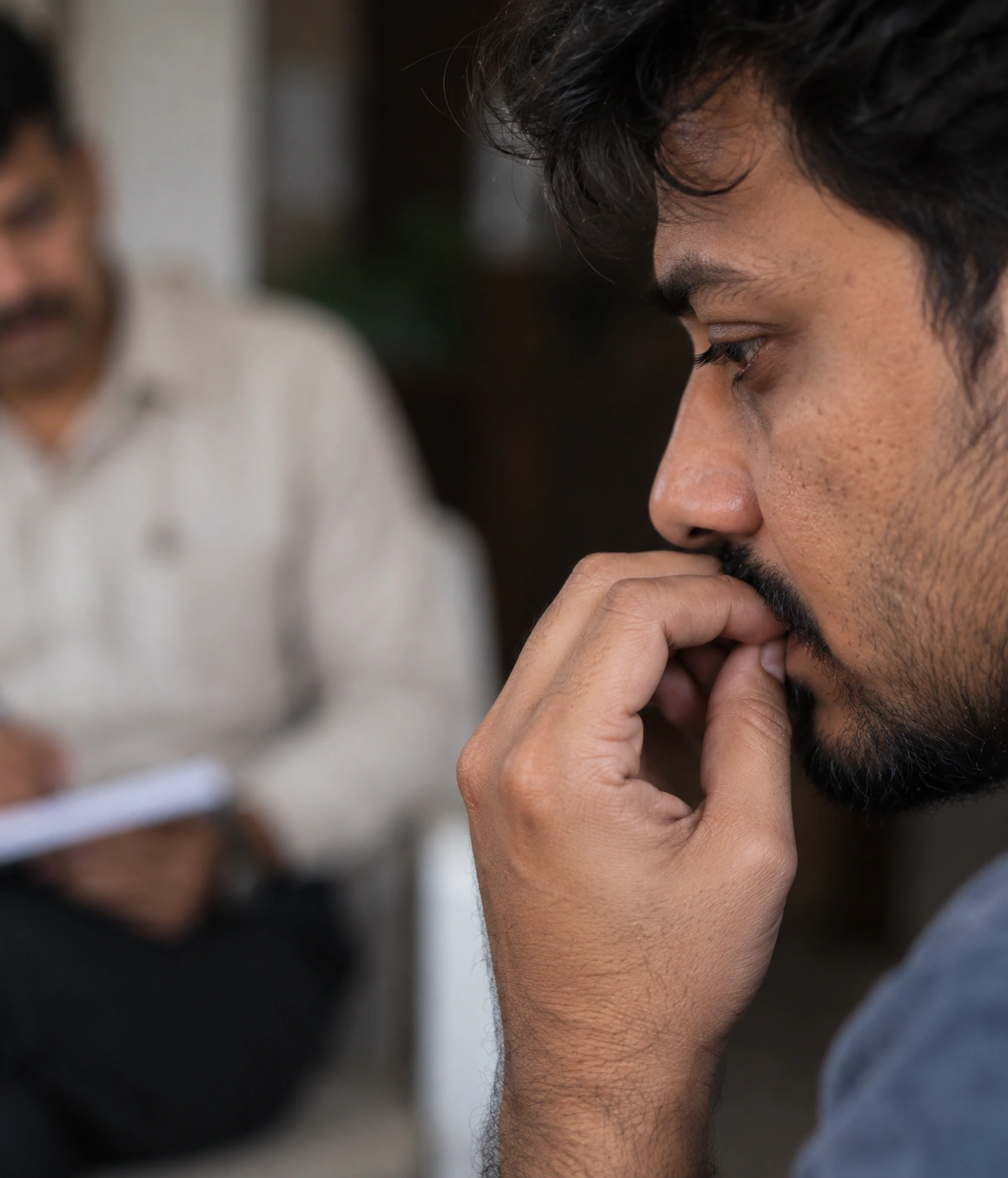
Diagnostic Criteria and Screening Tools
Doctors assess alcohol problems by looking at the pattern of drinking over time and its impact on life. They may use:
- DSM-5 criteria for alcohol use disorder
- Screening tools such as AUDIT or CAGE
- Questions about cravings, control and consequences
- Blood tests including liver function and blood counts
These tools help identify unhealthy alcohol use early so that support can be offered before things escalate.
When to Seek Help for Alcohol Use Problems
Knowing when to move from "I am not sure" to "I should talk to someone" is not always straightforward. Here are practical pointers on when to reach out and when to treat things as urgent.
Signs it is time to talk to a professional
Consider speaking to a healthcare professional if you:
- Feel concerned about your drinking but struggle to cut down
- Notice you need more alcohol than before to get the same effect
- Have had accidents, arguments or health problems related to drinking
- Feel dependent on alcohol to cope with daily life
Reaching out is the first step towards recovery and does not commit you to any particular type of treatment.
Red flags that require urgent or emergency care
Seek emergency medical help immediately if someone:
- Has a seizure or fit after stopping or reducing alcohol
- Is confused, cannot recognise family, or cannot be woken
- Is vomiting blood or passing black stools
- Has yellow eyes or skin, or a badly swollen abdomen
- Talks about ending their life
These are medical emergencies. Go to the nearest hospital first; rehabilitation can follow once the person is medically stable.

What Treatment for Alcoholism Usually Involves
If you recognise yourself or a loved one in these descriptions, the next question is usually "what happens in treatment?". Here is a brief overview.
Medical Detox and Inpatient Rehab
For people with clear signs of alcohol dependence, the first phase is usually a medically monitored detox to manage withdrawal safely and comfortably.
After detox, inpatient or residential rehab can provide:
- Daily individual and group therapy
- Medical monitoring and psychiatric review
- Support for coexisting mental health conditions
- Yoga, meditation and physical recovery
The goal is to stabilise health and lay the foundations for longer-term change. See what happens inside a rehab centre.
Counselling, Family Work and Support Groups
Others may benefit from less intensive options, such as:
- Outpatient counselling or structured day programmes
- Family or couples therapy
- Peer support groups and recovery communities
These approaches help people reduce or stop drinking, address the effects of alcohol on their lives, and lower the risk of relapse. The right level of care depends on how severe the dependence is and what support exists at home.
If you are comparing options locally, read about government nasha mukti kendras in Himachal Pradesh and how to choose the best rehabilitation centre.
Supporting Someone Who Shows Signs of Alcoholism
Watching someone you care about struggle with alcohol is painful and frustrating. You cannot control their choices, but there are meaningful things you can do, and limits you can set.
What to Do, and What Not to Do
If someone close to you may be struggling, it helps to:
- Choose a calm moment to share your concerns, never during intoxication
- Focus on specific examples rather than labels like "sharabi"
- Encourage them to seek help from a healthcare professional
- Offer to make the call or go with them to the assessment
Constant criticism, threats, or covering up consequences rarely improves the situation and can make it harder for the person to see the impact of their drinking. Before arranging an admission, read what families should know before admitting someone to a nasha mukti kendra.
Getting Help Across Himachal Pradesh and Nearby States
If the signs above sound familiar, help is close. Find the nearest rehab centre near me page for your district:
Frequently Asked Questions About the Signs of Alcoholism
What are the first signs of alcoholism?
Early signs of alcoholism are usually subtle shifts in how and why someone drinks: relying on alcohol to relax or sleep, regularly drinking more than planned, becoming defensive when it is mentioned, and feeling uncomfortable on nights without a drink. Cravings and guilt about drinking often appear around the same time.
What are the physical signs of alcoholism?
Common physical signs include facial redness or broken blood vessels, puffiness around the eyes, dark circles and a tired appearance, frequent hangovers and stomach problems, shaky hands or sweating after a period without alcohol, and abnormal liver function tests. None of these alone confirms alcohol use disorder, but together they are a strong warning.
Can you be an alcoholic and still function normally?
Yes. Many people with alcohol use disorder hold down jobs, run businesses and support families for years. This is sometimes called functional alcoholism. The dependence is still real, the organ damage still accumulates, and withdrawal is still dangerous. Being able to function is not evidence that the drinking is safe.
Sharab ki lat ke lakshan kya hain?
शराब की लत के मुख्य लक्षण हैं: सुबह उठते ही पीने की तलब, हाथ कांपना, नींद न आना, पीने की मात्रा पर काबू न रहना, छिपकर शराब पीना, घर-परिवार और काम में लापरवाही, और शराब न मिलने पर घबराहट या गुस्सा। अगर इनमें से कई लक्षण दिख रहे हैं, तो किसी नशा मुक्ति केंद्र में डॉक्टर से सलाह ज़रूर लें।
How do doctors diagnose alcohol use disorder?
Clinicians use DSM-5 criteria alongside screening questionnaires such as AUDIT or CAGE, questions about cravings, control and consequences, and blood tests including liver function. Severity is classified as mild, moderate or severe, which determines whether medically supervised detox is required.
Where can I find a nasha mukti kendra near me if these signs are present?
Eshan Charitable Trust runs a government registered nasha mukti kendra near me service at Tanda Kholi, Kangra, serving Dharamshala, Palampur, Nurpur, Baijnath, Chamba, Mandi, Una, Hamirpur, Bilaspur, Shimla, Solan, Kullu, Manali and all of Himachal Pradesh, plus families from Punjab, Jammu and Uttarakhand. Call +91 62304 15581 for a free, confidential assessment.
My husband drinks daily but says he can stop anytime. What should I do?
This is one of the most common things families tell us. Suggest, calmly and without an argument, that he simply stop for two weeks. If he cannot, or if he becomes shaky, sweaty and irritable within a day, that is physical dependence and he needs medical help, not willpower. Do not let him stop abruptly at home without speaking to a doctor first.
Is alcoholism curable?
Alcohol use disorder is a treatable long-term condition rather than something that is cured once and forgotten. With medical detox, structured therapy and sustained aftercare, a great many people stop drinking permanently and rebuild their health, work and family life. Read more about long-term alcohol addiction recovery.
More questions? See the full FAQ page or our de-addiction treatment services.
Worried About Someone? One Phone Call Is Enough to Start.
Open 24x7. Admissions any day of the week. Every conversation is confidential.
Eshan Charitable Trust
Nasha Mukti Kendra, De-Addiction & Rehabilitation Centre
Near FCI Godown, Village Tanda Kholi, Ward No. 7, PO Kholi,
Tehsil & District Kangra, Himachal Pradesh 176001
Medical disclaimer: This page is written for general information and is reviewed by a qualified psychiatrist. It is not a diagnostic tool and is not a substitute for individual medical advice. Alcohol withdrawal can be life threatening — do not stop heavy drinking suddenly without medical supervision. If someone is confused, having seizures or cannot be woken, call emergency services immediately.