
Best Rehab Centre in Paonta Sahib & Nasha Mukti Kendra
नशा मुक्ति केंद्र, पांवटा साहिब
Looking for a rehab centre in Paonta Sahib for chitta, sharab or charas? Our nasha mukti kendra in Paonta Sahib's own state gives him medically supervised detox, real counselling and 180 days to rebuild, for families from Paonta Sahib town, Badripur, Majra, Puruwala, Dhaulakuan, Nahan and Shillai.
+91 62304 15581. A counsellor answers, day or night.
Govt. registered: Sr. No. 193, HP State Mental Health Authority
- Govt. registeredHP State Mental Health Authority, Provisional Reg. Sr. No. 193, under the Mental Healthcare Act 2017.
- Charitable trustRegd. No. 2025/19/IV/123, Delhi. We exist for recovery, not profit.
- Men only, 18 and overNo upper age limit.
- Open 24x7Admissions any day of the week.
Is this happening in your home?
Almost every family who calls our rehab centre in Paonta Sahib begins the same way. Something has been wrong for months, the explanations stopped adding up a while ago, and nobody in the house wants to say the word chitta or sharab out loud. These are the signs they describe to us.
- Foil, a lighter, burnt silver paper or syringes in his room
- Drinking from the morning, or bottles hidden in the cowshed or car
- Money, grain or his mother's jewellery going missing
- Sudden weight loss, sleeping all day, awake and restless all night
- Shaking, sweating, vomiting or cramps when he cannot get a dose
- New friends you have never met, long absences, a phone he guards
- Tablets, capsules or cough syrup bought again and again
- Anger, lies, borrowed money and promises to stop that never hold
None of this makes him a bad son or a bad husband. Addiction is an illness that changes the brain, and like any illness it answers to proper treatment rather than to shame. Our full guide to the warning signs of drug and alcohol addiction goes through each one in detail, and if you are quietly wondering whether somebody at home is using, this guide in Hindi may help: ghar mein koi chitta le raha hai. The hardest part is the first phone call, and you do not need the right words for it.
What our rehab centre in Paonta Sahib treats
Most men who reach our drug rehabilitation centre in Paonta Sahib district are using more than one thing: chitta with sharab, charas or bhang with tablets, or poppy husk with whatever is at hand. We assess the whole picture at admission and build one plan around it, not a plan for the substance that happened to get caught.
Chitta, heroin, smack and brown sugar
Chitta takes hold within weeks and the withdrawal is brutal, which is why almost nobody manages to stop at home. Chitta ka ilaj here starts with medically supervised detox: the right medication, monitoring and nursing round the clock, so the vomiting, cramps, sweats and sleeplessness are managed rather than endured. After that comes the real work. Chitta treatment in Paonta Sahib families can rely on means months of counselling, group therapy and a written plan for the day he goes home, because chitta de-addiction is about rebuilding a life, not just clearing a drug.
Sharab: alcohol, country liquor and daily drinking
Sharab is still the commonest reason families here pick up the phone. Stopping suddenly after years of heavy drinking can cause tremors, seizures and hallucinations, so sharab chudane ka ilaj has to begin with medical care, not willpower. As an alcohol treatment center for Paonta Sahib families, we start with supervised detox, then treat the liver, sleep, nutrition and the depression or anxiety that sharab ki lat usually sits on top of. More on how alcohol de-addiction in Paonta Sahib actually works is in our guide to alcohol addiction recovery.
Charas, ganja and bhang
Bhang grows wild along the Yamuna banks and the field edges all around Paonta Sahib, and charas moves freely across the state lines here, so both are treated as normal rather than as drugs. We see the result as young men whose studies, work and motivation have drained away over two or three years, usually alongside something stronger. Charas ganja treatment is part of the same residential programme, because the thinking that keeps a man using is the same whatever he is using.
Opium, afeem, doda, bhukki and chura post
Poppy husk and opium move steadily along this border with the truck traffic between Himachal, Uttarakhand, Uttar Pradesh and Haryana. Poppy husk causes real physical dependence and is common among older men, truck drivers and labourers. Coming off doda or chura post needs a medically managed taper, then the full residential programme, because the habit is usually decades old.
Goliyon ka nasha and prescription drugs
Tramadol, codeine syrup and alprazolam hide in plain sight because the strips and bottles come from a chemist and nobody calls it a nasha. We taper under medical supervision, since stopping a benzodiazepine like alprazolam abruptly can cause seizures. Prescription dependence is treated with exactly the same seriousness as chitta at this de addiction center.
Injecting, mixed use, cocaine and MDMA
Injecting carries the highest risks of all: overdose, abscesses, hepatitis and HIV, and on this border belt it is more common than families expect. Mixing substances makes withdrawal unpredictable, so we screen for infection, refer where needed and detox with extra caution. Synthetic opioids such as fentanyl are not a significant problem in Himachal at present, but we test and watch for anything unusual in a mixed supply.
Is withdrawal dangerous at home?
Sometimes, yes, and this is the part families most often get wrong. Locking a man in a room until the nasha passes is not treatment. With alcohol, sudden withdrawal can bring on seizures and delirium tremens, which can kill. With alprazolam and other sleeping tablets, the same risk applies.
With chitta it is rarely fatal on its own, but the pain and sickness are so severe that almost everyone uses again within a day or two, and tolerance drops fast, so the dose he goes back to can be the one that stops his breathing. If he has ever had a fit, has liver trouble, is diabetic, or is drinking from morning to night, do not attempt this at home. Call our de-addiction centre in Paonta Sahib district or take him straight to a hospital.
What makes the best rehabilitation centre in Paonta Sahib for de-addiction?
Every one of them calls itself the best rehabilitation centre in Paonta Sahib. The district has more de-addiction centres than anywhere else in Himachal, and that makes choosing harder, not easier. Before you trust any rehab centre in Paonta Sahib with your son, ask for these six things and watch how quickly you get a straight answer. They are the standard we hold ourselves to, and you can check every one of them on a visit.
Registered, with papers you can see
We hold Provisional Registration Sr. No. 193 from the HP State Mental Health Authority, Shimla. Ask any centre to put its certificate in your hand. One that hesitates, or waves a trust deed at you instead, has already told you what you needed to know.
Medical detox, not a locked room
Withdrawal is managed with medication, monitoring and nursing round the clock. Cold turkey behind a bolted gate is not treatment, and with sharab or tablets it can be dangerous. Ask who prescribes, and what happens at three in the morning.
180 days, not 15
Short stays rarely hold, especially with chitta. Six months gives the body time to repair and the mind time to build habits that survive the walk back into the same street. We will tell you honestly what a shorter stay can and cannot do.
Family inside the treatment
Parents, wives and brothers learn how addiction works and how to help without funding the next dose. Recovery holds far better when the home changes too. A centre that keeps the family outside the gate is treating only half the problem.
Fees written down
Our fees for the nasha mukti kendra in Paonta Sahib families use are published in full on this page. Anything outside them, such as a hospital referral or transport, is discussed with the family before a rupee is spent. Nobody should learn the real price after their son is already inside.
Run by someone who has been there
Our founder, Eshan Pathania, is five years in recovery himself and is at the centre daily. He knows exactly what your son is going through, which excuses to expect, and what it takes to come out the other side.
Why families call us the top rehabilitation centre in Paonta Sahib district
Not because we say so. Because those six points are checkable, and because a top rehabilitation centre in Paonta Sahib district should be willing to say no when its programme is not right for your son, and point you somewhere better. We never promise a cure, we never quote a success rate, and we do not use the words "100% recovery". Addiction is a long illness with relapses in it, and any centre that tells you otherwise is selling something.
If you are not sure what you are even looking for, read the difference between a rehab centre and a nasha mukti kendra, and what actually happens inside a rehab centre, before you ring anybody.
Comparing the best nasha mukti kendra in Paonta Sahib, or the best rehab centre in Paonta Sahib, Himachal Pradesh, against whichever centre has paid for the top advertisement? Come and visit, ask the six questions, and hold us to every one.
Searching for the best rehab centre near me in Paonta Sahib?
Most families looking for a rehab centre in Paonta Sahib find us at two in the morning, typing rehab near me, nasha mukti kendra near me, de-addiction centre near me or alcohol treatment center near me into a phone after another bad night. From here that search returns Dehradun, Saharanpur, Ambala and Chandigarh as readily as it returns Himachal. Whether you are in Paonta Sahib town, Badripur, Majra, Puruwala, Behral, Bhagani, Batamandi, Dhaulakuan, Sataun, Kamrau or Shillai, here is what that search should honestly lead you to.
A rehab centre in Paonta Sahib families can actually verify
We will not pretend we are round the corner. Our centre is in Kangra and the drive from Paonta Sahib is a long day. What we can promise is that a counsellor answers at any hour, that the registration is printed on this page, and that we will plan the journey with you before you start it. If you searched for a rehab centre near me from a village where the last bus leaves at four, tell us and we will plan the day around that.
A nasha mukti kendra in Paonta Sahib with real medical cover
The best nasha mukti kendra near me is the one that can keep him safe while the drug leaves his body. We detox under medical supervision with 24x7 nursing, a pharmacist on the team and doctor and psychiatrist reviews, and a government medical college hospital sits on our doorstep at Tanda if a resident ever needs more than we can give. For a man coming off chitta or years of daily sharab, that cover is the whole point.
A de-addiction centre in Paonta Sahib you can check from a distance
A de addiction center near me is only worth the money if you can verify it, and on this border that matters more than anywhere. Any page can call itself the best nasha mukti kendra in Paonta Sahib; very few will hand you a certificate, and fewer still will tell you which state issued it.
That is the difference between a top nasha mukti kendra in an advertisement and one you can stand inside. Our registration number is printed on this page, our fees are published, our team is named with their qualifications, and you are welcome to walk in and look at the rehab centre in Paonta Sahib families are trusting their son to. A rehabilitation centre near me is a real answer only when the registration, the doctor and the fees are all things you can put your hand on.
Chitta, sharab and the border: what Paonta Sahib is facing
If you feel your family is the only one, the record says otherwise. Sirmaur is now one of the heaviest NDPS districts in Himachal Pradesh, and Paonta Sahib sits at the exact point where the trade crosses in. None of what follows is meant to frighten you. It is meant to tell you that what is happening in your house is a known, treatable pattern.
132NDPS cases registered in Sirmaur in nine months of 2025, sixth highest of fifteen police districts
95people arrested by Sirmaur police in 110 days of early 2025, 23 of them from outside Himachal
Rs 4.43 crof drug-trade assets attached in the district, including Rs 1.34 crore in Paonta Sahib alone
Three states meet at the Yamuna bridge
This is the single fact that shapes everything else. Paonta Sahib stands on the Yamuna, which is the boundary between Himachal Pradesh and Uttarakhand, with Dehradun about 44 km away and the Uttar Pradesh line a short run further. Three state police forces, three excise departments and three sets of prices meet within a few kilometres of your house.
For a man who is using, that is not an abstraction. It means supply is close, it is competitive, and it does not stop when one force cracks down, because the next bridge over is somebody else's jurisdiction. It also means a lot of the people arrested here do not live here. In the first 110 days of 2025 Sirmaur police arrested 95 people in 65 NDPS cases, and 23 of them came from outside the state.
What the police figures actually say
Between 1 January and 30 September 2025, Himachal Pradesh police registered 1,618 cases under the NDPS Act, a third more than the year before. Sirmaur accounted for 132 of them, behind Mandi, Shimla, Bilaspur, Kullu and Kangra but ahead of Solan, Una, Hamirpur and Chamba. For a district of about half a million people, that is a lot of files.
Within the district, chitta is the single biggest head. In that 110-day drive, heroin accounted for 25 of the 65 cases and 47 of the 95 arrests, with 642.21 grams seized, alongside 18.262 kg of charas, 32.262 kg of poppy husk, 1.035 kg of opium and 1,091 narcotic capsules. Those are small weights and large numbers of people, which is what a retail market looks like rather than a transit one.
Chitta at the toll barrier, in Badripur, in the bazaar
You do not need a map to know where it moves. In one set of operations in 2026 the Paonta Sahib detection cell and the Nahan units picked up heroin in the Badripur area, at the Yamuna toll barrier and in Sangrah market inside a few days. Grams, not kilos. That is street supply, and street supply means somebody's son is buying.
The money tells the same story from the other end. In October 2025 police attached property worth Rs 1,34,79,508 in Paonta Sahib after a financial investigation into one repeat dealer, one of six attachments in the district totalling Rs 4.43 crore. A trade that generates that much in one small town is not a few boys experimenting.
The industrial belt, and the men who come to work here
Paonta Sahib is not a hill town in the usual Himachal sense. It sits at about 389 metres, it is hot in summer, and it is an industrial centre with cement, pharmaceutical, textile and chemical plants, including units of some of India's largest drug makers. Kala Amb, up the road towards Nahan, is the same again.
That industry brings thousands of workers from Uttar Pradesh, Bihar, Uttarakhand and Nepal, many of them young men living far from their families on shift wages. We see the result constantly: a man working twelve-hour shifts, nobody at home to notice, cash in hand on a Saturday, and a habit that is six months old before anyone asks a question. If that is your son or your brother, you are not dealing with a character flaw. You are dealing with the predictable outcome of isolation plus money plus availability.
Sharab, and the lahan in the forests
Chitta gets the headlines; sharab quietly does more damage across more households here. Liquor is legal, cheap and everywhere in a border town where price differences between states have always driven traffic, and the illegal end of it is industrial in its own right.
In December 2025, Majra police found and destroyed roughly 2,600 litres of raw country liquor and four working bhattis in the Khara forests of Paonta Sahib sub-division. Lahan at that scale is not a hobby. It means a market, and a market means men drinking daily on something nobody has tested.
The families who ring us about sharab usually say the same things. He still goes to work. He has never hit anyone. It is only in the evening. All of that can be true while the liver, the sleep, the money and the marriage are going. Stopping heavy daily drinking suddenly can cause tremors, seizures and hallucinations, so sharab chudane ka ilaj has to start with medical care, not a promise.
The part nobody counts
Overdose is the figure that gets reported late and understated. In the Himachal assembly the Chief Minister put the state's drug overdose deaths at 66 over three years, eight in 2023, 31 in 2024 and 27 in 2025. Those are the ones recorded as overdoses. Anyone who has worked in this field knows the real number is higher.
The gap between the number using and the number treated is worse still. The AIIMS national survey, Magnitude of Substance Use in India, found that only about one person in 38 with alcohol dependence anywhere in India gets any help at all. Sirmaur has one weekly de-addiction OPD and no state-run residential centre open yet. The arithmetic is not kind.
What the government is doing, and what it does not cover
There is real movement. A state-level de-addiction centre has been sanctioned at Kotla Barog in the Pachhad sub-division of this district, planned at 100 beds, 50 for men and 50 for women, on a site of 157 bighas and seven biswas, with Rs 5.34 crore sanctioned for it. When it opens it will be the most significant thing to happen to treatment in Sirmaur in a generation.
It is not open yet. Until it is, the government option inside the district is the special de-addiction OPD at the medical college in Nahan, and the state runs the Anti-Chitta Jan Andolan and the national Nasha Mukt Bharat Abhiyaan alongside it. None of that treats the man already sitting in your house tonight. That part is yours to start, and it starts with a phone call.
Is your rehab centre in Paonta Sahib registered? How to check
In this district, this is the most important question on the whole page, and it matters far more than any best rehabilitation centre in Paonta Sahib claim you will read. Paonta Sahib has more de-addiction centres than anywhere else in Himachal, and the district police have themselves had to write to the State Mental Health Authority about what goes on inside some of them. Five minutes here can save you from handing your son to people who have no business taking him.
Why this matters most on a state border
Paonta Sahib sits where Himachal, Uttarakhand and Uttar Pradesh meet, and centres in all three states advertise into the same search results. A place registered in one state cannot be checked against the register of another, and some are registered nowhere at all. Unregistered and badly run centres in Himachal have been reported for overcrowding, for beatings, for detaining men against the law and for deaths in custody. We do not name victims or families. The point is only that the certificate is the first thing to check, and that you check it with the authority of the state the centre actually sits in.
The law says registration is compulsory
Under Section 65 of the Mental Healthcare Act 2017, no mental health establishment may run without being registered with the State Mental Health Authority. A de-addiction centre or rehab is a mental health establishment. There is no exemption for a small place, a charitable place, or one that calls itself only a hostel.
What provisional registration means
Under Section 66, a new establishment is first given provisional registration. It is valid for twelve months, it is renewable, and it is the step before permanent registration, which follows an inspection. Ours is Sr. No. 193, issued by the HP State Mental Health Authority, Shimla, on 14/05/2026 under Sections 66(4) and 66(11).
Why "government approved" often means nothing
Plenty of centres across Himachal, Uttarakhand and Uttar Pradesh advertise themselves as government approved on the strength of a trust deed, a society registration or a GST number. None of those is a licence to run a nasha mukti kendra in Himachal Pradesh or to treat anybody for drug de-addiction. A registration certificate from the State Mental Health Authority, with a serial number on it, is the only document that counts.
How to check any centre in five minutes
Ask to see the registration certificate and note the serial number. Ask which authority issued it and when it expires. Ask how many men are inside and how many beds it is registered for. Ask for the name of the doctor who prescribes during detox. Ring the HP State Mental Health Authority in Shimla on 0177-2633601 and confirm. If a centre gets annoyed at any of that, walk away.
Our papers, on the page and on the wall
Sr. No. 193 is printed at the top and the bottom of this page, and the certificate hangs at the centre where you can read it. Our trust registration, No. 2025/19/IV/123, is a separate document and we do not pretend it is a treatment licence. Come and inspect both, count the beds, and meet the staff before you decide anything.
The 180-day programme at our nasha mukti kendra in Paonta Sahib
Every man admitted to our rehab centre in Paonta Sahib district follows the same eight stages, whether he came in from Paonta Sahib town or from a village beyond Shillai. The pace changes from man to man. The structure does not. 180 days is what we recommend, but the programme is flexible, fees are monthly, and a shorter stay costs less. Our guide to what happens in a rehab centre walks through a stay day by day.
Admission and assessment
A confidential medical and psychiatric assessment of his substance history, physical health, mental health and family situation, then a written treatment plan made for him and explained to you.
Medically supervised detox
Withdrawal from chitta, sharab, doda or tablets is managed with the right medication, regular monitoring and 24x7 nursing, so it is as safe and as bearable as it can be made.
Psychiatric and psychological therapy
Addiction rarely arrives alone. One-to-one sessions and CBT work on the depression, anxiety, anger, grief or trauma that is usually sitting underneath the nasha.
12-step programme and group therapy
Daily group meetings where men learn from each other, hold each other to account, hear their own excuses in someone else's mouth, and find out they are not the only one.
Yoga, meditation and fitness
Mornings begin with yoga and meditation on the lawn, facing the Dhauladhar. Exercise, sport and regular meals rebuild a body that chitta or sharab has run down.
Family counselling
Parents, wives and siblings learn how addiction works, how to rebuild trust slowly, and how to support recovery without quietly funding the next relapse.
Relapse prevention
Before discharge, every man writes his own plan: his triggers, his warning signs, the people he will call, and what the first hour of each day at home will look like.
Aftercare and follow-up
Discharge is not goodbye. We stay in touch through follow-up calls and reviews, and the helpline stays open to him and to his family for as long as they need it.
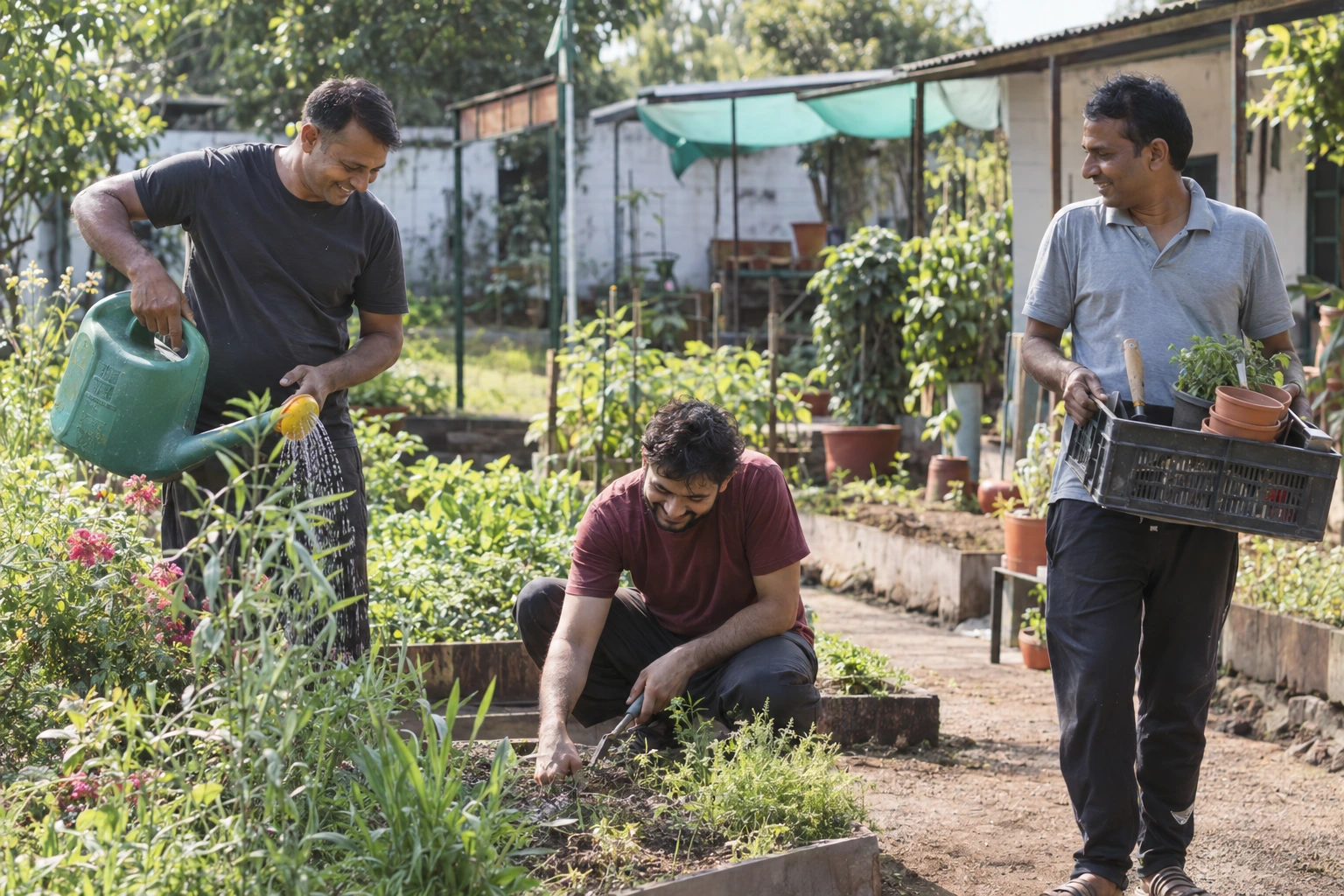
A day at the centre
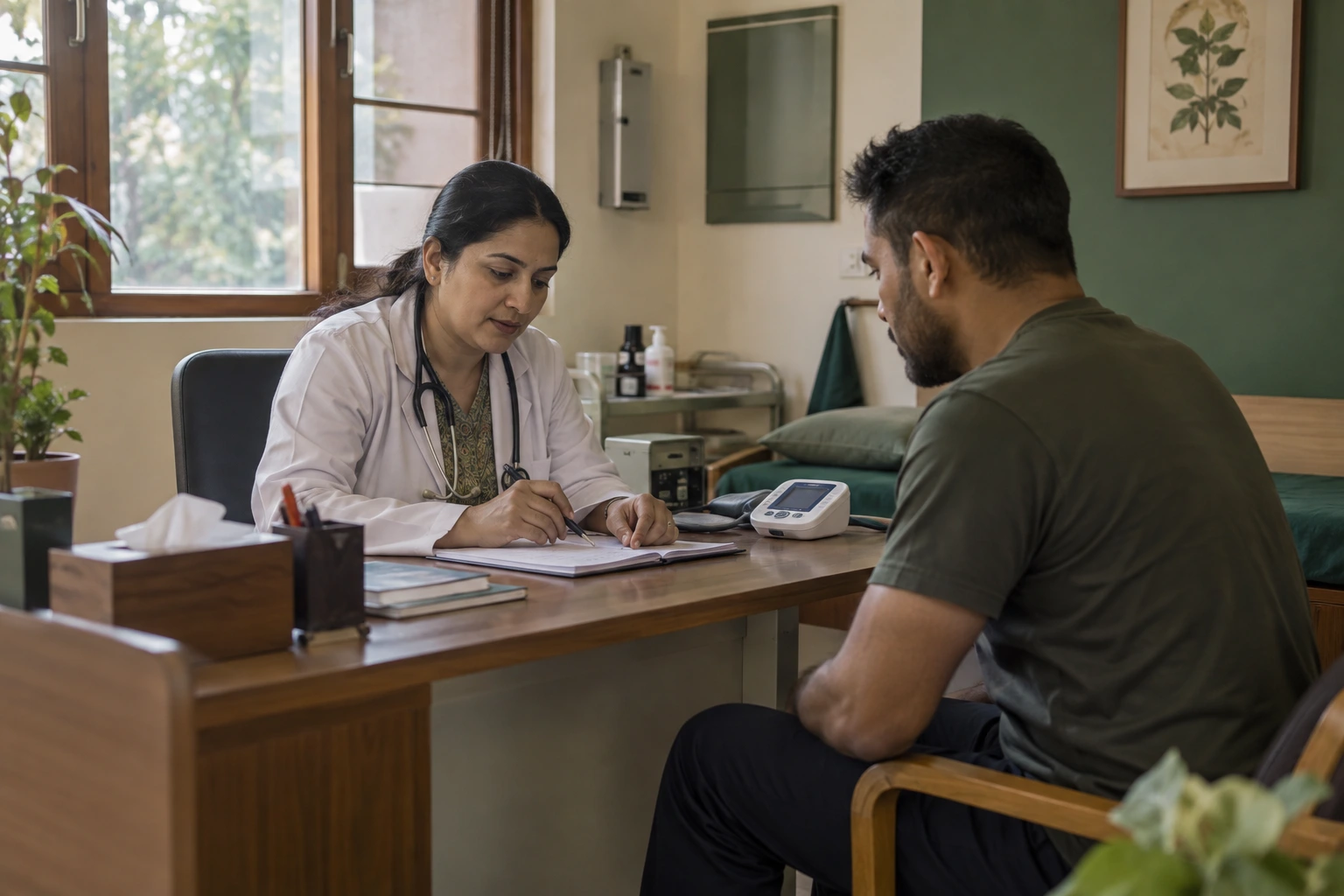
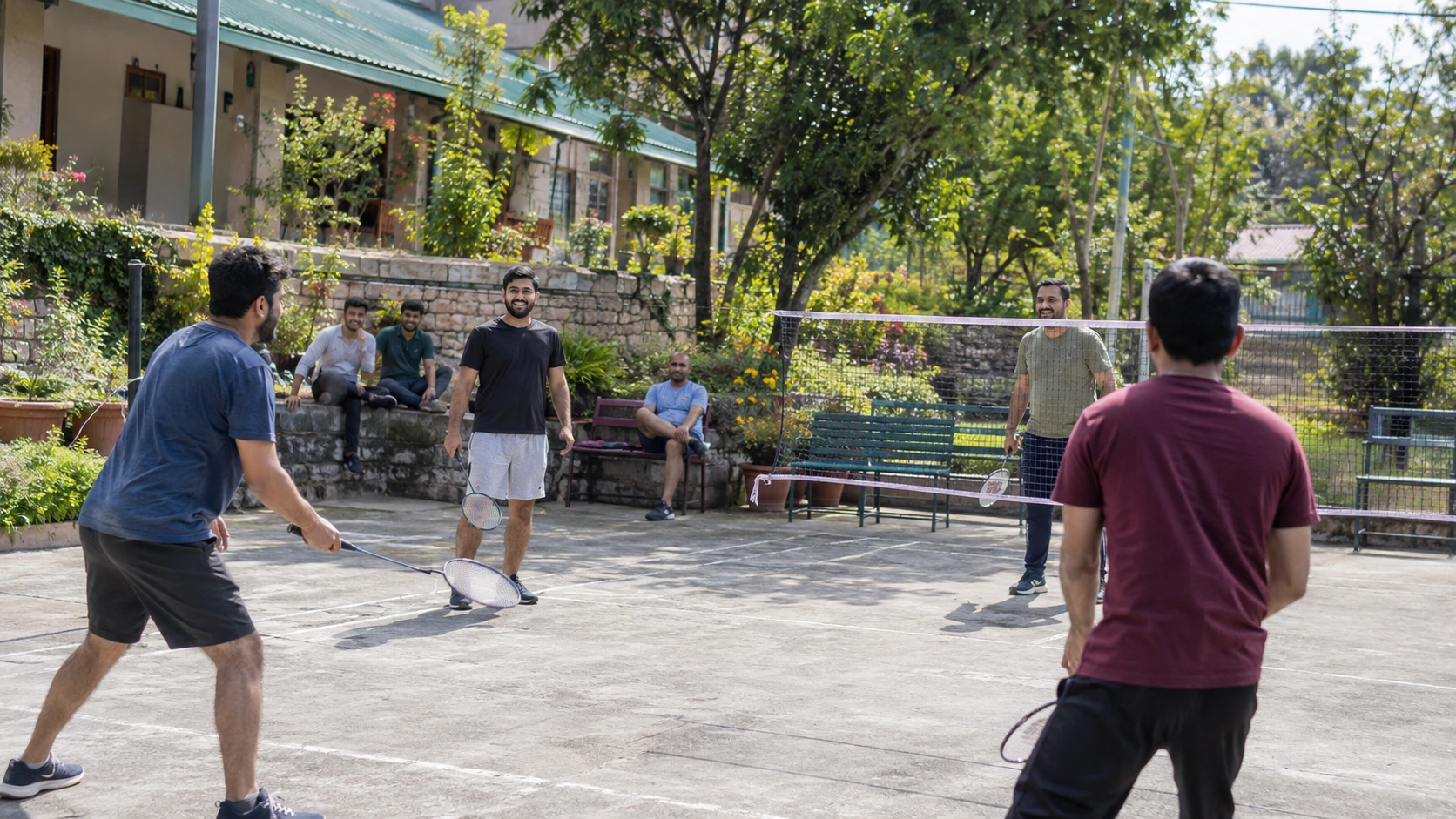
Structure is part of the medicine at any serious residential programme. At our rehab centre in Paonta Sahib district, life follows a steady rhythm from waking to lights out, so that discipline slowly takes the place of craving and the day stops being something to get through.
Morning
An early start, yoga and meditation on the lawn, breakfast, then group therapy and one-to-one counselling.
Afternoon
Rest, reading, skill-building and vocational work, and time for fitness and games.
Evening
Sport, a 12-step meeting and quiet reflection, with fixed meal and sleep times throughout.
Admission at our rehab centre in Paonta Sahib: first day, visits and calls
Families ask our nasha mukti kendra in Paonta Sahib district the same practical questions on every first call, and they deserve real answers rather than "don't worry". Here is what actually happens.
When he refuses help
Refusal is part of the illness, not proof that treatment will fail. Nearly every man here said no first. Do not argue during a craving or a drunk evening; speak in a calm hour, say what you have seen rather than what he is, and make one concrete offer. Our counsellors will coach you through that conversation on the phone before you have it, and explain honestly what the Mental Healthcare Act 2017 does and does not allow a family to do. It may also help to read this guide for families who suspect chitta at home.
What to bring
His Aadhaar or another photo ID, your own ID, and any old prescriptions, discharge summaries or test reports. A few sets of clothes, slippers, a towel and basic toiletries. No cash, no jewellery, no valuables. Tell us at assessment about seizures, TB, HIV, hepatitis, liver problems, diabetes, blood pressure or any psychiatric medicine he takes, even if it feels shameful. Withheld information is the most common reason a detox goes badly.
The first day and the first week
Assessment, paperwork, a medical check, then a room and a meal. Detox usually begins the same day. The first three to five days are the hardest, with poor sleep, aches, sweats and a lot of anger, and nursing runs through the night for exactly this reason. By the end of the first week most men are eating properly and sitting in group. Somebody from the team will update you by phone through that week.
Visits and phone calls
Both are planned with the counsellors as part of treatment, usually after the first stabilisation period, because contact during withdrawal tends to turn into pleading to come home and sets recovery back. After that, visits are welcome and family sessions are part of the programme. Families from Paonta Sahib generally come once a month and combine the visit with a family counselling session, which saves a second journey.
Food and daily care
Simple Himachali vegetarian food from the trust kitchen, on a fixed timetable, with an upgraded diet on the B Caring and A Caring plans. Tea in the morning and evening. Medication is given by the nurse, not kept by residents. Clothes, cleaning and laundry are part of the daily routine, because doing your own work again is part of getting well.
After discharge, and if he slips
He leaves with a written relapse prevention plan and a follow-up schedule, and our helpline stays open to him. If he does slip, tell us early. A slip caught in a week is a setback; a slip hidden for three months is usually a full relapse. We will look honestly at what failed, whether it was a stay that was too short, a depression nobody treated, or no plan for the first Sunday at home, and we will take him back.
Rehab centre in Paonta Sahib: fees, stated plainly
Families comparing a top rehabilitation centre in Paonta Sahib against the cheaper options almost always start with cost, and they are right to. We publish everything. The treatment is identical in every plan; only the room and the diet change. Fees are monthly, so a shorter stay costs less.
General accommodation
Shared Residential Care
Rs 12,500 per month
A place in shared quarters, with meals from the trust kitchen.
Deluxe room, twin sharing
B Caring
Rs 25,000 per month
A deluxe room shared with one other resident, with an upgraded diet.
Private room, single occupancy
A Caring
Rs 40,000 per month
A room of his own and an upgraded diet, for men who need privacy.
Medically supervised detox: Rs 6,000, charged once at admission, whichever plan you choose.
Every plan includes
- Accommodation and all meals
- Prescribed medication
- Doctor and psychiatrist reviews
- Individual counselling and group therapy
- Yoga, fitness and every activity at the centre
- Family counselling sessions
Anything outside this, such as a hospital referral or transport, is discussed with the family before it is spent. There is no separate charge for admission, for paperwork, or for talking to us on the phone.
Government options for Paonta Sahib families, honestly compared
No rehab centre in Paonta Sahib, and no top rehabilitation centre in Paonta Sahib district, should pretend the free route does not exist. We are a private charitable trust and we charge fees. For some families the government route is the right first stop, and for some it is the only affordable one. This is what is actually available in and around Sirmaur, with the details we could verify.
The de-addiction OPD at Nahan medical college
Dr Y S Parmar Government Medical College at Nahan runs a special de-addiction clinic through its psychiatry department, every Saturday from 2 pm to 4 pm. It opened in March 2025. It offers blood work including HIV and hepatitis B and C screening, counselling, and a roughly two-month detoxification programme under medical supervision. This is the nearest proper psychiatric door inside the district and it costs almost nothing. Ring the hospital first to confirm the timing before you travel from Paonta Sahib.
Civil Hospital Paonta Sahib and the CHCs
The civil hospital in Paonta Sahib town and the community health centres across the sub-division are the nearest doors that open at any hour if your son has collapsed, is fitting, is bleeding or cannot be woken. They are not de-addiction facilities, but in an emergency that is not what matters. Withdrawal seizures and overdose are medical emergencies, and the hospital is the right answer, not a phone search.
Kotla Barog, when it opens
A state-level de-addiction centre has been sanctioned at Kotla Barog in the Pachhad sub-division of this district, planned at 100 beds, 50 for men and 50 for women, with rooms, dormitories, a gymnasium, yoga and meditation space, a library and vocational training, on a site of 157 bighas and seven biswas. Rs 5.34 crore has been sanctioned. It is not open yet and we have seen no opening date, so ask the district administration rather than relying on a website.
The helplines, which do work
The national de-addiction helpline on 14446 and Tele MANAS on 14416 are free, answer in Hindi, and will talk to a family member rather than only the person using. If you are reading this at three in the morning and cannot do anything else tonight, do that. It is a real first step and it costs you nothing.
Tanda, near us
The government medical college hospital at Tanda in Kangra runs a weekly drug de-addiction clinic through its psychiatry department, and it sits on our doorstep. For a family that decides to send a man this far, that proximity is part of what you are buying: if a resident ever needs more than we can give, tertiary care is minutes away rather than hours. Our guide to government de-addiction centres in Shimla explains how the government side of this works across Himachal.
Where we differ, plainly
Government treatment is free or nearly free, and that matters enormously. What a weekly OPD cannot offer is a six-month residential stay, a named counsellor throughout, family sessions built into the programme, 24x7 nursing through detox, or a bed on the day you call. We charge for those things. If the free route can do what your family needs, take it, and we will say so on the phone rather than talk you into a journey.
The people Paonta Sahib families will meet
These are the faces behind the rehab centre in Paonta Sahib families send their sons to: the counsellors, the nurse, the pharmacist and the trainers he will see every day. Nobody here is a name on a website you cannot meet, and after what has been reported inside some centres in this district, that should matter to you.
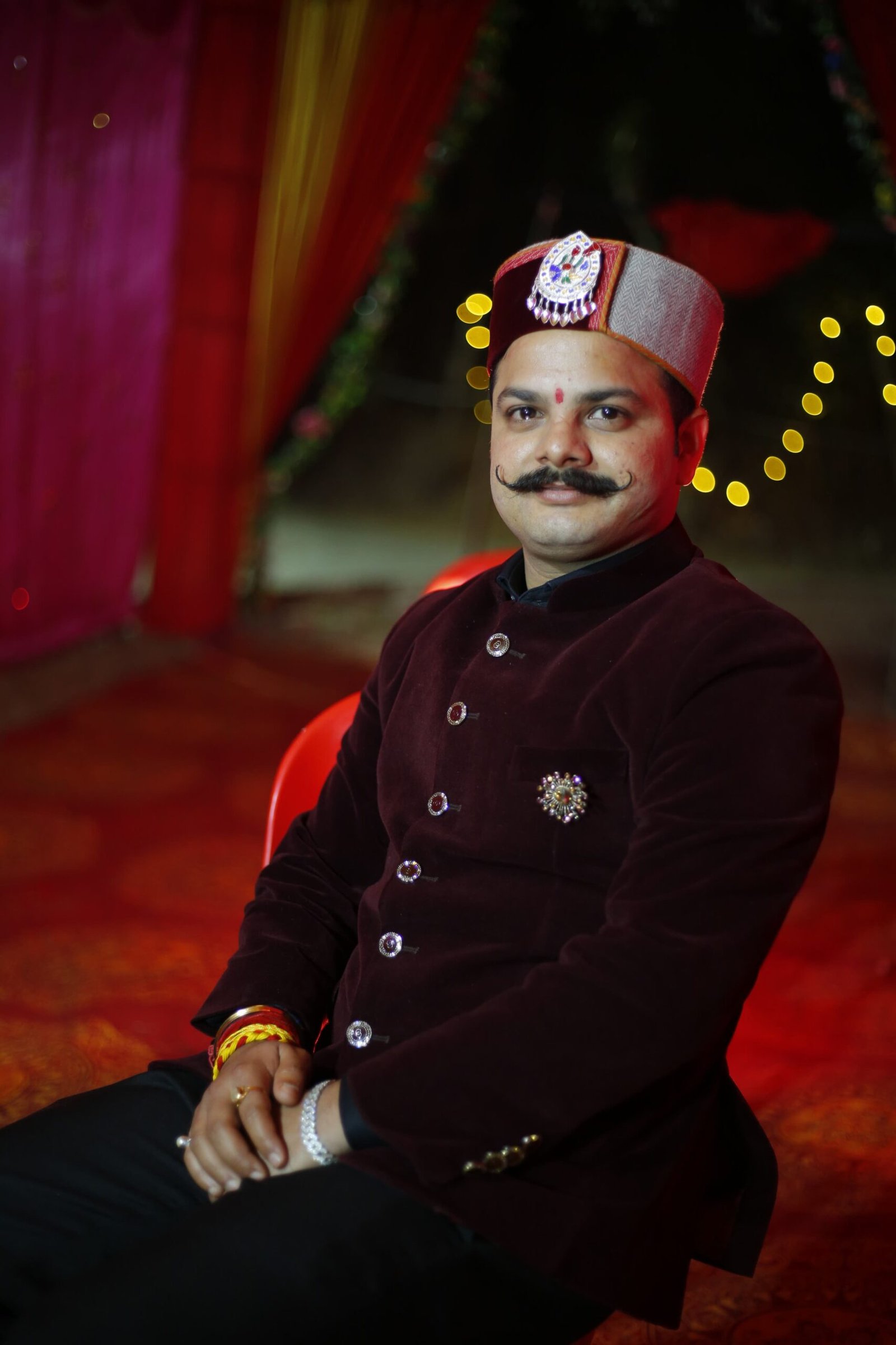
Eshan Pathania
Founder & Managing Trustee
Eshan set up the Trust on one conviction: that the men of Himachal deserve serious, dignified treatment close to home, and that their families deserve straight answers instead of sales talk. He is five years in recovery himself, he is at the centre every day, and if you call and ask for him you will usually get him.
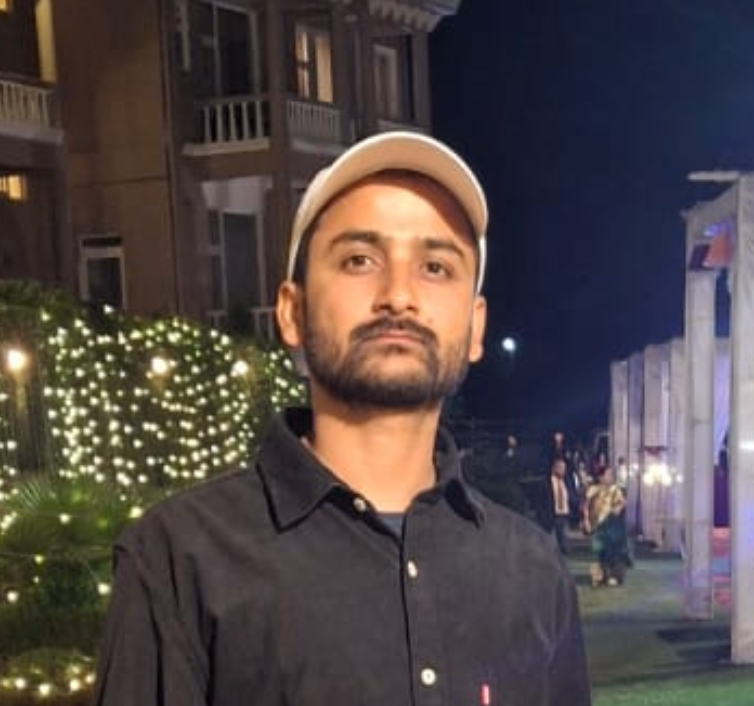
Pankaj Guleria
Vocational Trainer
Skill development and daily vocational work
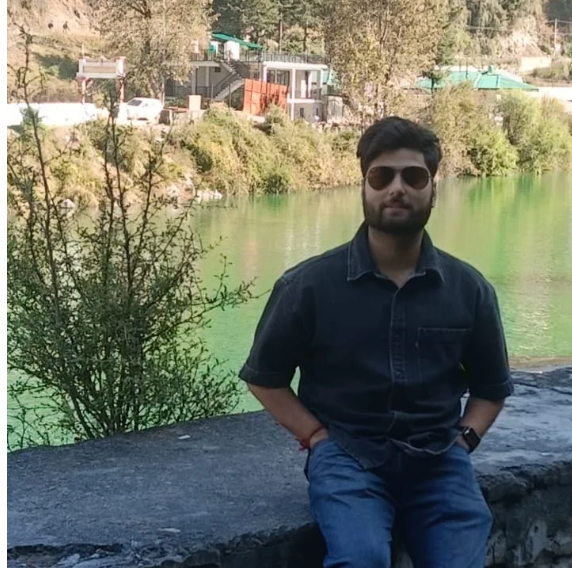
Rakshit Sharma
D. Pharma
Medical support and medication management
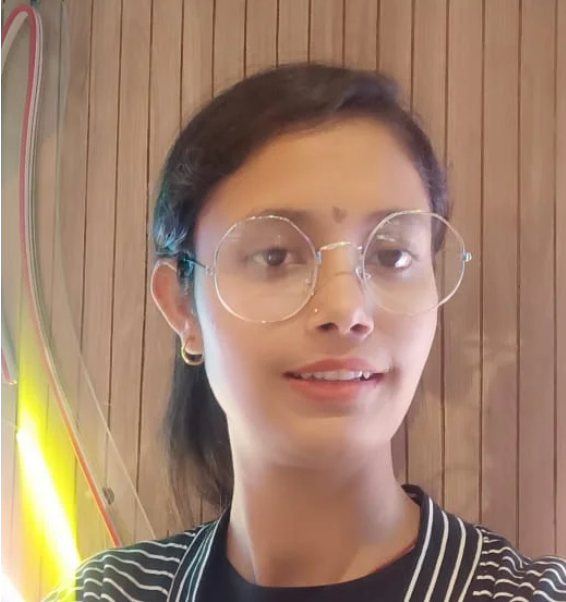
Vanshika
Psychologist
Group therapy and relapse prevention
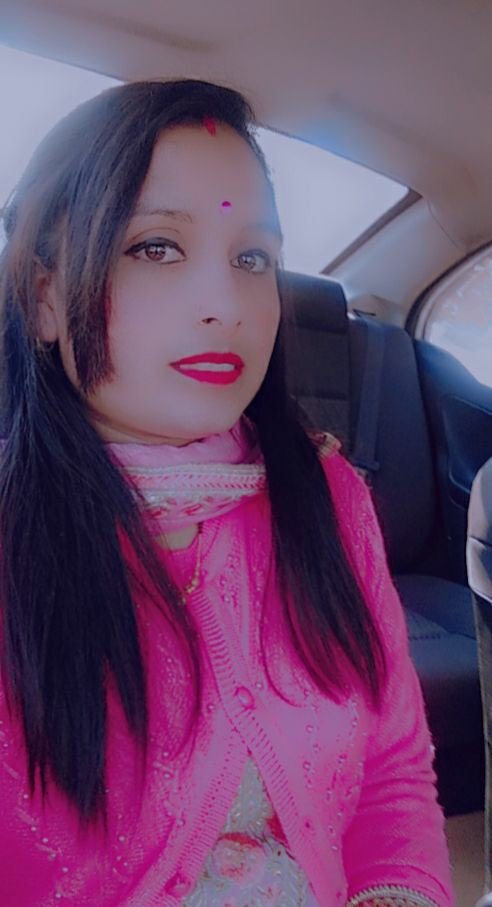
Shivani Rana
MSW Counsellor
Individual counselling and family support
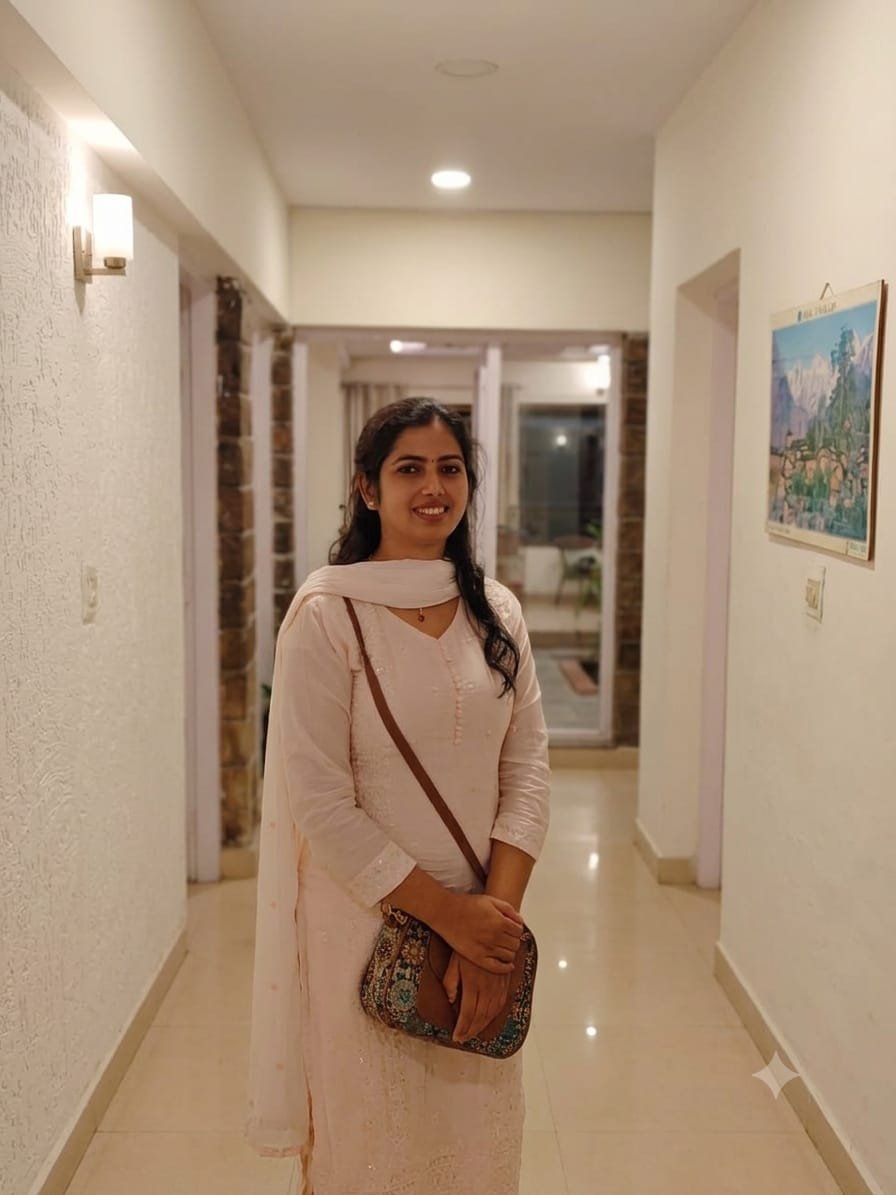
Counsellor
MSW Counsellor
12-step programme and emotional support
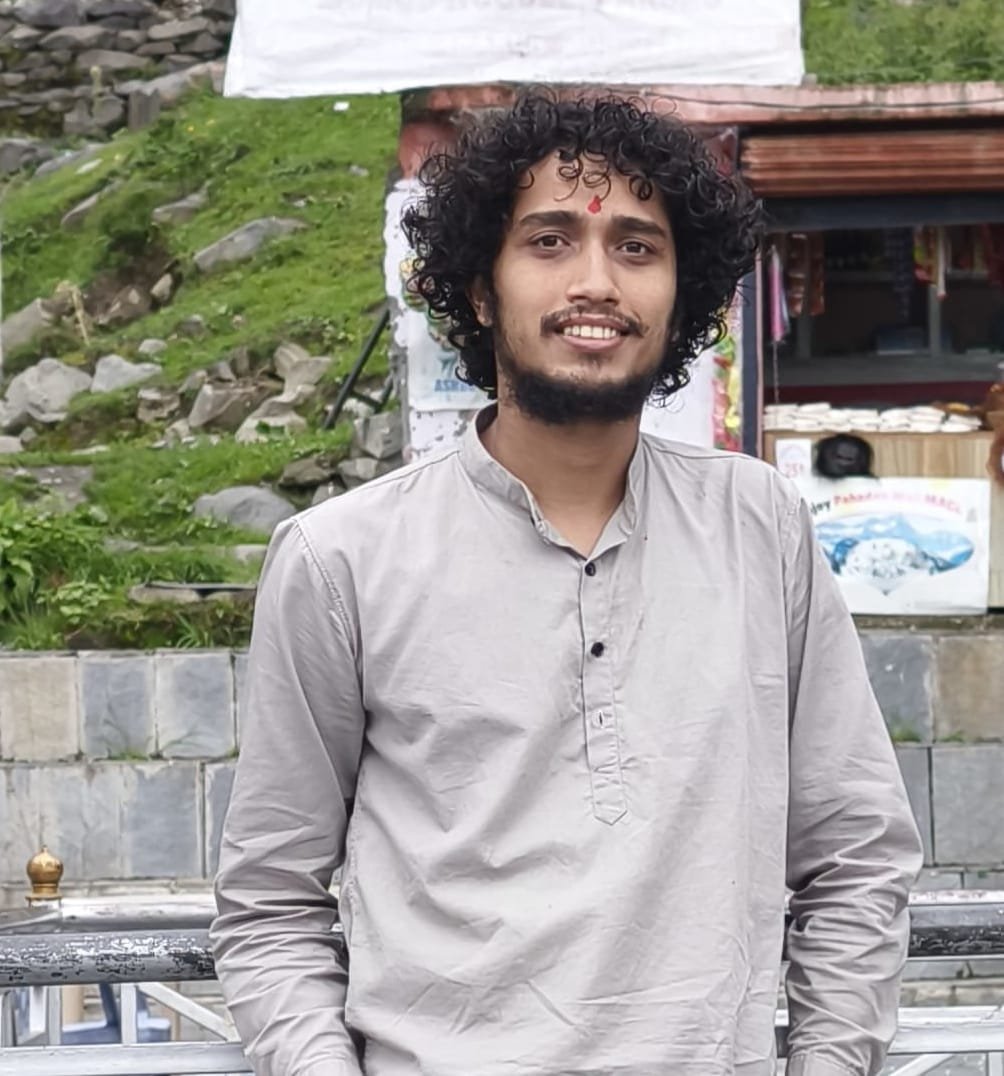
Abhishek
Yoga & Wellness Instructor
Morning yoga and breathwork
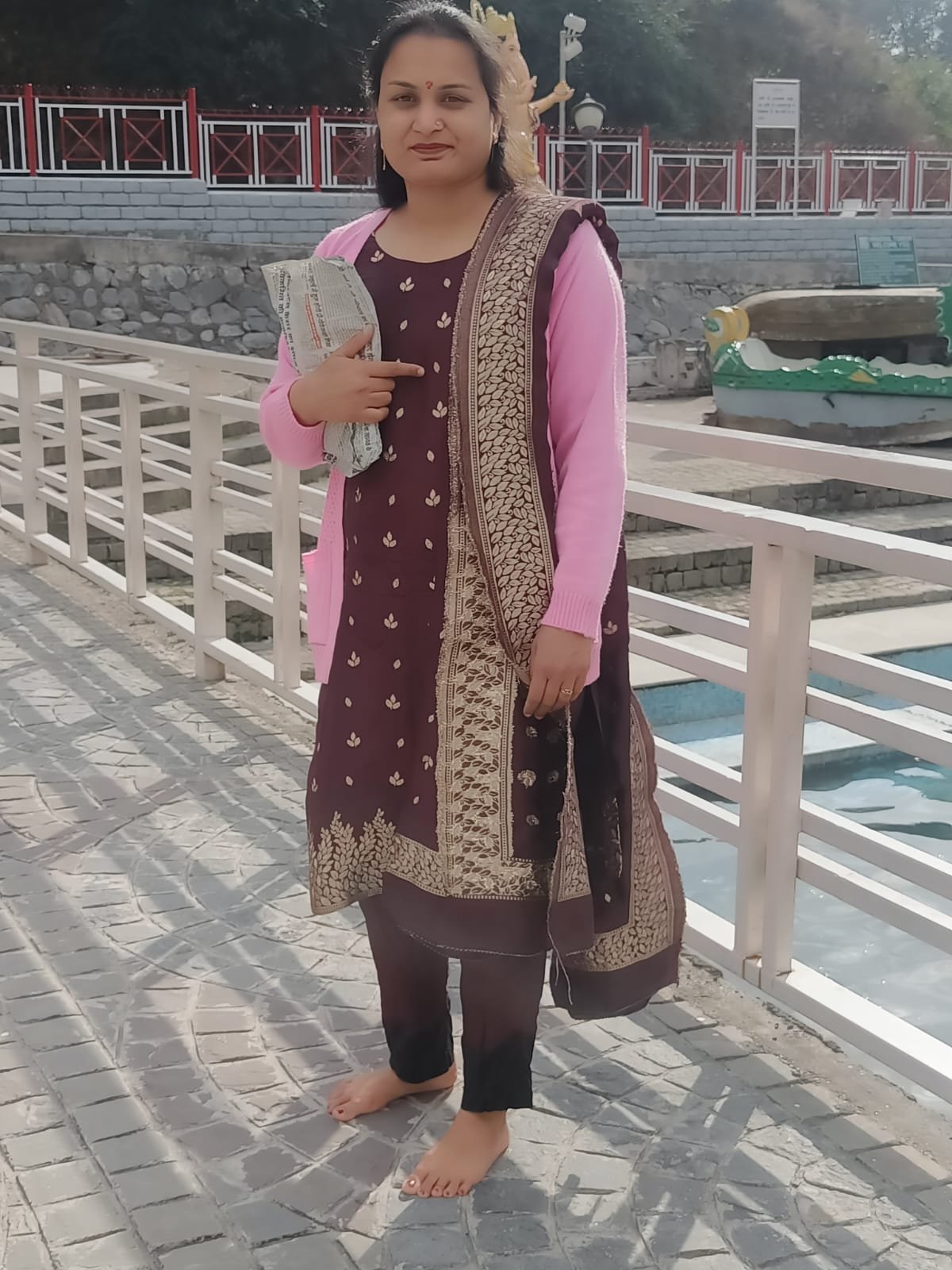
Kheema
Staff Nurse
Round-the-clock nursing care
Voices of recovery
Shared with permission by men who finished the programme at our nasha mukti kendra in Paonta Sahib district. People here ask us constantly whether any of this really works, so we would rather let three of them answer than answer for ourselves.
“I had written myself off long before I got here. Nobody shouted and nobody locked me up. At this nasha mukti kendra they treated me like a man still worth saving, and I stayed the full 180 days of the de-addiction programme. I walked out of that rehabilitation centre with my life back in my own hands.”
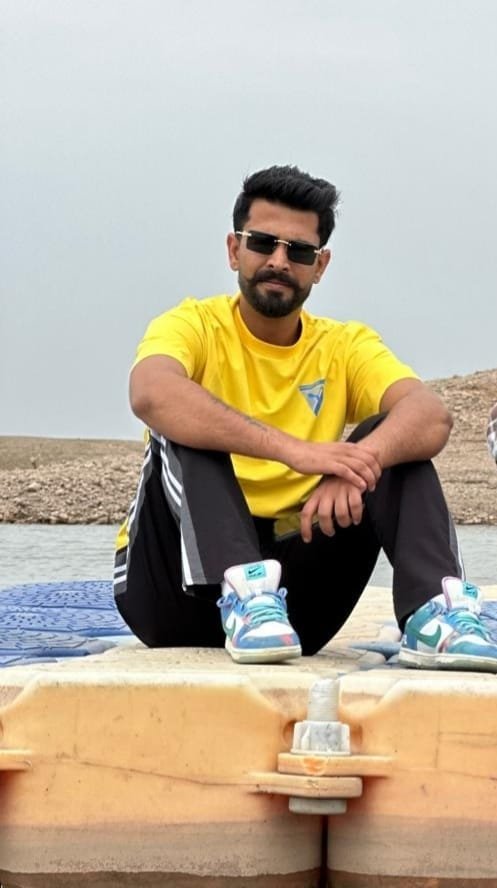 Dinkar
“What happens at this de addiction center is real medical care, not punishment, and that is the whole difference. The detox and drug de-addiction got me clean; the counselling made me face things I had run from for years. I left this rehab with a plan on paper and I still follow it every morning.”
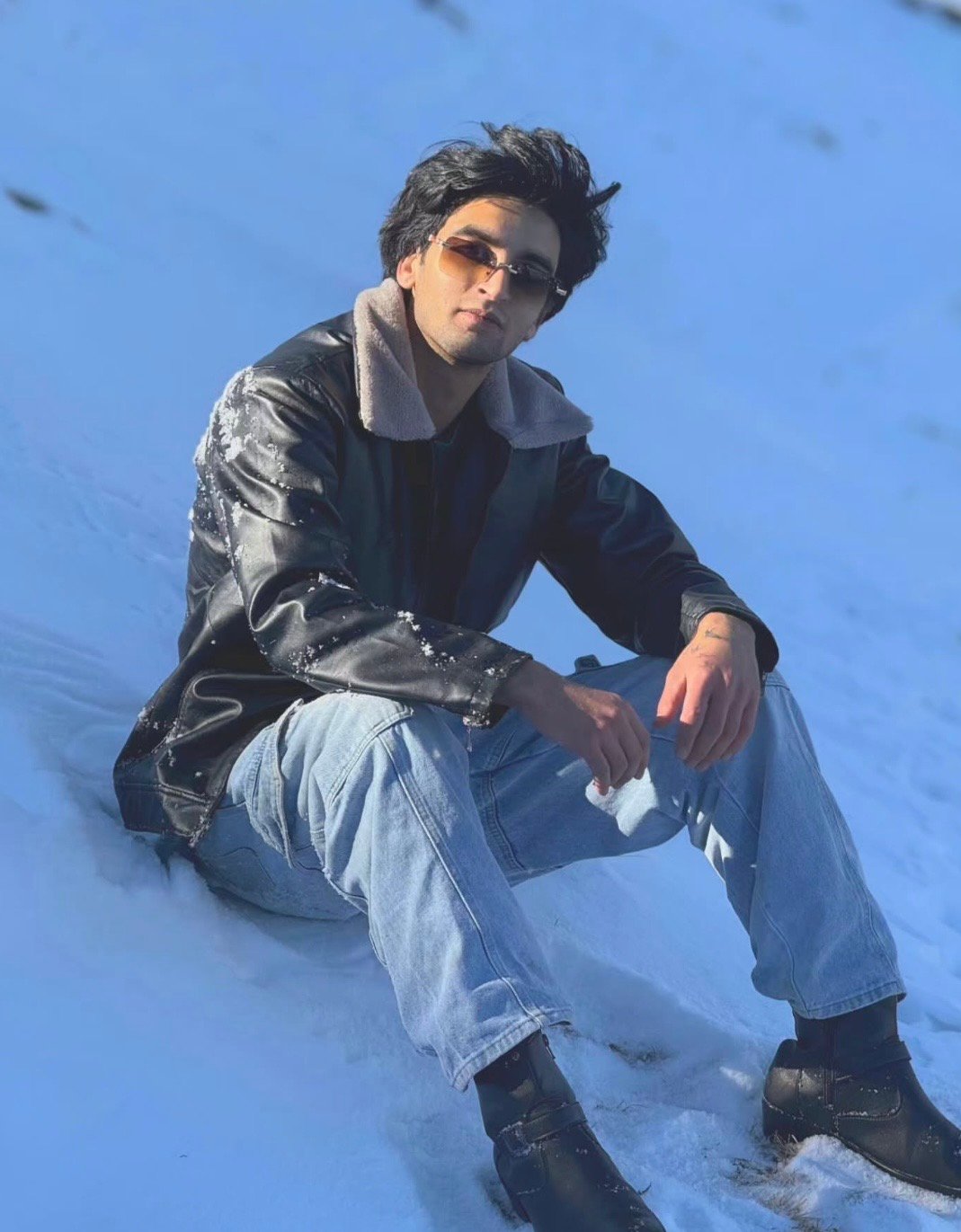 Farhan
“Yoga at six with the Dhauladhar in front of us, group meetings every evening, and staff who never gave up on me even when I had given up on chitta ever letting go. I came in needing an alcohol treatment center as much as anything else. Piece by piece this place rebuilt me and my family has me back.”
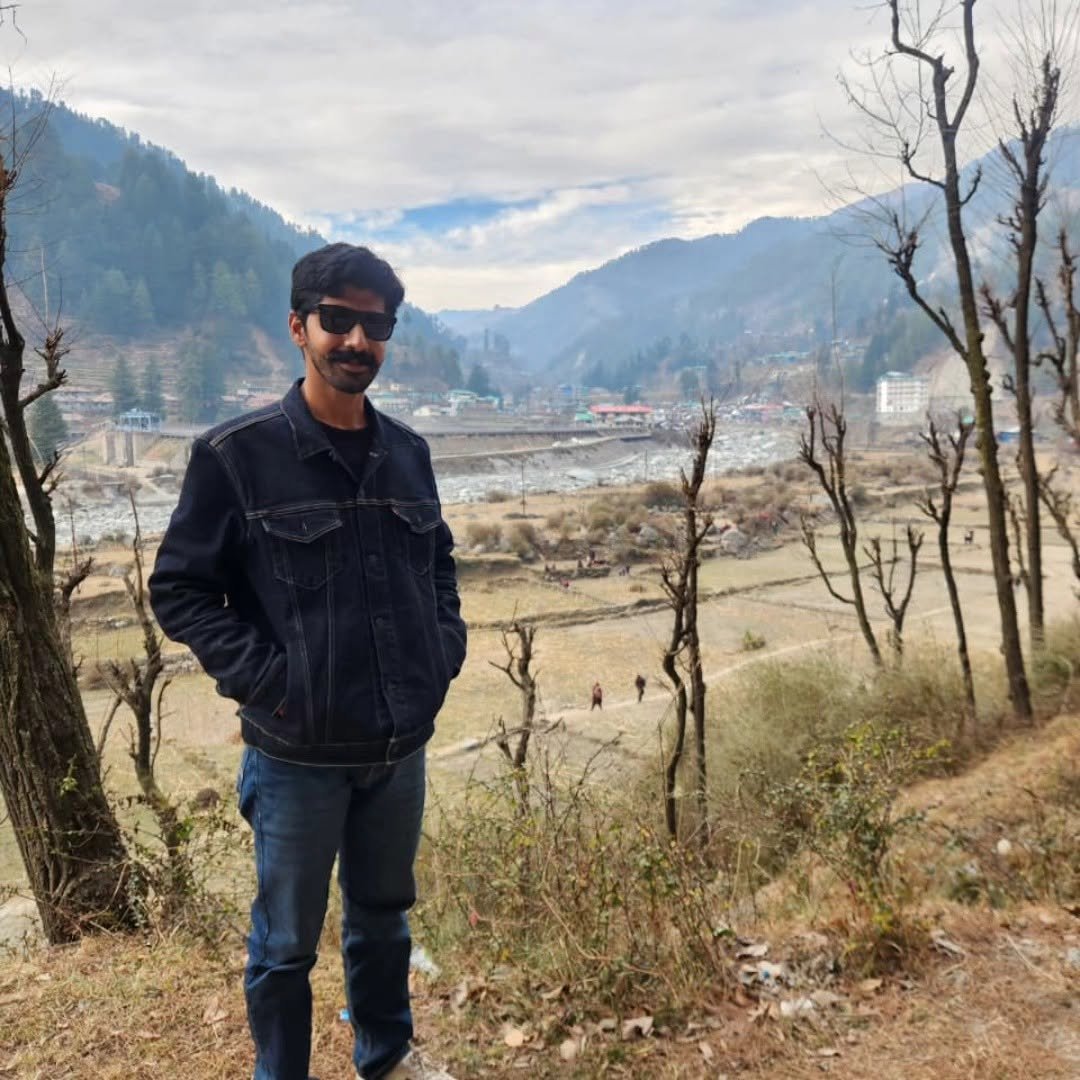 Ayush
How to reach our nasha mukti kendra in Paonta Sahib area
Let us be straight with you about geography, because some centres are not. We do not have a building in Paonta Sahib town. Our centre is at Village Tanda Kholi in Kangra district, at the far north-west end of Himachal, and families from Sirmaur bring their sons to us there. It is a long way and we would rather you knew that before you ring than after.
Why our rehab centre in Paonta Sahib's state sits so far from town
Distance is not a drawback here. It is part of the treatment, and in a border town more than most. A man in recovery who can cross a bridge into another state in ten minutes, or walk to the same bazaar corner where the handover happened, is fighting his illness with one hand tied. Putting real distance between him and all three of those borders is exactly what the first months need.
It also means privacy. In Paonta Sahib, Majra or Puruwala everyone knows everyone, and the fear of the neighbours finding out keeps more families silent than the cost of treatment does. Nobody at the centre knows your village, and nobody in your village needs to know where he has gone.
Being further away does not mean being cut off. Visits and family counselling sessions are planned so that one journey does both, we update you by phone through the week, and aftercare after discharge runs on the phone rather than on the road. We would still rather tell you honestly that the Nahan OPD is the sensible first stop for your family than have you drive all night for nothing.
350 kmapproximate road distance from Paonta Sahib to our centre at Tanda Kholi, via Nahan, Kala Amb, Pinjore and Una
8 to 10 hrsroughly, by car or taxi in normal conditions. A map on your phone will show you the exact route and timing on the day
Ring firstFrom this distance, always confirm a bed and ask what papers to bring before anybody gets in the car
Towns and villages around Paonta Sahib we serve
Men reach our de-addiction centre in Paonta Sahib area from across Sirmaur, and from the Uttarakhand and Uttar Pradesh side of the Yamuna too. If your place is not named here, it is still covered; call and ask.
- Paonta Sahib town and the Yamuna beltPaonta Sahib town, Badripur, Batamandi, Gondpur, Mishrwala, Rampurghat, Surajpur and Kedarpur.
- Majra, Puruwala and the industrial areaMajra, Puruwala, Behral, Bhagani, Jamniwala, Gorkhuwala, Khodri, Nihalgarh and the factory estates that feed them.
- Dhaulakuan and the Nahan roadDhaulakuan, Amboya, Bangran, Shambhuwala, Kolar and the villages along the road up to Nahan.
- Nahan, Kala Amb and TrilokpurNahan town, Kala Amb, Trilokpur, Suketi, Dosarka and the district headquarters belt.
- Shillai, Kamrau and the Giripar villagesShillai, Kamrau, Sataun, Ronhat, Kafota, Minus and the trans-Giri country.
- Renuka, Sangrah and HaripurdharDadahu, Renuka Ji, Sangrah, Haripurdhar, Nohradhar and the upper Sirmaur villages.
- Rajgarh, Pachhad and SarahanRajgarh, Sarahan, Narag, Banethi, Kotla Barog and the peach valley.
- Across the YamunaFamilies in Vikasnagar, Herbertpur and Dehradun in Uttarakhand, and in Behat, Saharanpur and Yamunanagar, reach us on the same terms. Admission does not depend on which state your address is in.
- The Kangra endEverything around the centre itself. Families who come this far often also read our nasha mukti kendra in Kangra page and the rehab centre in Dharamshala page, which cover the same catchment.
Because the centre sits in Kangra district, families travelling up from Paonta Sahib often also read our rehab centre in Palampur page, or the rehab centre in Nurpur page if they are going on towards Pathankot. It is the same centre, the same team and the same fees whichever page brought you here. You can also start at our main site.
By bus from Paonta Sahib
There is no single direct service, so most families change once. Take an HRTC bus from Paonta Sahib to Chandigarh via Nahan and Kala Amb, then one of the frequent Chandigarh to Dharamshala or Pathankot services, and get down at Tanda Medical College. An auto covers the last stretch. Start at first light; this is a full day on the road and arriving in daylight makes the admission easier on everyone.
By car or taxi
Out of Paonta Sahib on the Nahan road, through Kala Amb to Pinjore, then the Chandigarh bypass and up through Una and Hamirpur or Nadaun to Kangra and Tanda. Most of it is good road. Ask any driver for the FCI godown at Tanda Kholi, beside the medical college. Call us when you set out and again when you are close and we will talk you in.
By train
Paonta Sahib has no railway station of its own. The usable railheads are Dehradun across the Yamuna and Saharanpur or Yamunanagar on the plains side. From any of them you would still need to reach Chandigarh or Pathankot and then come across to Kangra, which is why almost every family we admit from Sirmaur travels by road instead. If you do come by train, Pathankot is the station to aim for and a taxi from there reaches us in about two hours.
By air
Paonta Sahib has no airport. Gaggal near Kangra, also called Dharamshala airport, is the nearest one to our centre and a taxi from there comes almost straight to Tanda, but getting to Gaggal from Sirmaur means flying out of Dehradun or Chandigarh via Delhi. For almost everyone the car is faster, cheaper and easier with a man who is unwell.
Questions about our rehab centre in Paonta Sahib
These are the questions families ask our de-addiction centre in Paonta Sahib district most often. If yours is not here, call us. Every conversation is private, there is no obligation, and nobody will be put under pressure to admit anyone.
Serving families across Paonta Sahib and nearby villages. This map shows the area we serve; our centre's address is in the contact section below.
How far is your rehab centre from Paonta Sahib?
A long way, and we would rather you knew before you ring. Our centre is at Village Tanda Kholi in Kangra district, not in Paonta Sahib town. From Paonta Sahib it is roughly 350 km by road via Nahan, Kala Amb, Pinjore and Una, about eight to ten hours by car in normal conditions. A map on your phone will show you the exact route and timing on the day you travel.
Is there a de-addiction centre in Paonta Sahib or Sirmaur we should try first?
The nearest government option inside the district is the special de-addiction OPD at Dr Y S Parmar Government Medical College in Nahan, which runs every Saturday afternoon through the psychiatry department and offers screening, counselling and a supervised detox programme. A state-level centre with 100 beds has been sanctioned at Kotla Barog in Pachhad but is not open yet. Ring Nahan first. If the free route can do what your family needs, take it, and we will say so.
How do we reach you from Paonta Sahib?
Most families drive. Out of Paonta Sahib on the Nahan road, through Kala Amb to Pinjore, then the Chandigarh bypass and up through Una and Hamirpur or Nadaun to Kangra and Tanda. By bus, take an HRTC service to Chandigarh and change there for Dharamshala or Pathankot, getting down at Tanda Medical College. Ask any driver for the FCI godown at Tanda Kholi. Call us when you set out and we will guide you in.
Which towns and villages around Paonta Sahib do you take men from?
From across Sirmaur. Paonta Sahib town, Badripur, Batamandi, Majra, Puruwala, Behral, Bhagani, Gondpur, Mishrwala, Rampurghat, Surajpur, Kedarpur, Jamniwala, Gorkhuwala, Khodri, Nihalgarh, Dhaulakuan, Amboya, Bangran, Shambhuwala, Kolar, Nahan, Kala Amb, Trilokpur, Shillai, Kamrau, Sataun, Ronhat, Kafota, Dadahu, Renuka Ji, Sangrah, Haripurdhar, Nohradhar, Rajgarh, Sarahan and Kotla Barog. If your village is not on that list, call anyway.
We live across the Yamuna in Uttarakhand or Uttar Pradesh. Can you still take him?
Yes, on exactly the same terms. Paonta Sahib, Vikasnagar, Herbertpur, Behat and the Saharanpur belt are one community in practice, whatever the map says. There is no different fee, no different programme, and no question asked about which state your address is in. Bring the same identity papers any Himachal family brings.
Does Paonta Sahib really have a drug problem, or is it being exaggerated?
It is not exaggerated. Between January and September 2025 Himachal Pradesh police registered 1,618 NDPS cases and Sirmaur accounted for 132 of them, the sixth highest of fifteen police districts. In the first 110 days of 2025 alone, Sirmaur police registered 65 cases and arrested 95 people, 47 of them in chitta cases. In October 2025 property worth Rs 1.34 crore was attached in Paonta Sahib from one repeat dealer.
Why is the state border such a problem for Paonta Sahib?
Because three states meet within a few kilometres. The Yamuna is the Himachal and Uttarakhand boundary, Dehradun is about 44 km away, and the Uttar Pradesh line is a short run beyond. Supply is close and competitive, enforcement stops at each bridge, and a lot of the people arrested here do not live here: of the 95 arrested in that 110-day drive, 23 came from outside Himachal.
Is chitta or sharab the bigger problem in Paonta Sahib?
Chitta gets the headlines and sharab quietly does more damage across more households. Heroin was the single biggest head in the Sirmaur drive, 25 of 65 cases and 642.21 grams seized, and police have picked it up at the Yamuna toll barrier and in Badripur. But liquor is legal, cheap and everywhere here, and in December 2025 police destroyed about 2,600 litres of raw country liquor and four bhattis in the Khara forests of this sub-division.
Is illegal liquor a real danger around Paonta Sahib?
Yes. Lahan brewed in the forest is untested, unmeasured and sometimes poisonous, and the quantities found here are industrial rather than domestic. The Majra police operation in December 2025 destroyed roughly 2,600 litres and four working distillation setups in the Khara forests. If a man in your family is drinking that, the risk is not only dependence; it is what is actually in the bottle.
My brother works in a factory here and lives away from the family. Is that the usual pattern?
It is one of the most common patterns we see from this belt. The industrial area around Paonta Sahib and Kala Amb draws thousands of young men from Uttar Pradesh, Bihar, Uttarakhand and Nepal onto shift work, living in rooms away from home with cash in hand. Nobody notices for months. That is not a character flaw, it is isolation plus money plus availability, and it responds to treatment like any other dependence.
Why is your rehab centre in Paonta Sahib's state located so far away?
Because keeping a man ten minutes from a state line, or within walking distance of the bazaar corner where the handover happened, is the fastest way to lose him in the first month. Space from that world is part of the treatment. So is privacy: in Paonta Sahib, Majra or Puruwala everybody knows everybody, and the fear of neighbours finding out keeps more families silent than the cost of treatment does.
Can families from Paonta Sahib visit during treatment?
Yes. Visits are planned with the counsellors, usually after the first stabilisation period, because contact during withdrawal turns into pleading to come home and sets recovery back. Given the distance, most Sirmaur families come about once a month and we schedule the family counselling session for the same visit so that one journey does both. Between visits we update you by phone.
What should we do before travelling down with him?
Ring first. From this distance nobody should set out without a confirmed bed. On that call a counsellor will ask what he is using and how much, how long it has been going on, whether he has had fits or blackouts, and what he has already tried. We will tell you what papers to bring, what the first week looks like, and honestly whether the Nahan OPD or a hospital is the better first step tonight.
Which is the best rehab center near me in Paonta Sahib?
Judge any centre on six checkable things: a registration certificate from the State Mental Health Authority of the state it actually sits in, detox under medical supervision, a stay long enough to work, the family inside the treatment, fees in writing, and staff you are allowed to meet. We meet all six and we welcome you to verify each one. If you searched for rehab near me or nasha mukti kendra near me from anywhere in Sirmaur, call first and we will tell you honestly whether our programme suits your family.
Is there an alcohol treatment center near me in Paonta Sahib?
Alcohol is treated in the same residential programme as every other substance, so an alcohol treatment center and a de addiction center are the same place here. Our alcohol de-addiction in Paonta Sahib begins with medically supervised detox, because stopping heavy daily drinking suddenly can cause tremors, seizures and hallucinations, then treats the liver, sleep, nutrition and the depression underneath. For a dangerous withdrawal right now, the civil hospital is the answer, not a phone search.
Does charas or bhang really need treatment? It grows around here.
Growing wild does not make it harmless. What we treat is the young man whose studies, job and motivation have quietly fallen apart over two or three years of bhang and charas, and who is usually using something else alongside it by the time anybody notices. On a border where chitta is this available, a cannabis habit rarely stays a cannabis habit for long.
We cannot afford to travel or to pay. What then?
Say so on the phone and we will be straight with you rather than waste your time. Start with the Saturday de-addiction OPD at the Nahan medical college and the national helpline on 14446, both of which cost nothing. If a residential stay is genuinely what he needs and money is the only obstacle, tell us; we are a charitable trust, not a business, and the conversation is worth having before you give up on it.
What is chitta ka ilaj at your centre?
It starts with medically supervised detox: medication to manage the cramps, vomiting, sweating and sleeplessness, with monitoring and nursing round the clock. Once he is stable, the real treatment begins, which is counselling, CBT for the depression or anxiety underneath, the 12-step programme, group therapy, yoga and fitness, family work and a written relapse prevention plan for the day he goes home.
How long does chitta treatment in Paonta Sahib families ask about actually take?
Detox takes one to two weeks. Recovery takes much longer. We recommend 180 days in residence because chitta rarely lets go in 15 or 30 days, and the men who relapse fastest are almost always the ones who left early. The programme is flexible and fees are monthly, so a shorter stay is possible and costs less, but we will say plainly what it can and cannot achieve.
Is chitta withdrawal dangerous?
Chitta withdrawal is rarely fatal by itself, but it is severe enough that almost nobody gets through it alone at home. The greater danger comes afterwards. Once the body loses tolerance, going back to the old dose can stop his breathing, which is why so many overdose deaths happen soon after a failed attempt to quit. Detox under medical supervision removes both risks.
What are the signs of a chitta overdose, and what do we do?
Very slow or stopped breathing, blue lips or fingertips, pinpoint pupils, cold clammy skin, and a person who cannot be woken by shouting or shaking. This is an emergency. Call an ambulance or get him to the nearest hospital immediately, keep him on his side, and do not leave him alone or wait to see if he sleeps it off.
He has relapsed after chitta before. Is there any point trying again?
Yes. Relapse is part of this illness, not proof that he is beyond help, and many men here are on their second or third attempt. What matters is looking honestly at why the last one failed: a stay that was too short, a depression nobody treated, a family that was never involved, or no plan for the first week at home. We start there.
He injects. Is chitta de-addiction different for him?
The programme is the same but the medical care is more careful. Injecting brings the risk of overdose, abscesses, hepatitis B and C and HIV, so we screen at admission, treat infections or refer for them, and watch him more closely through detox. Tell us at assessment if he has been injecting, even if he has hidden it from you until now.
What is sharab chudane ka ilaj and how does it work?
It begins with medically supervised detox, because alcohol is one of the few substances where stopping suddenly can be dangerous. After that we treat the whole picture: sleep, nutrition, liver and blood pressure, the depression or anxiety that usually sits underneath sharab ki lat, and the habits and company that keep it going. Counselling, the 12-step programme and family sessions run through the stay.
Is alcohol withdrawal dangerous at home?
It can be. After years of heavy daily drinking, stopping abruptly can cause tremors, confusion, hallucinations, seizures and delirium tremens, which can kill. If he drinks from the morning, has ever had a fit, or has liver trouble, do not lock him in a room and wait it out. Get him into medical care, either with us or at a hospital.
My husband drinks every day but still goes to work. Does he need alcohol rehab in Paonta Sahib?
Holding down a job does not mean the drinking is under control; it usually means the crash has not arrived yet. The questions that matter are whether he can stop for a week without feeling ill, whether the amount keeps rising, whether money and sleep and temper have changed, and whether he drinks before noon. If you are frightened of him or of the bills, that is reason enough to call.
My father has been drinking for thirty years. Is he too old for a de-addiction centre in Paonta Sahib district to help?
No. We take men aged 18 and above with no upper age limit, and older men often do very well because the motivation is real and the denial has worn thin. What changes is the medical side: we look harder at the liver, the heart, blood pressure, diabetes and nutrition, and the detox is managed more slowly and more carefully.
Do you treat charas, ganja, bhang, doda and goliyon ka nasha as well?
Yes, all of them, inside the same residential programme. Charas, ganja and bhang are treated mainly with CBT, routine and fitness. Opium, afeem, doda, bhukki and poppy husk need a medically managed taper, and in this district that is a large part of what we do. Tramadol, codeine syrup and alprazolam are tapered under supervision too, because stopping a benzodiazepine suddenly can cause seizures.
What is the difference between a rehabilitation center and a de addiction center?
In India the words are used interchangeably, and a nasha mukti kendra usually means the same thing again. Strictly, a de-addiction centre handles the medical side, which is detox and getting the substance out safely, while rehabilitation covers the months of counselling, therapy and relapse prevention that follow. A good centre does both, which is what we do. Our full explainer on the difference between a rehab centre and a nasha mukti kendra goes through it properly.
What actually happens inside a rehab centre day to day?
An early start with yoga and meditation, breakfast, then group therapy and one-to-one counselling through the morning. Afternoons are rest, reading, skill-building, vocational work, fitness and games. Evenings bring sport, a 12-step meeting and quiet reflection, with fixed meal and sleep times throughout. Detox runs alongside this in the first weeks. Our guide to what happens in a rehab centre walks through a full stay.
Which is the best rehab centre in Paonta Sahib, and how should we judge?
The best rehabilitation centre in Paonta Sahib for your family is the one you can check rather than the one with the loudest advertisement. Ask to see the State Mental Health Authority registration certificate, ask who prescribes during detox, ask how long the core stay is, ask what the family's role is, ask for the fees in writing, and ask to meet the staff. Any centre that avoids those questions has answered them.
Is your nasha mukti kendra in Paonta Sahib district government registered?
Yes. We hold Provisional Registration Sr. No. 193 from the HP State Mental Health Authority, Shimla, under Sections 66(4) and 66(11) of the Mental Healthcare Act 2017, issued on 14/05/2026. The certificate is displayed at the centre and you are welcome to inspect it. We are also a registered charitable trust, but we do not pretend a trust deed is a treatment licence.
What are the fees?
Rs 12,500 a month for Shared Residential Care, Rs 25,000 a month for B Caring, which is a deluxe twin-sharing room with an upgraded diet, and Rs 40,000 a month for A Caring, which is a private room. Medically supervised detox is Rs 6,000, charged once at admission whichever plan you choose. The treatment is identical in every plan.
What is included in the monthly fee?
Accommodation, all meals, prescribed medication, doctor and psychiatrist reviews, individual counselling, group therapy, the 12-step programme, yoga, fitness and every activity at the centre, plus family counselling sessions. Anything outside this, such as a hospital referral or transport, is discussed with the family before it is spent.
Can we choose a shorter stay than 180 days?
Yes. The programme is flexible and fees are monthly, so a shorter stay costs less. Being honest about it: one month can get him safely through detox and stabilised. Three months adds real therapy and the beginnings of new habits. Six months is what gives a relapse prevention plan a fair chance of holding once he is back among the same people and places.
What if he refuses to come for treatment?
Almost everyone refuses at first, and that is the illness talking rather than a final answer. Do not raise it during a craving or a drunk evening. Choose a calm hour, describe what you have seen instead of what he is, and make one clear offer. Call us beforehand and a counsellor will help you plan that conversation, and will explain what the Mental Healthcare Act 2017 allows.
Can we admit him by force?
We do not do forced admissions and no lawful centre should. The Mental Healthcare Act 2017 sets out narrow conditions for supported admission, and they require a proper assessment rather than a family decision alone. In practice, a man dragged in against his will leaves as soon as he can. Getting him to agree, even reluctantly, is worth the extra week it takes.
Is admission confidential?
Completely. As a registered mental health establishment we are bound by the Mental Healthcare Act 2017 to keep his records private. Nothing is shared with employers, neighbours, panchayat members or anyone outside the treatment. Nobody at the centre will know your village, and nobody in your village needs to know where he has gone.
Who can be admitted, and what should we bring?
Men aged 18 and above, with no upper age limit. This is a male-only residential centre. Bring his Aadhaar or another photo ID, your own ID, and any old prescriptions or discharge papers. A few sets of clothes and basic toiletries are enough. Tell us at the assessment about seizures, liver problems, diabetes, TB, HIV or any psychiatric medicine he is on.
He has tried nasha chudane ka ilaj before and it failed. Why would this be different?
Because most failed attempts were not really treatment. A fortnight in a locked room is detox at best, and detox alone almost never holds. What changes the odds is length of stay, psychiatric care for what lies underneath, the family being taught how to help, and a written plan for the first weeks at home. If those four were missing last time, this will not be the same thing.
What happens after discharge?
Every man leaves with a written relapse prevention plan naming his triggers, his warning signs and the people he will call. Aftercare means follow-up calls and reviews through the first fragile months at home, and our helpline stays open to former residents and their families. If he slips, tell us early, because a slip caught in a week is far easier to turn around.
Guides for families in Paonta Sahib
Eight honest reads from our nasha mukti kendra in Paonta Sahib district, for households anywhere from Badripur to Shillai who want to understand what is happening before they decide what to do about it.
What Happens in a Rehab Centre
A stay walked through day by day, from the first assessment and detox to discharge and aftercare.Read the articleRehab Centre or Nasha Mukti Kendra?
What the words actually mean, how a de-addiction centre differs from rehabilitation, and which one he needs.Read the article
Government De-Addiction Centres
How the free government route works, what it can offer and where it falls short.Read the articleWarning Signs of Drug and Alcohol Addiction
The physical, behavioural and financial signs families miss, and what each one usually means.Read the article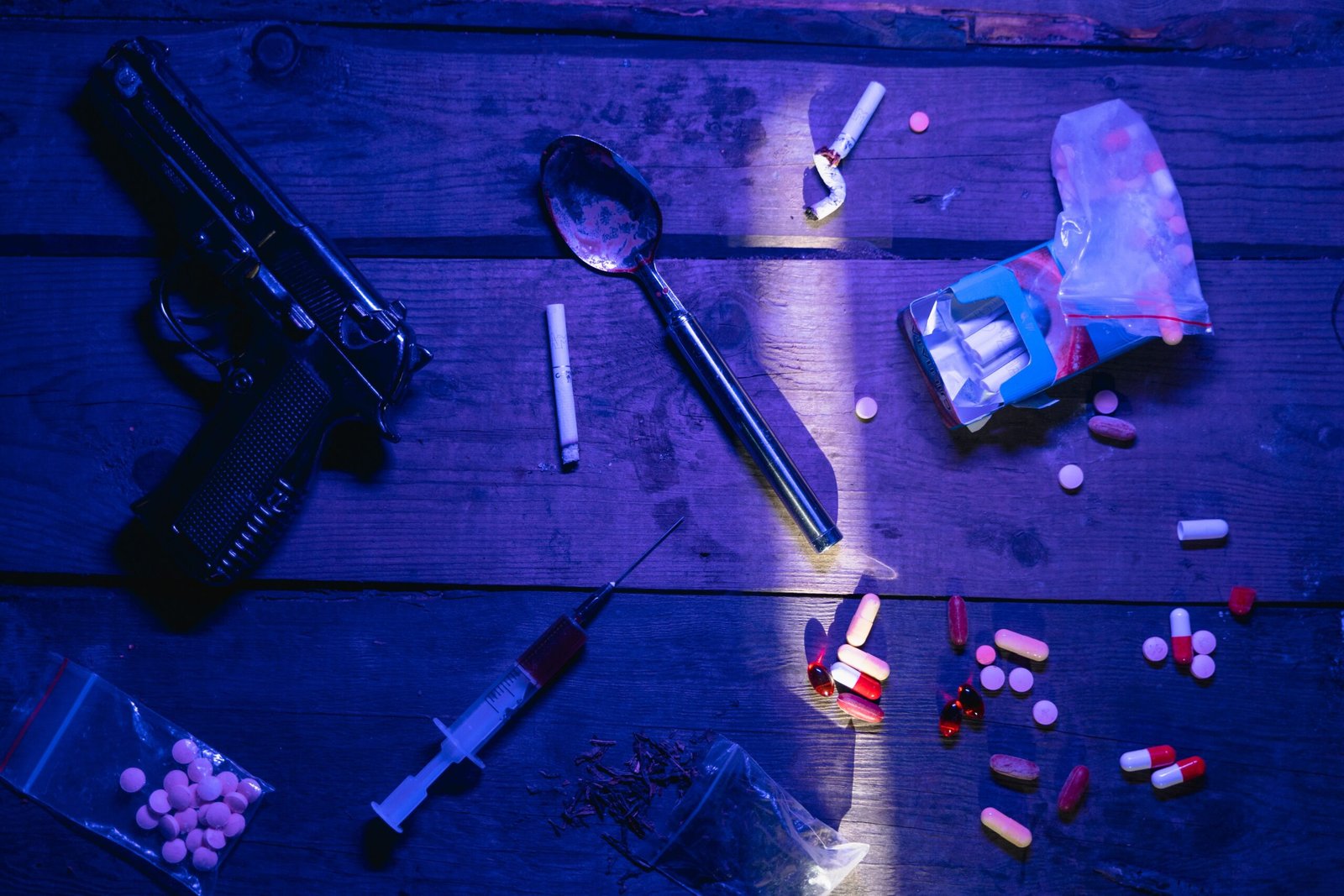
The Psychology of Addiction
Why addiction is a response to pain rather than a failure of willpower, and how the brain can learn to heal.Read the article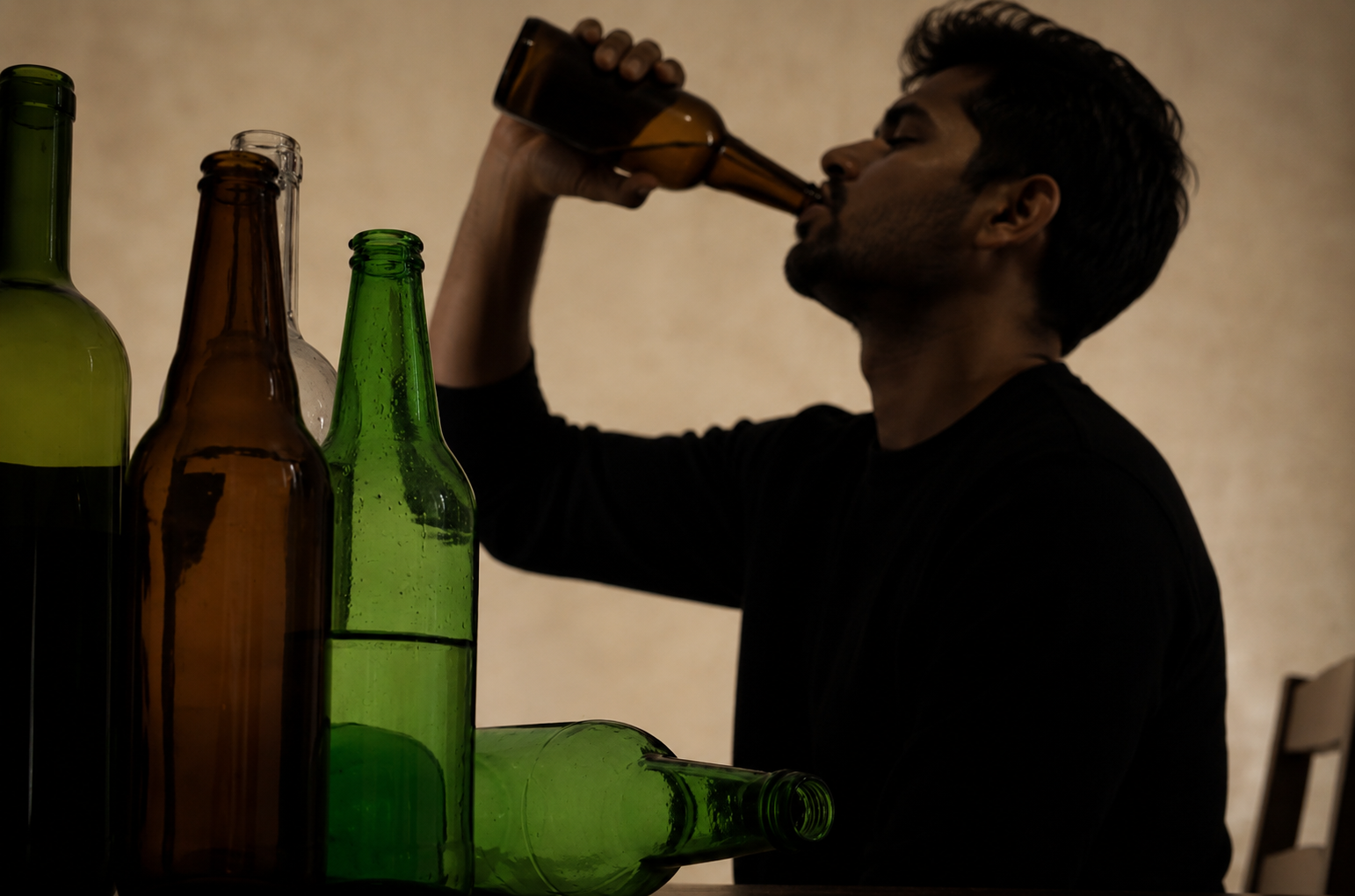
Alcohol Addiction Recovery
The silent warning signs of sharab ki lat, how alcohol rewires the brain, and the real path back to health.Read the article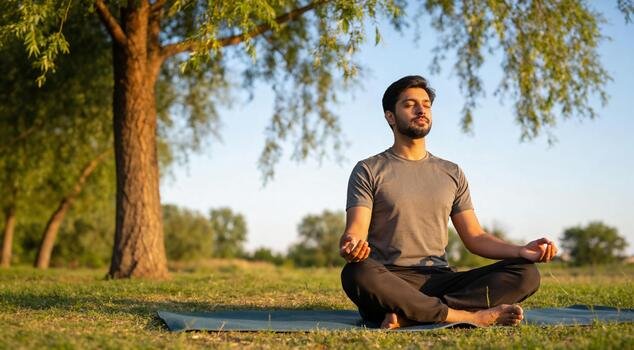
Yoga for Stress and Anxiety
Simple asanas and breathwork to calm the nervous system and settle a restless mind.Read the articleGhar Mein Koi Chitta Le Raha Hai
A guide in Hindi for families who suspect somebody at home is using chitta, and what to do next.Read the articleContact our rehab centre and nasha mukti kendra in Paonta Sahib
One phone call is where it starts.
Tell us what is happening at home. Calls are confidential, there is no obligation, and a counsellor will talk you through what to do next even if you never come to us. Most families searching for the best nasha mukti kendra in Paonta Sahib start with exactly this call.
From Paonta Sahib that is roughly 350 km by road via Nahan, Kala Amb, Pinjore and Una, about eight to ten hours by car in good conditions. A map on your phone will show the exact route on the day.
- +91 62304 15581, call or WhatsApp
- info@eshancharitabletrust.org
- Open 24x7, admissions any day
Need someone right now? National de-addiction helpline 14446, Tele MANAS 14416. More at Nasha Mukt Bharat Abhiyaan, and district information at hpuna.nic.in.
Eshan Charitable Trust, rehab centre and nasha mukti kendra for Paonta Sahib families
HP State Mental Health Authority, Shimla: Provisional Reg. Sr. No. 193 under Sections 66(4) and 66(11), Mental Healthcare Act 2017, issued 14/05/2026.
Trust Regd. No. 2025/19/IV/123, Book No. IV, Vol. 4067, Sub-Registrar-I, Kashmere Gate, Delhi, 14 February 2025.
Centre address: Near FCI Godown, Village Tanda Kholi, Ward No. 7, PO Kholi, Tehsil & District Kangra, Himachal Pradesh 176001. We serve families across Sirmaur district and the Yamuna border belt; we do not operate a branch inside Paonta Sahib town.