
Chitta Detox Centre in Himachal Pradesh
डॉक्टर की निगरानी में चिट्टा डिटॉक्स — सुरक्षित और पूरी तरह गोपनीय
Chitta & Heroin Addiction
This page explains how chitta detox works at Eshan Charitable Trust in Kangra: who needs medically supervised withdrawal, what happens on each day, what medication and supportive care is used, how long it takes, what it costs and what follows it.
Detox is the first phase of chitta nasha treatment. Its job is narrow and important: get the drug out of the body safely, without the complications that make unsupervised withdrawal dangerous.
If someone at home is in withdrawal right now, do not wait to finish reading. Call +91 62304 15581.
Chitta Detox at a Glance
- Acute detox takes 7 to 14 days, with the physical peak between day two and day four.
- Withdrawal is managed with prescribed medication, fluids and nutrition, under 24x7 doctor and nursing cover.
- The main medical risk is dehydration from vomiting and diarrhoea, which is why monitoring matters.
- Detox alone has a high relapse rate; patients move straight into residential therapy at the same centre.
- No restraint, no beating, no locked rooms. Registered with the HP State Mental Health Authority, Sr. No. 193.
- Admissions 24x7, including same-day in an emergency, on +91 62304 15581.

What Medically Supervised Chitta Detox Actually Means
Detox here is not a locked room and a few days of suffering. It is a clinical process: a doctor’s assessment on arrival, a written medication plan, regular monitoring of pulse, blood pressure, hydration and symptom severity, and nursing presence round the clock.
Our intake is deliberately small, which means staff notice early when someone stops keeping fluids down or when blood pressure climbs. That early response is the entire difference between managed withdrawal and a medical emergency.
It also means the person is somewhere he cannot simply walk out of at hour 36, which is when almost every home attempt ends.
Why Is Medically Supervised Chitta Detox the First Step?
Because the body is physically dependent, and removing an opioid abruptly without cover produces days of vomiting, diarrhoea, cramps, sleeplessness and bone pain that very few people can endure and that carry real risk of dehydration.
Supervised detox does two things at once. It controls those symptoms with medication so the peak is survivable, and it stabilises the person physically so that therapy can actually begin. Starting counselling with someone in full withdrawal does not work; they are not there to hear it.
What Happens When He Arrives
Admission begins with a confidential assessment covering how much chitta is being used, how long, by what route, what else is involved, previous attempts to stop, physical health and mental health history.
Where there is injecting use we screen for infection, abscesses and bloodborne illness, because those need treating alongside withdrawal rather than afterwards.
From that assessment the doctor sets a personalised plan rather than applying a standard protocol. The first days are then kept deliberately simple: scheduled medication, fluids, light food, rest and low-demand contact with staff.
What Detox Involves, Day by Day
The shape of detox is predictable, which is what makes it manageable. Here is what each phase involves and what the clinical team is doing during it.


Medication for opioid withdrawal
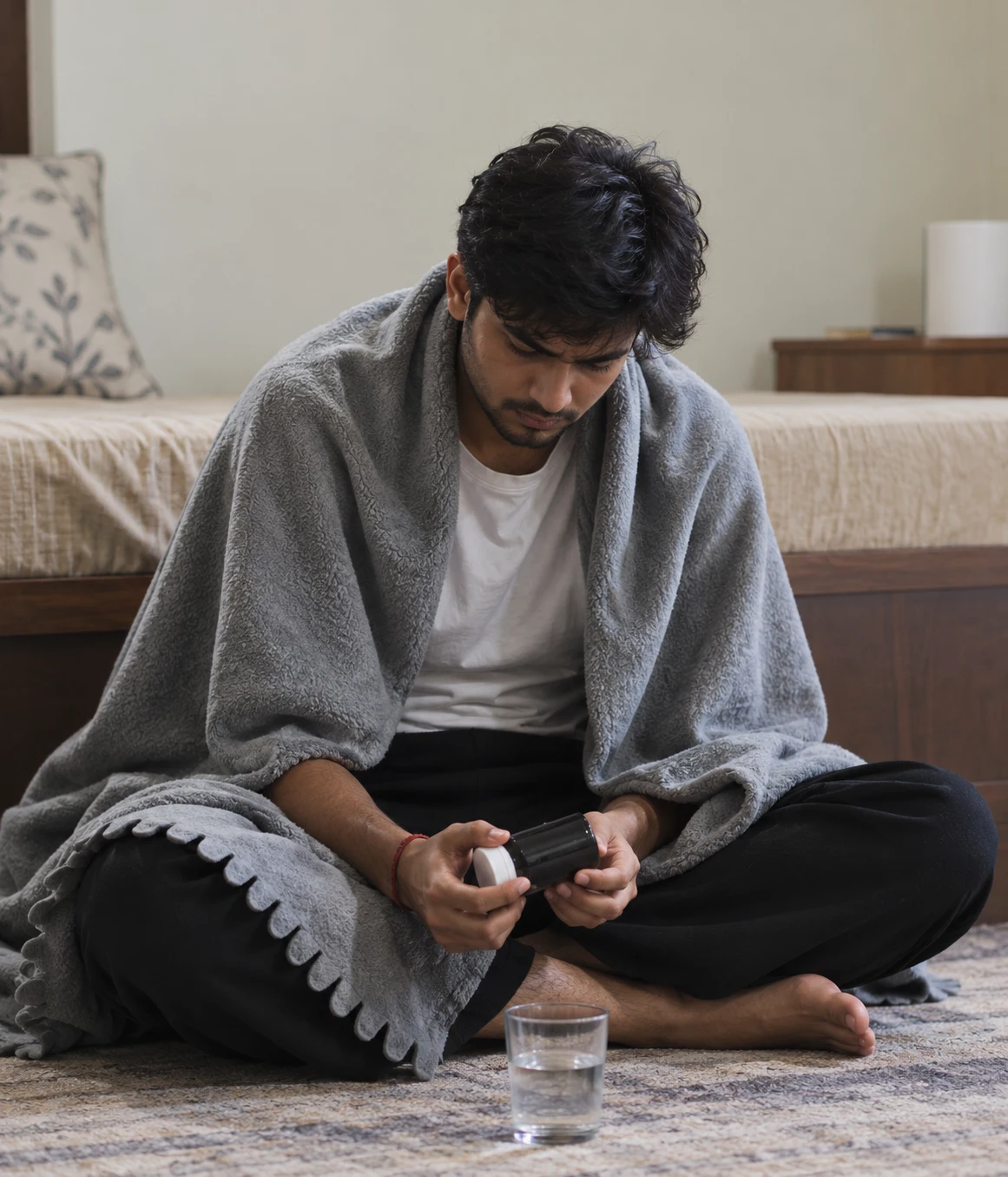
Our doctors prescribe to control the specific symptoms as they arrive. Depending on presentation that may include medication to manage:
- Pain in muscles, bones and the abdomen
- Nausea, vomiting and diarrhoea
- Agitation, anxiety and sleeplessness
- Blood pressure and pulse instability
- Vitamin and nutritional deficiency after months of poor eating
Hydration and nutrition
This is the part families underestimate. Days of simultaneous vomiting and diarrhoea strip fluid and electrolytes fast, and dehydration is the main medical risk of opioid withdrawal.
Fluids are given from day one, intake and output are watched, and food is reintroduced gradually as the gut settles.
Infection screening where there is injecting use
Where chitta has been injected we check for abscesses, cellulitis and vein damage, and arrange testing for bloodborne infection.
Treating these alongside withdrawal rather than afterwards avoids the common pattern where a patient completes detox and then returns with an untreated infection.
Medical leadership
Treatment is delivered under qualified supervision at a centre registered with the Himachal Pradesh State Mental Health Authority, Sr. No. 193.
Clinical content and protocols are reviewed by Dr. Devashish Sharma, MBBS, DNB (Psychiatry), HPMC Reg. No. 5263, with Dr. Aditya Thakur, MBBS, HPMC Reg. No. 6218.
How Long Does Chitta Detox Take?
The acute phase of opioid withdrawal typically runs seven to fourteen days, with the physical peak between day two and day four. Beyond that, sleep, appetite and blood pressure take longer to settle.
Duration depends on how long and how heavily chitta was used, whether it was smoked or injected, what else is in the picture, and the person’s general health. Someone using daily for three years will not detox on the same timetable as someone six months in, and we do not pretend otherwise.
What we will not do is rush it. Compressing detox to look efficient increases risk and improves nothing.
Chitta Detox vs Residential Rehab: What Each One Does
| Chitta Detox | Residential Rehabilitation | |
|---|---|---|
| Purpose | Clear the drug and manage withdrawal safely | Treat what caused the use and what will trigger relapse |
| Typical duration | 7 to 14 days | 90 to 180 days |
| What happens | Medication, fluids, monitoring, rest | Counselling, group and family therapy, yoga, psychiatric care, relapse prevention |
| Treats the body | Yes | Continues alongside therapy |
| Treats triggers and habits | No | Yes, this is the core of it |
| Outcome if done alone | High relapse rate within weeks | Substantially better odds, particularly with 12 months of aftercare |
| Our approach | Never offered as a stand-alone service | Follows directly on from detox with no gap in between |
What Happens After Chitta Detox
Detox resolves physical dependence. It does not address the patterns that led there, which is why the next step is agreed before detox even finishes.
Residential Rehabilitation
Full residential treatment with daily therapy, group work and psychiatric oversight, usually 90 to 180 days.
Family Counselling
Sessions that rebuild trust and set honest boundaries, and prepare the household for what discharge actually requires of them.
Twelve Months of Aftercare
Scheduled follow-up, relapse-prevention review and support rebuilding work and family life through the highest-risk year.
See what happens inside the rehab centre | Rehab centre fees in Himachal Pradesh
Chitta Detox for Families Across Himachal and Beyond
Looking for a detox centre near me? Patients reach our Kangra centre from every district:
Chitta Detox FAQs
How long does chitta detox take?
Acute chitta detox usually takes seven to fourteen days. The physical peak passes in the first four days, but stabilising sleep, appetite and blood pressure takes longer. Detox is the first phase of treatment, not the whole of it, and most patients then need 90 to 180 days of residential rehabilitation.
Is chitta detox painful?
Unmedicated opioid withdrawal is extremely painful. Under medical supervision the symptoms are controlled with prescribed medication, fluids and nutritional support, which does not remove all discomfort but makes it survivable rather than unbearable. Nobody at our centre is left to ride it out.
What is the difference between chitta detox and rehab?
Detox clears the drug and manages withdrawal safely; it treats the body. Rehab treats everything that led to the use and everything that will pull him back: triggers, habits, mental health, family relationships and daily structure. Detox alone has a very high relapse rate, which is why we do not offer it as a stand-alone service.
Chitta detox ghar par ho sakta hai?
नहीं, घर पर चिट्टा डिटॉक्स सुरक्षित नहीं है। दूसरे से चौथे दिन लक्षण सबसे तेज़ होते हैं और उस समय उल्टी-दस्त से शरीर में पानी की भारी कमी हो सकती है। इसके अलावा उस हालत में इंसान किसी भी तरह नशा लेने की कोशिश करता है, और कुछ दिन साफ़ रहने के बाद पुरानी मात्रा जानलेवा हो सकती है। डॉक्टर की निगरानी में डिटॉक्स ही सही तरीका है।
Can chitta detox be sped up or done in two days?
No. Rapid or forced detox increases medical risk without improving outcomes, and anyone promising a two-day cure for opioid dependence should be treated with suspicion. The body needs a controlled taper of symptoms under medical cover.
Is there a chitta detox centre near me in Himachal Pradesh?
Eshan Charitable Trust runs a government registered detox and nasha mukti kendra near me service at Tanda Kholi, Kangra, reachable from Dharamshala, Palampur, Nurpur, Baijnath, Chamba, Mandi, Una, Hamirpur, Bilaspur, Shimla, Solan, Kullu and Manali, and used by families from Punjab, Jammu and Uttarakhand.
What happens immediately after chitta detox?
Patients move straight into the residential therapy programme at the same centre, with no gap. The days right after detox carry very high relapse risk because the body feels better while nothing underneath has changed yet, and tolerance has already dropped.
Will he be tied up, beaten or locked in a room?
No. We do not use restraint, beating or forced confinement as treatment, and no legitimate centre does. If any centre you are considering describes those methods, walk away. Treatment here is medication, supervision, therapy and routine.
Related reading: chitta withdrawal symptoms, chitta nasha treatment, and the difference between a rehab centre and a nasha mukti kendra.
Do Not Attempt Chitta Detox at Home. Call Us First.
Open 24x7. Admissions any day of the week. Every conversation is confidential.
Eshan Charitable Trust
Nasha Mukti Kendra, De-Addiction & Rehabilitation Centre
Near FCI Godown, Village Tanda Kholi, Ward No. 7, PO Kholi,
Tehsil & District Kangra, Himachal Pradesh 176001
Medical disclaimer: This page is written for general information and is reviewed by a qualified psychiatrist. It is not a substitute for individual medical advice and does not provide medication names or dosages. This page does not name or dose any medication; prescribing is a clinical decision made after assessment. If someone is unconscious, breathing slowly or cannot be woken after taking chitta or any opioid, treat it as an overdose emergency and get them to a hospital immediately.