
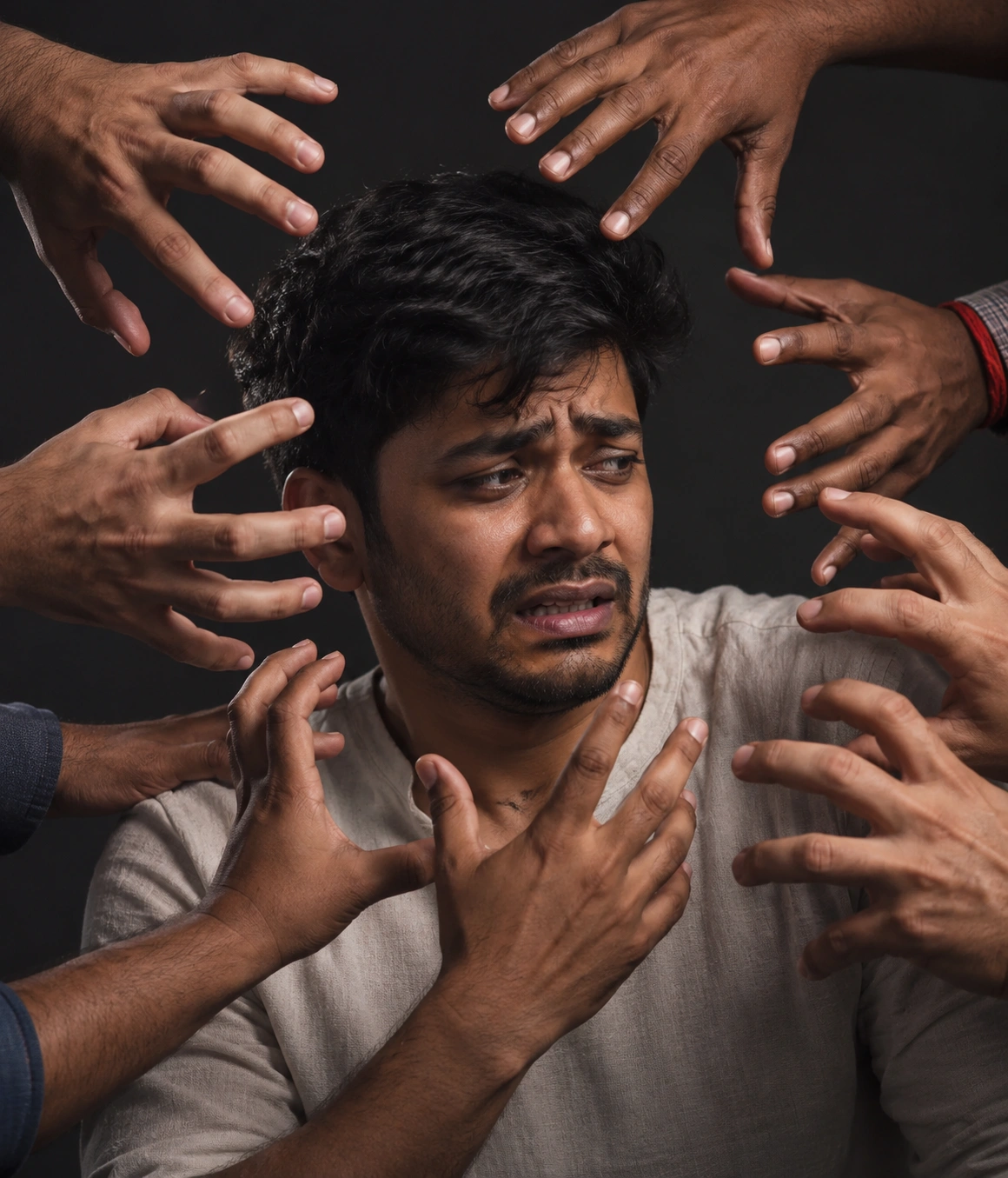
Signs and Symptoms of Bhang, Charas and Ganja Addiction
भांग, चरस और गांजे की लत के लक्षण — घर में क्या देखें, और डॉक्टर को कब दिखाएँ
Bhang, Charas & Ganja Addiction
Cannabis is the hardest addiction in Himachal Pradesh to see, because it does not announce itself. There is no overdose, no jaundice, no needle in a drawer. There is only a man who became slightly less capable every year, and a family that adjusted to each step without ever noticing the staircase.
That is why the detection figures look the way they do. Cannabis is used by over thirty million people in India yet accounts for roughly one in nine of those who ever reach treatment, and in one north Indian clinic group, only 7 per cent of cannabis users had ever sought help for quitting, while 74 per cent met the full criteria for cannabis use disorder.
This page sets out the bhang addiction symptoms families actually report, in the forms Himachal actually uses: charas and sulfa above all, then ganja, then bhang. It is written so you can decide whether to make a call, not so you can confront anybody.
Bhang and Charas Addiction Symptoms at a Glance
- Physical: red eyes, dry mouth, smoky smell on clothes and in the room, dry cough, appetite swinging between enormous and absent, weight change.
- Behavioural: morning use, friend group narrowed to those who also use, marks or work sliding, money unaccounted for, sleeping through the morning.
- Mental: memory and attention visibly worse, motivation gone, anxiety, low mood.
- On stopping: two to three weeks of sleeplessness, lost appetite and a very short temper.
- Red flag: suspicion, talking to himself, hearing voices. This needs a doctor the same day.
- Assessment is free and confidential, and it is not the same as admission.
The Three Families Of Bhang Addiction Symptoms
Cannabis dependence shows up in three places, and families almost always notice them in this order: the house first, the person second, the mind last.
What You Notice In The House
The smell that never quite goes. Mornings lost to sleep. The same two or three friends and nobody else. Money that does not add up, usually in small constant amounts rather than large ones.
What You Notice In Him
Red eyes, dry cough, weight that moved. Tolerance, present in 76 per cent of clinic cases, so he needs more than he did. Craving when he cannot have it, in 71 per cent. Two to three bad weeks every time he tries to stop.
What You Notice In His Mind
Memory and attention visibly reduced. Motivation gone. Flat mood, anxiety. At the serious end, suspicion, talking to himself or hearing voices, which stops being a family matter and becomes a medical one.
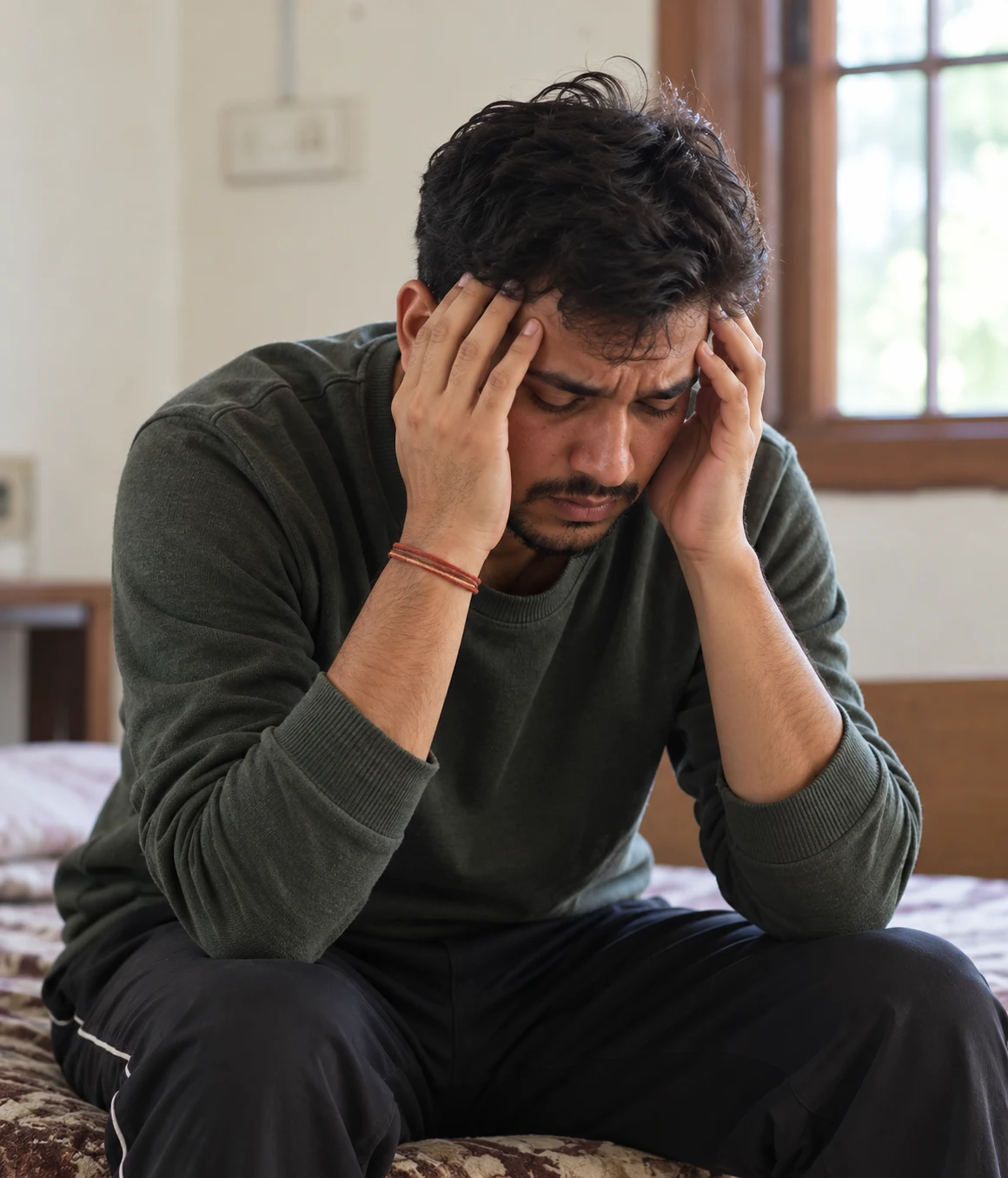
Physical Signs Of Charas, Ganja And Bhang Use
Because 96 per cent of cannabis users studied preferred the smoked forms, charas, ganja and sulfa, the physical signs in Himachal are mostly respiratory and olfactory. Families looking for the dramatic signs they associate with chitta find nothing and conclude there is nothing.
Oral bhang leaves fewer traces, which is part of why it is wrongly treated as harmless, but it is rare as a daily habit: only about 1 per cent used oral forms alone, while 73 per cent used only smoked forms and 26 per cent used both.
None of these signs alone proves anything. Several of them together, over months, usually does.
- Red, bloodshot or heavy-lidded eyes, most obvious an hour or two after use.
- Dry mouth and constant drinking of water.
- A persistent smoky, herbal smell on clothes, hair, fingers and bedding.
- Dry cough, throat clearing and frequent chest infections from smoking.
- Appetite swinging between enormous and absent, with visible weight change either way.
- Slowed reactions and poor coordination, which matters badly on hill roads.
- Sleeping very late into the morning, then being awake and restless at night.
Behavioural Signs Families Report Most Often
These are the signs that actually bring people to us, and they are nearly always described in the same words: he is not doing anything wrong, he is just not doing anything.
The clinical markers behind them are measurable. Tolerance in 76 per cent, craving in 71 per cent, withdrawal in 55 per cent, and continued use in physically hazardous situations in 47 per cent. More than half, 58 per cent, met ICD-10 criteria for dependence outright.
What makes this hard in a Himachali village is that none of it looks abnormal locally. If most of the young men on the street smoke, a son who smokes is not a deviation. The question is not whether he is unusual. It is whether he can stop.
- Using first thing in the morning, before food, work or college.
- Needing noticeably more than a year or two ago for the same effect.
- The friend circle shrinking until it contains only people who also use.
- Plans, promises and small responsibilities quietly stopping being honoured.
- Money missing in small, constant amounts, often unexplained rather than denied.
- Three weeks of sleeplessness and a vicious temper every time he tries to stop.
- Driving or working after use, which 47 per cent in clinic continued to do.
- Secretiveness about a substance he simultaneously insists is harmless.
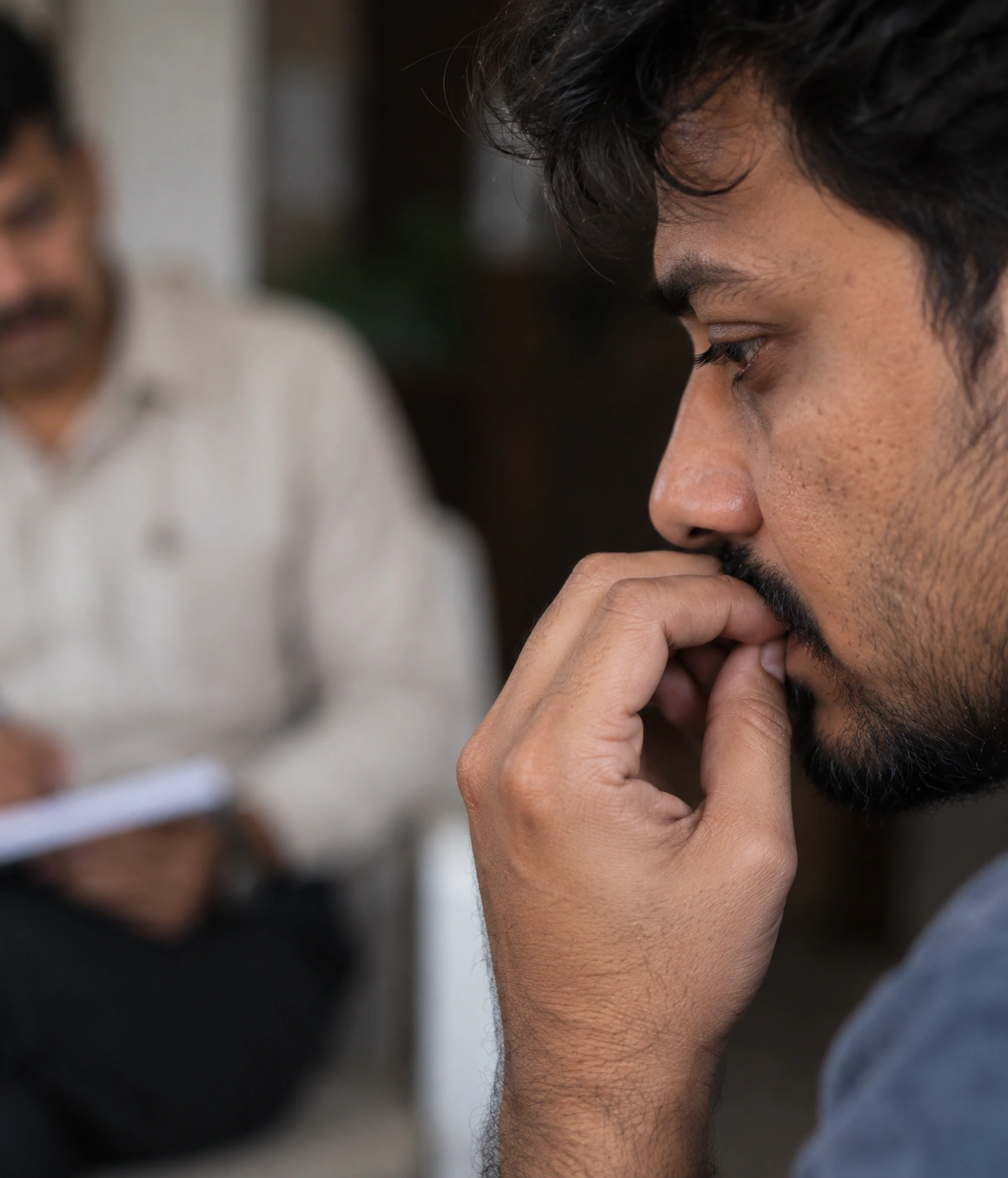

The Student Pattern: When Marks Fall And Nobody Connects It
This is the version of cannabis dependence Himachal sees most, and the version that gets diagnosed latest. It arrives as an academic problem, not a drug problem.
The sequence is almost always identical. Attendance slips first. Mornings go. Assignments stop being finished rather than being failed. Then the interests go: the cricket, the music, the plans for after the degree. By the time the marks fall far enough for the family to act, two or three years have usually passed, and his own explanation is that the course is boring and everyone smokes.
Daily cannabis blunts short-term memory, attention and drive. The important and badly understood part is that recovery of concentration after stopping is slow, usually six to eight weeks, which is exactly why a three-week attempt at home convinces a young man that quitting did not help him and he may as well go back.
How Often These Bhang Addiction Symptoms Actually Occur
From a study of a hundred men using cannabis at a north Indian addiction clinic. These are the numbers behind the bhang addiction symptoms and charas addiction signs described on this page.
Source: study of cannabis users at a north Indian addiction clinic, published via PMC. Shared for public education and not a substitute for individual assessment.
Is he using more, or for longer, than he meant to?
The commonest first yes. It starts as evenings and becomes mornings as well, and the shift is invisible from inside because each step is small.
Has he tried to cut down and failed?
This is not a sign of weakness but a diagnostic criterion, and it is extremely common. In the clinic group, 69 per cent had stopped for more than a month at some point and gone back, usually because of craving in 54 per cent of cases or friends who still use in 35 per cent.
Does he spend a lot of time getting it, using it, or recovering from it?
In the charas belt the getting is easy, so this shows up as time lost to being high and to the slow mornings afterwards rather than to arranging supply.
Is there craving when he cannot have it?
Present in 71 per cent. Craving is not a wish, it is an intrusive pull that takes over attention, and it is the single commonest cause of relapse.
Is it interfering with work, study or home duties?
The student and the working man both show this as a slide rather than an event, which is why it is argued about for years.
Has he kept using despite it causing problems with people?
Arguments at home about the same subject for the tenth time are themselves a criterion, not just a family matter.
Has he given up things he used to enjoy?
The one families remember most painfully afterwards. Sport, music, friends outside the group, plans. The loss is gradual and nobody dates it correctly.
Does he use in situations where it is physically risky?
Present in 47 per cent. On Himachal roads, driving or riding after charas is the clearest example, and it is routinely dismissed as being fine at it.
Does he keep using despite a physical or mental problem it is causing?
Chest symptoms, anxiety, memory, and in some cases early psychotic symptoms, all continuing alongside use that continues anyway.
Does he need more than he used to for the same effect?
Tolerance, present in 76 per cent. Easy to confirm: ask what a day used to cost him two years ago and what it costs now.
Does stopping produce withdrawal?
Present in 55 per cent: sleeplessness in 62 per cent, loss of appetite and weight in 59 per cent, irritability and anger in 44 per cent, restlessness in 39 per cent. See bhang and charas detox for the full timeline.
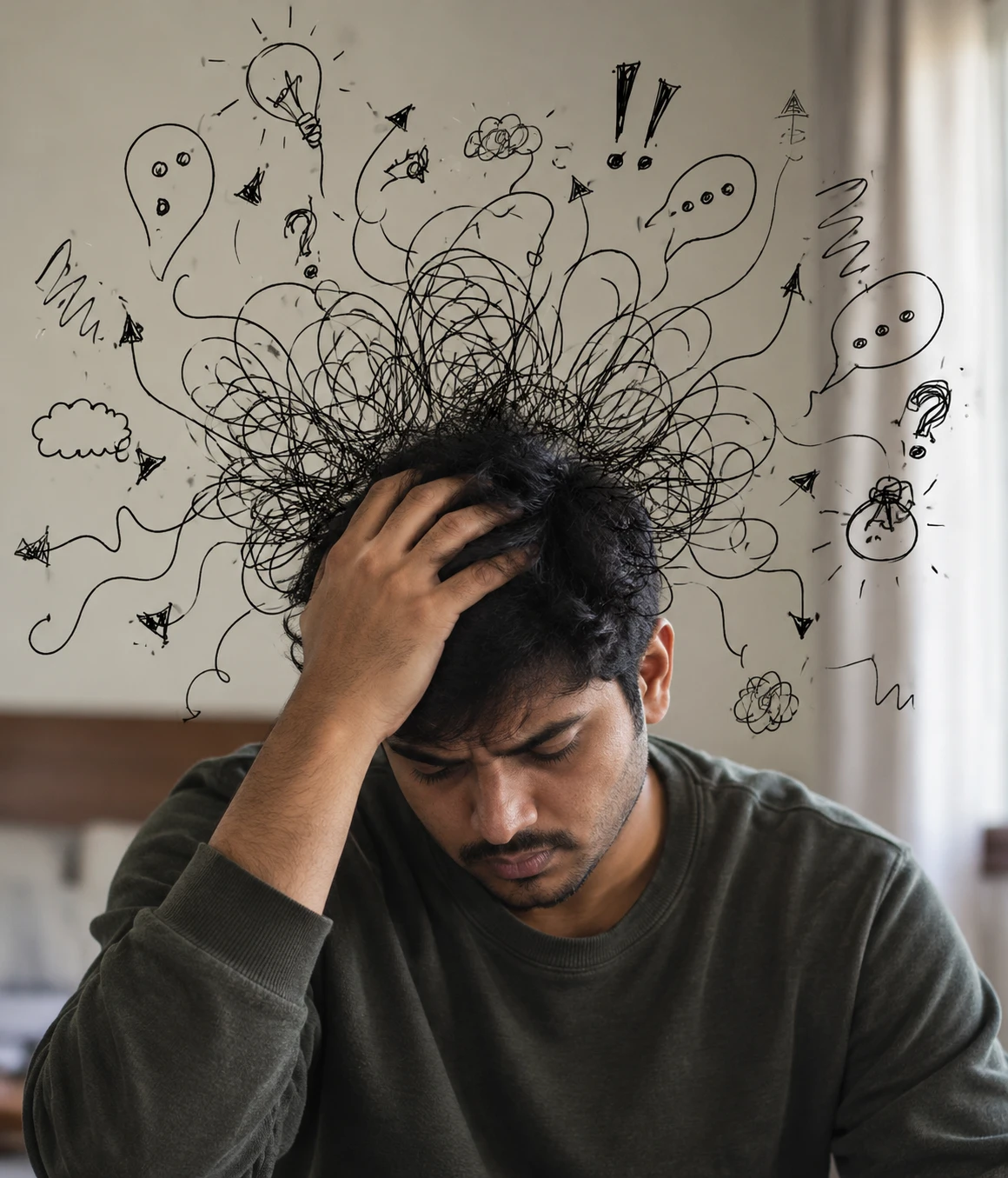
The One Symptom That Cannot Wait: Psychosis
Everything else on this page can be assessed next week. This cannot. Heavy cannabis use, starting young and high-potency forms such as hand-rubbed charas are all associated with psychosis, and in practice it is the symptom that finally makes Himachal families pick up the phone.
Call a doctor the same day if he believes he is being watched, followed or plotted against; if he is hearing voices or talking to things that are not there; if he has become suspicious of family members in a way that is not like him; if he is frightened or threatening without cause; or if he has almost stopped sleeping.
Sometimes this resolves within days of stopping. Sometimes it does not and requires full psychiatric treatment. Taking someone in this state to a centre with no psychiatrist loses time that matters, so ask that question before you travel anywhere.
What These Bhang Addiction Symptoms Are Not
Half of what families bring us is a correct observation with the wrong explanation attached. It is worth separating them, because the wrong explanation delays everything.
It is not his personality. The irritability and anger that appear when he stops are withdrawal, present in 44 per cent of cases, and they peak in the first week. Families reliably read this as proof that quitting made him worse and hand the substance back in exactly the week that mattered.
It is not only depression, but depression may also be there. Low mood in 29 per cent and anxiety in 25 per cent appear during withdrawal, and separating withdrawal from an illness that predates the cannabis takes a psychiatric assessment rather than a guess. Both get treated if both are present.
It is not harmless because it is legal. Bhang from leaves and seeds is outside the NDPS Act; charas and ganja are not. In the clinic study, 27 per cent believed some form was legal and 81.5 per cent of them named bhang. Legality is a question of law and tells you nothing about dependence.
How The Signs Change As Use Progresses
| Stage | What the family sees | What he says | What is actually happening |
|---|---|---|---|
| Occasional use | Nothing, or a smell at a festival. No change in work, study or money. | Everyone does it. It is Shiva ka prasad. | No dependence. Genuinely nothing to treat, and saying so honestly is part of the job. |
| Regular use | Later mornings, the friend group narrowing, small amounts of money unaccounted for. | I can stop whenever I want. | Tolerance beginning. This is the stage at which a single honest conversation still works and almost never happens. |
| Early dependence | Marks or work sliding. Interests dropped. Three bad weeks every time he tries to stop. | I tried, it did not help, so clearly there is no problem. | Tolerance, craving and withdrawal all present. 58 per cent of the clinic group met ICD-10 dependence criteria at this point. |
| Established dependence | A visibly less capable version of the person, with no single incident to point at. | This is just who I am now. | Cannabis use disorder, moderate to severe. 32 per cent of the clinic group were in the severe band. Residential treatment is usually needed. |
| With psychosis | Suspicion, muttering, voices, fear or threat without cause. | They are watching me. You are all against me. | A medical emergency. Needs a psychiatrist the same day, not a de-addiction bed on its own. |
He Says Everyone Here Does It. How Do I Know This Is Different?
It is the fairest objection there is, and in Himachal it is often factually true. Cannabis grows wild, charas is a local crop in Kullu and the Parvati valley, and in some villages most young men have used it.
So the question is not whether he is unusual. It is whether he is dependent, and dependence is not about frequency compared with the neighbours. It is about three things that are entirely personal: does he need more than he did, does he crave it when he cannot have it, and does stopping cost him two to three weeks of broken sleep and a temper the house cannot hold?
If all three are true, then whatever everyone else in the village does, he has a cannabis use disorder and it is treatable. And if none of them are true, we will tell you that too. We have told families that before, and it is a better outcome than an unnecessary admission.
If You Have Recognised Him On This Page
Three things worth doing, and four worth not doing. Most of what goes wrong at this stage is in the second column.
Do write down what you have actually seen, with rough dates. Not opinions, just events: the term his attendance dropped, the month he stopped playing cricket, what a day used to cost and what it costs now. Denial with cannabis is almost never I do not use it; it is it is not a problem. A list of facts is the only thing that argument does not survive.
Do call and get advice before you confront anyone. An assessment is free, confidential and is not an admission. Only 7 per cent of cannabis users ever seek help themselves, so waiting for him to ask is usually waiting for nothing.
Do expect the first three weeks to be unpleasant and decide now, in advance, that bad sleep and a short temper are withdrawal rather than evidence that stopping was a mistake.
Do not argue about whether cannabis is dangerous. You will lose, because he has heard every argument and half of them are available on the internet. Talk about what has changed in him instead.
Do not treat the legal question as the medical question. Whether bhang is permitted under the NDPS Act has no bearing on whether your son is dependent on charas.
Do not hand it back in the first bad week. That week is the whole treatment, and in 44 per cent of cases it comes with anger that is genuinely hard to live with.
Do not wait if there is any suspicion, voices or talking to himself. That is the one part of this page with a same-day answer. Call a doctor.

Free Confidential Assessment, And What Happens Next
Eshan Charitable Trust is a registered charitable trust running a de-addiction and rehabilitation centre registered with the Himachal Pradesh State Mental Health Authority, Sr. No. 193, at Tanda Kholi, Kangra.
Clinical content on this site is reviewed by Dr. Devashish Sharma, MBBS, DNB (Psychiatry), HPMC Reg. No. 5263, with Dr. Aditya Thakur, MBBS, HPMC Reg. No. 6218.
An assessment means a conversation, a history and, where needed, a psychiatric review. It does not mean he is admitted, and it does not commit you to anything. If treatment is needed we will explain what detox involves and what the bhang addiction treatment programme looks like, including what it costs, before you decide anything.
Book a free assessmentBhang And Charas Addiction Help Across Himachal Pradesh
Find your district page for the nearest nasha mukti kendra near me and rehab centre near me:
Frequently Asked Questions About Bhang Addiction Symptoms
Bhang ya charas ki lat ke lakshan kya hain?
सबसे पहले दिखने वाले लक्षण: आँखें लाल रहना, मुँह सूखना, कपड़ों और कमरे में लगातार धुएँ जैसी गंध, भूख का अजीब पैटर्न (कभी बहुत ज़्यादा, कभी बिल्कुल नहीं), सुबह देर तक सोना, और याददाश्त कमज़ोर होना। व्यवहार में: दोस्तों का दायरा सिर्फ़ उन लोगों तक सिमट जाना जो साथ पीते हैं, पढ़ाई या काम में लगातार गिरावट, पैसों का हिसाब न मिलना, और छोड़ने की कोशिश पर दो-तीन हफ़्ते नींद न आना और बहुत गुस्सा आना। सबसे गंभीर लक्षण है शक करना, अकेले में बातें करना या आवाज़ें सुनना — इसमें तुरंत डॉक्टर को दिखाना चाहिए।
How do I know it is addiction and not just occasional use?
Three questions separate the two. Has the amount needed gone up over the last year, meaning tolerance, which was present in 76 per cent of cannabis users assessed in clinic? Does he get craving when he cannot have it, present in 71 per cent? And does stopping produce two to three weeks of sleeplessness and a short temper, present in 55 per cent? If the answer to any of those is yes, this is no longer occasional use. In the same group, 74 per cent met full diagnostic criteria for cannabis use disorder and 32 per cent were in the severe band.
What are the physical signs of charas or ganja use?
Red or bloodshot eyes, dry mouth, a persistent smoky smell on clothes, hair and in the room, a dry cough and throat clearing from smoking, visible weight change in either direction, and poor coordination. Smoked forms dominate in Himachal: 96 per cent of cannabis users studied preferred charas, ganja or sulfa over oral bhang, so the signs are respiratory and smell-based far more often than families expect.
What are the mental and psychological symptoms?
Short-term memory that has visibly deteriorated, difficulty holding attention, and a loss of motivation that families describe as nothing mattering to him any more. Anxiety and low mood are common. The serious end is psychosis: suspicion, believing he is being watched or plotted against, talking to himself, or hearing voices. Heavy use, starting young and high-potency forms such as hand-rubbed charas are all linked to this, and it needs a doctor the same day rather than a wait-and-see week.
He is a student and his marks have fallen. Could bhang be the reason?
It is one of the commonest presentations we see in Himachal. The pattern is consistent: attendance drops, mornings are lost, assignments stop being finished, interests he used to have quietly disappear, and his own account is that he is fine and the course is boring. Daily cannabis blunts short-term memory, attention and drive, and recovery of concentration after stopping takes weeks, not days. If the slide has lasted more than a term, get him assessed.
Is there a nasha mukti kendra near me where I can get him assessed?
Eshan Charitable Trust offers free, confidential assessment at its registered nasha mukti kendra near me facility at Tanda Kholi, Kangra, Himachal Pradesh, with families coming from Dharamshala, Palampur, Nurpur, Baijnath, Jawali, Chamba, Mandi, Kullu, Manali, Shimla, Solan, Una, Hamirpur, Bilaspur, Sirmaur and Kinnaur, plus Punjab, Jammu and Uttarakhand. An assessment is not an admission. If any rehab centre near me tells you he must be admitted before anyone will look at him, ask somebody else.
He denies everything. Is denial itself a symptom?
With cannabis it is close to universal, and it has a specific shape: not I do not use it but it is not a problem. It is reinforced by everything around him, because bhang is excluded from the NDPS Act and 27 per cent of cannabis users in one study believed some form was legal, 81.5 per cent of them naming bhang. Arguing about the drug rarely works. Describing what the family has actually watched change over two years works more often.
Does he have to agree before we can do anything?
He does not have to agree before you get advice, and you do not need his permission to call and describe what you are seeing. Most families who reach us start exactly there. In the clinic data only 7 per cent of cannabis users had ever sought help themselves, so waiting for him to ask is usually waiting for something that will not happen. Family support was also the most cited reason people stayed stopped, at 40 per cent, which means the person reading this page is the single most useful factor in the outcome.
Are the signs of bhang addiction different from chitta or alcohol?
Yes, and that difference is why cannabis gets missed. Chitta shows itself in a collapse: weight, money, health and injection marks. Alcohol shows itself in smell, incidents and liver problems. Cannabis shows itself in subtraction. Nothing breaks, nobody is hospitalised, and the only evidence is that over two or three years he became a less capable version of himself. Compare with signs of a chitta addict and signs of alcoholism.
Related reading: bhang and charas addiction treatment, bhang and charas detox, signs of a chitta addict, signs of alcoholism and prescription drug addiction symptoms.
If You Recognised Him Somewhere On This Page, That Is Enough To Call.
Open 24x7. Admissions any day of the week. Every conversation is confidential.
Eshan Charitable Trust
Nasha Mukti Kendra, De-Addiction & Rehabilitation Centre
Near FCI Godown, Village Tanda Kholi, Ward No. 7, PO Kholi,
Tehsil & District Kangra, Himachal Pradesh 176001
Medical disclaimer: This page is written for general information and is reviewed by a qualified psychiatrist. It is not a substitute for individual medical advice and does not provide medication names or dosages. This page is written to help families recognise cannabis dependence. It is not a diagnostic tool and no list of signs replaces an assessment by a doctor. Signs of psychosis, including suspicion, hearing voices or talking to oneself, need medical attention the same day. If someone is unconscious, breathing slowly or cannot be woken after taking chitta or any opioid, treat it as an overdose emergency and get them to a hospital immediately.