

Prescription Drug Detox and Goliyon Ka Nasha Taper in Himachal
गोलियों का नशा छुड़ाने के लिए डॉक्टर की निगरानी में धीरे-धीरे दवा कम करना
Prescription Drug & Goliyon Ka Nasha
This page explains how prescription drug detox works at Eshan Charitable Trust in Kangra: why tablets are tapered rather than stopped, which groups are dangerous to withdraw from, what happens week by week, and what follows detox.
The single most important point comes first. Sedative tablets of the alprazolam type must never be stopped abruptly after regular use, because that withdrawal can cause seizures and can kill. This is not true of chitta or of painkiller tablets. It is true here.
If someone at home has suddenly stopped his sleeping or anxiety tablets, do not wait to finish reading. Call +91 62304 15581.
Prescription Drug Detox at a Glance
- This is a planned taper, not an abrupt stop. The dose comes down in steps the doctor sets.
- Sedative tablets are the dangerous group: abrupt withdrawal can cause seizures and can be fatal.
- Opioid tablets rarely kill on withdrawal, but symptoms are severe enough that unsupported attempts fail.
- Opioid tapers usually run 10 to 21 days. Sedative tapers often run 4 to 8 weeks or longer.
- Where chitta, alcohol or several tablets are involved, everything is managed in one combined plan.
- Detox is never offered alone here. Patients move straight into residential treatment.

Why Tablets Are Tapered, Not Simply Stopped
When a medicine is taken regularly for months, the body adjusts around it. Remove it suddenly and every system it was quietly holding down rebounds at once.
With opioid tablets that rebound means pain, cramps, vomiting, diarrhoea, sleeplessness and crawling restlessness. Unpleasant and overwhelming, but rarely fatal in a healthy adult.
With sedatives it is different in kind, not just degree. These medicines calm electrical activity in the brain. Taking that away abruptly can let the brain over-fire, which is what a seizure is. Alongside seizures there can be severe agitation, confusion and hallucination.
A taper avoids all of this by lowering the dose in steps small enough that the body can keep up. It is slower, and it is the only version that is both safe and likely to finish.
Why Is a Medically Supervised Taper the First Step?
Because the dose has to be known before it can be reduced, and with tablet dependence almost nobody reports it accurately. Patients under-report out of shame, families guess, and the strips in the bag rarely match what is actually being taken each day.
A supervised admission establishes the real picture in the first forty-eight hours by observation rather than by interview. Only then can a taper schedule be written that is neither so fast it causes seizures nor so slow that the person loses patience and leaves.
Why stopping sedatives suddenly can kill
These medicines dampen electrical activity in the brain. The brain compensates by becoming more excitable. Remove the medicine abruptly and that excitability is left unopposed, which can produce:
- Seizures, which may be the first sign that anything is wrong
- Severe confusion and disorientation
- Hallucinations and extreme agitation
- Dangerously high blood pressure and pulse
- In rare cases, death
Signs that need a hospital immediately
If someone has recently stopped or sharply reduced sedative tablets and shows any of the following, treat it as an emergency:
- A seizure or fit of any kind
- Confusion, not recognising family, or inability to be woken
- Seeing or hearing things that are not there
- A very high fever with heavy sweating
- Uncontrollable shaking with a racing heart
What to do while you arrange treatment
Do not confiscate the tablets and force an abrupt stop. It feels decisive and it is the single most dangerous thing a family can do here.
Keep him safe, keep the remaining tablets accounted for, and call a doctor or a de-addiction centre the same day so a taper can be planned properly. Reducing on a schedule from tomorrow is far better than stopping dead today.
Why this is different from chitta withdrawal
Chitta and other opioid withdrawal is agonising but rarely directly fatal. Sedative withdrawal is often less dramatic to watch in the first day and can be lethal in the second.
Families who have already been through a chitta detox sometimes assume tablets will be easier. Clinically it is the opposite risk profile, and it catches people out.

What Prescription Drug Detox Looks Like, Stage by Stage
Every taper is individual, because it depends on which medicine, how much, for how long and what else is involved. The shape below is what most patients at our Kangra centre go through.

-
Assessment
Days 1 to 2Nothing is reduced on day one. The first task is finding out what is actually being taken, which is established by observation as much as by interview.
- Full medical and psychiatric assessment, including seizure history
- Review of every strip, bottle and prescription the family brings
- Screening for chitta, alcohol and other substances alongside the tablets
- Assessment of the original pain, anxiety or sleep problem
- A written taper schedule, explained to the patient and the family
-
Early Taper
Week 1The first reductions begin. Most patients find this stage easier than they feared, which is the point of doing it this way.
- Dose lowered in planned steps rather than cut
- Daily review of symptoms, pulse and blood pressure
- Supportive medication for sleep, nausea and restlessness
- Any co-occurring chitta or alcohol dependence managed in parallel
-
The Difficult Middle
Weeks 2 to 4The hardest stretch, and where the difference between tablet groups shows most. Opioid tapers are usually finishing by now; sedative tapers are still in progress.
- Rebound anxiety and sleeplessness, particularly with sedatives
- Pain returning for patients whose use began with injury, which is addressed directly
- Low mood and irritability as the body re-regulates
- Taper pace adjusted where symptoms are too severe, rather than pushed through
-
Stabilisation
From week 4 onwardThe dose reaches zero or close to it, and attention shifts from medicine to everything underneath it.
- Sleep begins returning without tablets, usually in broken patches first
- Non-opioid pain management established where it is needed
- Psychiatric treatment of underlying anxiety or depression well under way
- Transition into the full residential programme with no gap
Patients often say this is the first time in a year or more that they have felt properly awake. It is also where therapy becomes genuinely useful, because they can engage with it.
How Detox Differs by Tablet Group
| Group | Typical Taper Length | Main Risk | How We Manage It |
|---|---|---|---|
| Opioid painkillers (tramadol type) | 10 to 21 days | Severe discomfort and very high drop-out, plus overdose risk if he relapses after tolerance falls | Stepped reduction with supportive medication, fluids and close symptom review |
| Sedatives (alprazolam type) | 4 to 8 weeks, sometimes longer | Seizures, delirium and in rare cases death if reduced too quickly or stopped abruptly | Slow planned taper, seizure precautions, daily observation and a pace that can be slowed if needed |
| Pregabalin | 2 to 4 weeks | Rebound anxiety, sleeplessness and return of the opioid craving it was being used to blunt | Tapered alongside the opioid dependence it almost always accompanies, never in isolation |
| Codeine cough syrup | 10 to 21 days | Same opioid withdrawal pattern, often in younger patients who have never been assessed before | Opioid taper plus a full first assessment, since many have no medical history on record |
| Several of these together | Decided case by case | Interactions, unpredictable withdrawal and the highest overdose risk of any group | One combined plan written by the doctor, with the most dangerous withdrawal stabilised first |
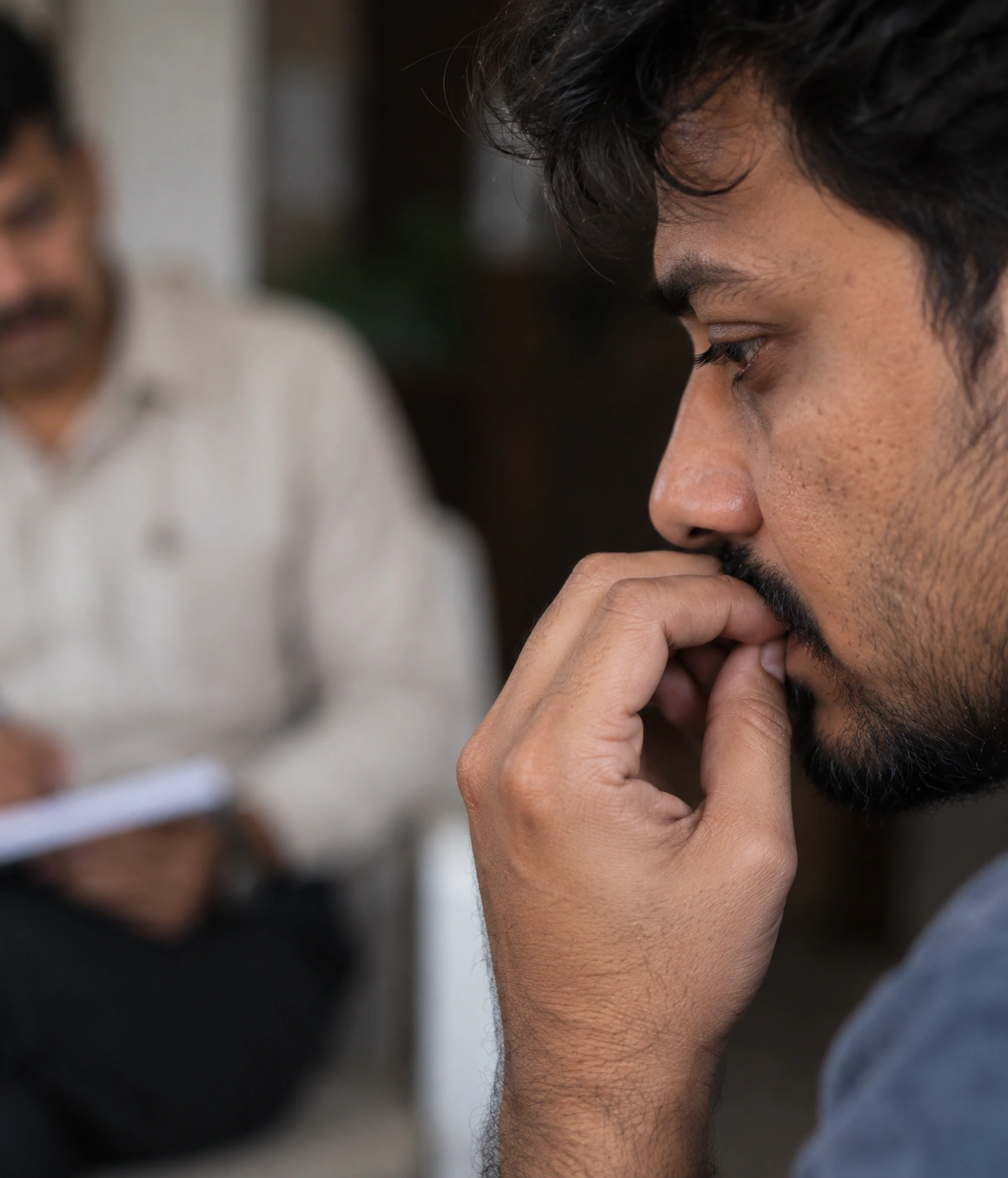
Medication, Comfort and Monitoring
A taper is not the whole of detox. Alongside the reducing dose, patients receive supportive treatment for the symptoms the reduction produces.
That means medication for sleep, nausea, cramps and agitation where appropriate, fluids and nutrition, and close monitoring of pulse, blood pressure and symptom severity throughout. For patients who were injecting or who have been unwell for a long time, physical health problems are treated in parallel.
What we do not do is name medicines or doses on a public page. Prescribing is a clinical decision made after assessment, and a list on a website helps nobody except the person looking to self-manage.
Why Home Tapers Usually Fail
Families often try first, and the pattern is consistent. The schedule is agreed on Sunday. By Wednesday the symptoms arrive, he takes an extra tablet, and within a week the dose is back where it started or higher.
This is not weakness. A person in withdrawal holding the remaining strip is being asked to do something very few people manage, and the family cannot supervise every hour.
A supervised taper removes that decision from him entirely. The tablets are held and given on schedule, the symptoms are treated as they appear, and nobody has to rely on willpower at two in the morning.
See the full treatment programme
What Happens After the Taper
Detox clears the medicine. It does not treat the pain, the anxiety or the sleeplessness that put the tablets there, which is why the next step is agreed before the taper finishes.
Residential Rehabilitation
Full residential treatment of 90 to 180 days with therapy, psychiatric care and non-opioid pain management.
Treating What Started It
Chronic pain, anxiety, depression and insomnia are treated directly, because leaving them untreated is the most reliable route back.
Twelve Months of Aftercare
Scheduled follow-up, relapse-prevention review and guidance on how to handle future medical treatment safely.
Prescription Drug Detox Across Himachal and Beyond
Looking for a detox centre near me? Patients reach our Kangra centre from every district, including the Baddi and Solan belt:
Prescription Drug Detox FAQs
How long does prescription drug detox take?
Longer than most families expect, because this is a taper rather than a stop. Opioid tablets usually take ten to twenty-one days. Sedative tablets take considerably longer, often four to eight weeks and sometimes more, because the dose has to come down in planned steps to avoid seizures. The doctor sets the schedule after assessment and adjusts it as the patient responds.
Why is a taper used instead of just stopping?
With sedatives, because stopping abruptly can cause seizures and can be fatal. With opioid tablets, because a controlled reduction makes the symptoms manageable, which is the difference between a patient who completes detox and one who walks out on day three. A taper is not a softer option, it is the clinically correct one.
Is stopping sleeping tablets really dangerous?
Yes, and this is the single most important thing on this page. Alprazolam-type sedatives act on the same brain system as alcohol. After regular use, abrupt withdrawal can produce seizures, delirium and in rare cases death. It is one of only two commonly misused drug groups where the withdrawal itself can kill. Never stop these at home to prove a point.
Goliyan ekdum band kar dein to kya hota hai?
नींद और घबराहट की गोलियाँ अचानक बंद करने पर दौरे (fits) पड़ सकते हैं, भ्रम की स्थिति बन सकती है, और यह जानलेवा भी हो सकता है। दर्द की ओपिऑइड गोलियाँ अचानक बंद करने से आमतौर पर जान नहीं जाती, लेकिन बदन दर्द, उल्टी-दस्त, नींद न आना और बेचैनी इतनी तेज़ होती है कि ज़्यादातर लोग दोबारा शुरू कर देते हैं। दोनों हालात में डॉक्टर की निगरानी में धीरे-धीरे मात्रा कम करना ही सही तरीका है।
What happens if he is taking tablets and chitta together?
That is common and it changes the plan. In north Indian addiction centres the great majority of patients dependent on pregabalin are also dependent on opioids, and many tramadol patients are using chitta as well. Both are managed in one combined plan, because tapering one while the other continues simply does not work. Tell us everything at assessment, including what you think he is hiding.
Can prescription drug detox be done at home or as an outpatient?
Occasionally, for a low-dose opioid taper in someone with stable health and a reliable family. Almost never for sedatives, and not at all where there is a seizure history, another substance in use, or a previous failed attempt. The risk is not worth it and the success rate at home is poor.
Is there a prescription drug detox centre near me in Himachal Pradesh?
Eshan Charitable Trust in Kangra provides medically supervised detox and tapering with 24x7 doctor and nursing cover, serving Dharamshala, Palampur, Nurpur, Baijnath, Chamba, Mandi, Una, Hamirpur, Bilaspur, Solan, Baddi, Shimla, Kullu and Manali, plus families from Punjab, Jammu and Uttarakhand. When comparing any nasha mukti kendra near me, ask specifically who writes and reviews the taper.
What happens immediately after detox?
Patients move straight into the residential programme at the same centre, with no gap. For tablet dependence this matters even more than usual, because the pain or anxiety that started it has to be treated before the person goes home to the same chemist and the same cupboard.
Related reading: goliyon ka nasha treatment, signs of prescription drug addiction and chitta nasha detox.
Do Not Stop His Tablets Suddenly. Call Us First.
Open 24x7. Admissions any day of the week. Every conversation is confidential.
Eshan Charitable Trust
Nasha Mukti Kendra, De-Addiction & Rehabilitation Centre
Near FCI Godown, Village Tanda Kholi, Ward No. 7, PO Kholi,
Tehsil & District Kangra, Himachal Pradesh 176001
Medical disclaimer: This page is written for general information and is reviewed by a qualified psychiatrist. It is not a substitute for individual medical advice and does not provide medication names or dosages. This page names no medicines by brand and gives no doses; prescribing and tapering are clinical decisions made after assessment. Sedative tablets must never be stopped abruptly after regular use, because that withdrawal can cause seizures. If someone is unconscious, breathing slowly or cannot be woken after taking chitta or any opioid, treat it as an overdose emergency and get them to a hospital immediately.