
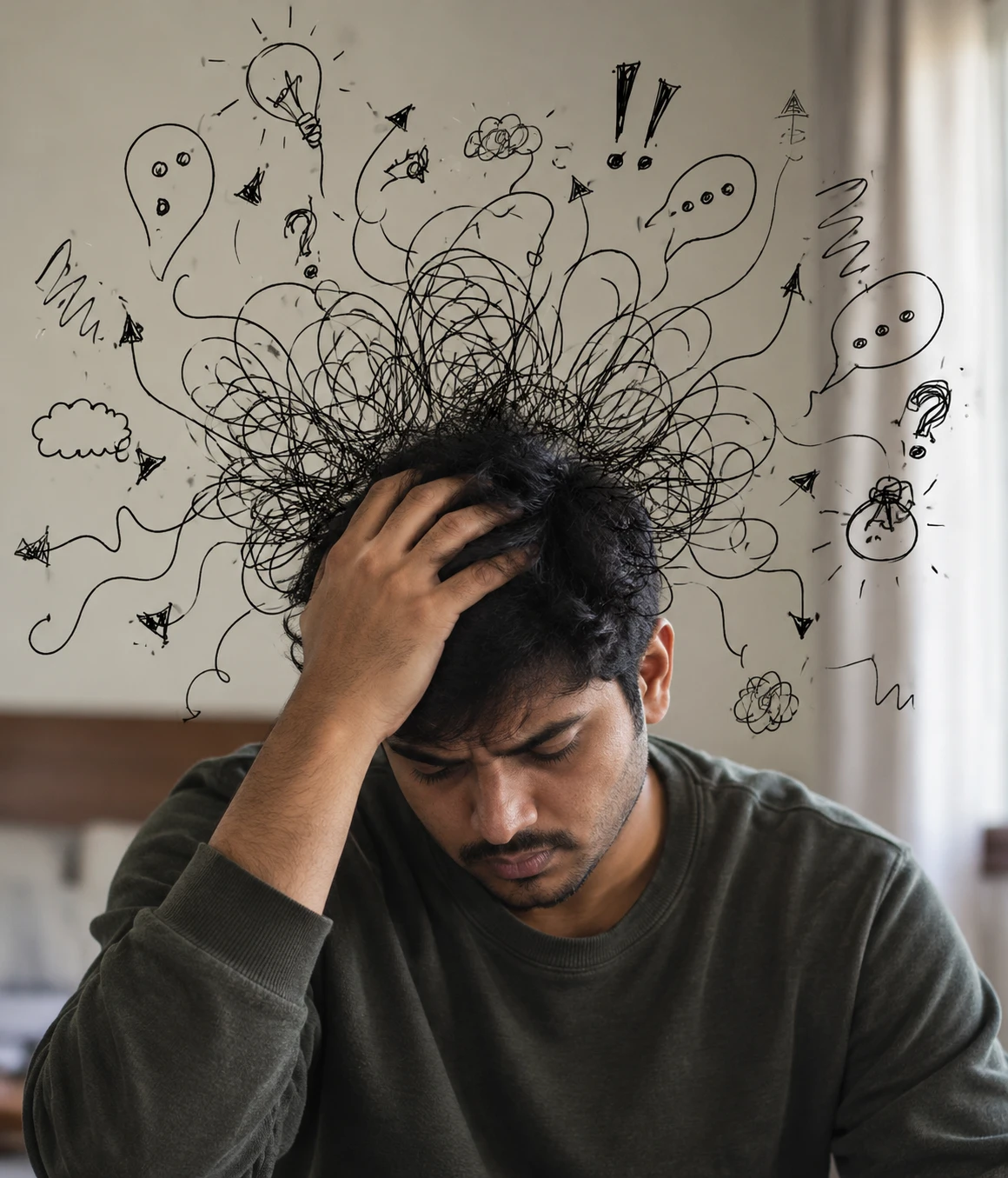
Chitta Nasha (Heroin) Withdrawal: Symptoms & Timeline
चिट्टा छोड़ने पर क्या होता है — लक्षण, समय और सुरक्षित इलाज
Chitta & Heroin Addiction
This page sets out chitta nasha withdrawal symptoms in the order they actually arrive: what begins in the first twelve hours, what peaks on day two to four, what eases after a week, and what continues for months.
Chitta is heroin, and heroin is an opioid, so chitta nasha withdrawal follows a predictable pattern. Knowing that pattern matters, because almost every failed attempt to stop at home collapses at the same point, and because a few symptoms are genuine medical emergencies.
Nothing here is a reason to attempt withdrawal unsupervised. It is here so you know what is coming and why medical cover changes the outcome.
Chitta Nasha Withdrawal at a Glance
- Heroin withdrawal symptoms begin 8 to 12 hours after the last dose; craving and anxiety come first.
- Peak intensity falls between day two and day four: body pain, vomiting, diarrhoea, no sleep.
- Acute symptoms ease substantially by day seven; sleep and mood take far longer.
- The real danger is dehydration from vomiting and diarrhoea, not the pain itself.
- Tolerance drops within days, so relapsing at the old chitta or smack dose is when overdose deaths happen.
- Medication under supervision flattens the peak. Supervised chitta nasha detox is the safe route.
Why Chitta Nasha and Heroin Withdrawal Feels the Way It Does
Regular chitta or heroin use suppresses the body’s own opioid system. The brain stops producing the chemistry that normally damps down pain, regulates sleep and settles the gut, because an outside supply is doing it.
Remove the supply and that system is left exposed. Every function it was quietly managing rebounds at once: pain amplifies, the gut empties, the heart races, sleep becomes impossible and anxiety floods in.
That is why withdrawal is not simply discomfort and cannot be willed through. It is a whole-body rebound, and it is also why it is finite: once the system re-regulates, it stops.
The Chitta Nasha Withdrawal Timeline, Stage by Stage
Heroin withdrawal differs between people depending on how much, how long and by what route chitta was used, but the sequence is consistent. At our Kangra centre clinicians track this progression from admission so each stage is anticipated rather than reacted to.

-
Early Withdrawal
8–12 hours after the last doseThe first stage is more psychological than physical, and it is where most people go back out to score.
- Strong craving and rising anxiety
- Yawning, running nose and watering eyes
- Sweating, goosebumps and shivering together
- Restlessness and an inability to sit still
- Difficulty falling asleep
At this point medication can be started, which is the single biggest difference between a supervised detox and an attempt at home.
-
Peak Withdrawal
Day 2 to day 4: hardest windowThis is the peak, and the reason supervised care exists. Symptoms arrive together and the person is genuinely unable to manage them alone.
- Deep muscle and bone pain, especially legs and back
- Vomiting, diarrhoea and abdominal cramps
- Fever, chills and heavy sweating
- Raised pulse and blood pressure
- Complete sleeplessness and severe agitation
- Dilated pupils, the opposite of intoxication
Fluids, electrolytes and anti-emetics matter as much as anything else here, because dehydration from simultaneous vomiting and diarrhoea is the main medical risk of opioid withdrawal.
-
Settling
Day 5 to day 7 and the first fortnightThe acute storm passes. Physical symptoms recede faster than people expect once the peak is behind them.
- Vomiting and diarrhoea stop; appetite starts returning
- Body pain reduces to aching and stiffness
- Sleep returns in broken patches
- Mood remains low and irritability is common
This is the point at which detox ends and actual treatment begins. Leaving now, feeling physically better, is the most common and most costly mistake families make.
-
Post-Acute Phase
Weeks to several monthsPhysical withdrawal is over; the brain is still re-regulating. This phase is poorly understood by families and is where relapse overwhelmingly happens.
- Disturbed sleep and vivid dreams
- Low mood, flat motivation, poor concentration
- Sudden intense cravings triggered by a place, person or smell
- Irritability and low tolerance for stress
It is normal, it is temporary, and it is precisely what residential treatment and twelve months of aftercare are built to carry someone through.
How Severe Will It Be? What Changes the Picture
| Factor | Milder Withdrawal | More Severe Withdrawal | What We Do About It |
|---|---|---|---|
| How long he has used | Weeks to a few months | A year or more of daily use | Longer use means a slower, more carefully medicated taper |
| Route of use | Smoked on foil | Injected | Injecting adds infection screening and vein care alongside withdrawal management |
| Daily quantity | Small, fairly stable amount | Large or steadily escalating amount | Dose history guides the medication plan from day one |
| Other substances | Chitta only | Chitta with alcohol, tablets or charas | Combined dependence is managed together; treating one alone is unsafe |
| Physical health | Young, no other illness | Liver disease, TB, HIV, malnutrition, heart problems | Medical conditions are treated in parallel, not postponed |
| Mental health | No psychiatric history | Depression, anxiety or psychosis | Psychiatric treatment begins during detox rather than after it |
Signs that need urgent medical care
Get medical help straight away if you see:
- Vomiting and diarrhoea that will not stop, with no fluids staying down
- Dry mouth, sunken eyes, very little urine, confusion — these are dehydration
- Seizures or fits, which may mean alcohol or tablets are also involved
- Chest pain, a very fast or irregular heartbeat, or fainting
- High fever that does not settle
- Talk of self-harm or suicide, which is common in withdrawal and must be taken seriously
Overdose, which is the opposite picture
Overdose looks nothing like withdrawal and is the more immediate killer. Treat it as an emergency if he is unconscious or cannot be woken, if breathing is slow, shallow or gurgling, if lips or fingertips turn blue or grey, or if the body is limp with cold clammy skin.
Risk is highest just after a period clean. Tolerance falls within days while the habitual dose does not, and that gap is where most chitta deaths in Himachal occur.
Why unsupervised withdrawal fails even when it is safe
Beyond the medical risk there is a practical one. At hour 36 a person in peak withdrawal will lie, leave, beg or turn aggressive to make it stop, and no family can hold that line for four days.
This is not a failure of love or discipline. It is pharmacology, and it is the reason supervised detox exists.

Why Home Detox Almost Always Collapses
Every family we admit has already tried to manage heroin withdrawal at home. The pattern barely varies: he agrees on Sunday, the room is locked, by Tuesday night the vomiting and pain peak, and by Wednesday morning he is out and using again, usually at a dose his body can no longer handle.
There is nothing unusual about that outcome. Without medication the peak is simply not endurable, and without supervision the dehydration goes unnoticed until it is serious.
Supervised chitta detox changes two things: the symptoms are medicated so the peak is survivable, and he is somewhere he cannot leave in the middle of it.
How supervised chitta detox worksHow We Manage Chitta Nasha Withdrawal at Our Kangra Centre
Heroin withdrawal here is a clinical process with a doctor’s assessment, a written plan and nursing cover round the clock, not a locked room and a prayer.
Assessed and Medicated
A doctor assesses the chitta or heroin dose, route, duration and physical health, then prescribes to control pain, vomiting, cramps and sleeplessness, reviewing daily.
Monitored Round the Clock
Vital signs, hydration and symptom severity are tracked throughout the peak so complications are caught early rather than discovered late.
Straight Into Treatment
There is no gap between stabilising and starting therapy, because that gap is exactly where relapse happens.
Help With Chitta Nasha Withdrawal Across Himachal and Beyond
Families reach our Kangra centre from every district. Find your nearest rehab centre near me page:
Frequently Asked Questions About Chitta Nasha Withdrawal
How long do chitta nasha withdrawal symptoms last?
Acute chitta nasha withdrawal symptoms usually begin 8 to 12 hours after the last dose, peak between day two and day four, and ease substantially by day seven. Sleep problems, low mood and cravings commonly continue for weeks or months afterwards, which is the stage most people relapse in.
Chitta chhodne par kya hota hai?
चिट्टा बंद करने के 8 से 12 घंटे बाद ही शरीर में लक्षण शुरू हो जाते हैं: नाक बहना, जम्हाई, आँखों से पानी, बदन दर्द, पेट में मरोड़, उल्टी और दस्त, नींद न आना और बहुत बेचैनी। दूसरे से चौथे दिन यह सबसे तेज़ होता है। यह जानलेवा कम होता है, लेकिन उल्टी-दस्त से शरीर में पानी की कमी ख़तरनाक हो सकती है, इसलिए डॉक्टर की निगरानी ज़रूरी है।
Can chitta withdrawal kill you?
Heroin and chitta withdrawal is less often directly fatal than alcohol withdrawal, but it is not safe to dismiss. Deaths do happen, usually from dehydration and electrolyte loss caused by days of vomiting and diarrhoea, from inhaling vomit, or from overdose on relapse when tolerance has dropped. Existing heart, liver or lung disease raises the risk considerably.
What is the worst day of chitta withdrawal?
For most people day two to day four is the hardest, when muscle and bone pain, vomiting, diarrhoea, sleeplessness and agitation all peak together. This is the window in which almost every unsupervised home attempt collapses.
Can chitta withdrawal be treated at home?
It should not be. Beyond the medical risk, the practical reality is that a person in peak withdrawal will leave, lie or become aggressive to make it stop, and the family cannot hold that line for four days. Supervised chitta detox manages the symptoms with medication and keeps him safe while the worst passes.
Why do cravings continue after withdrawal ends?
Physical heroin withdrawal clears in about a week. The brain changes underneath it take months to settle, which is why sleep disturbance, low mood, irritability and sudden cravings continue long after the body looks recovered. This phase is normal, it is temporary, and it is exactly what residential treatment and aftercare are designed to carry someone through.
Is there a nasha mukti kendra near me that manages chitta withdrawal medically?
Eshan Charitable Trust in Kangra provides medically supervised chitta and heroin withdrawal management with 24x7 doctor and nursing cover, serving all of Himachal Pradesh and families from Punjab, Jammu and Uttarakhand. When comparing any nasha mukti kendra near me, ask specifically whether a doctor prescribes and reviews during withdrawal.
He says he will stop on his own next week. Should I believe him?
Believe the intention, plan for the withdrawal. Almost everyone means it when they say it. What defeats them is hour 36, not a lack of sincerity. Agreeing to a supervised detox is not a sign of weakness; it is the only version of the plan that tends to survive contact with the symptoms.
Related reading: chitta addict signs, chitta nasha treatment, and chitta kaise chhode.
Do Not Let Him Go Through This Alone. Call First.
Open 24x7. Admissions any day of the week. Every conversation is confidential.
Eshan Charitable Trust
Nasha Mukti Kendra, De-Addiction & Rehabilitation Centre
Near FCI Godown, Village Tanda Kholi, Ward No. 7, PO Kholi,
Tehsil & District Kangra, Himachal Pradesh 176001
Medical disclaimer: This page is written for general information and is reviewed by a qualified psychiatrist. It is not a substitute for individual medical advice and does not provide medication names or dosages. Chitta nasha withdrawal should be managed with medical supervision rather than by stopping abruptly at home. If someone is unconscious, breathing slowly or cannot be woken after taking chitta or any opioid, treat it as an overdose emergency and get them to a hospital immediately.